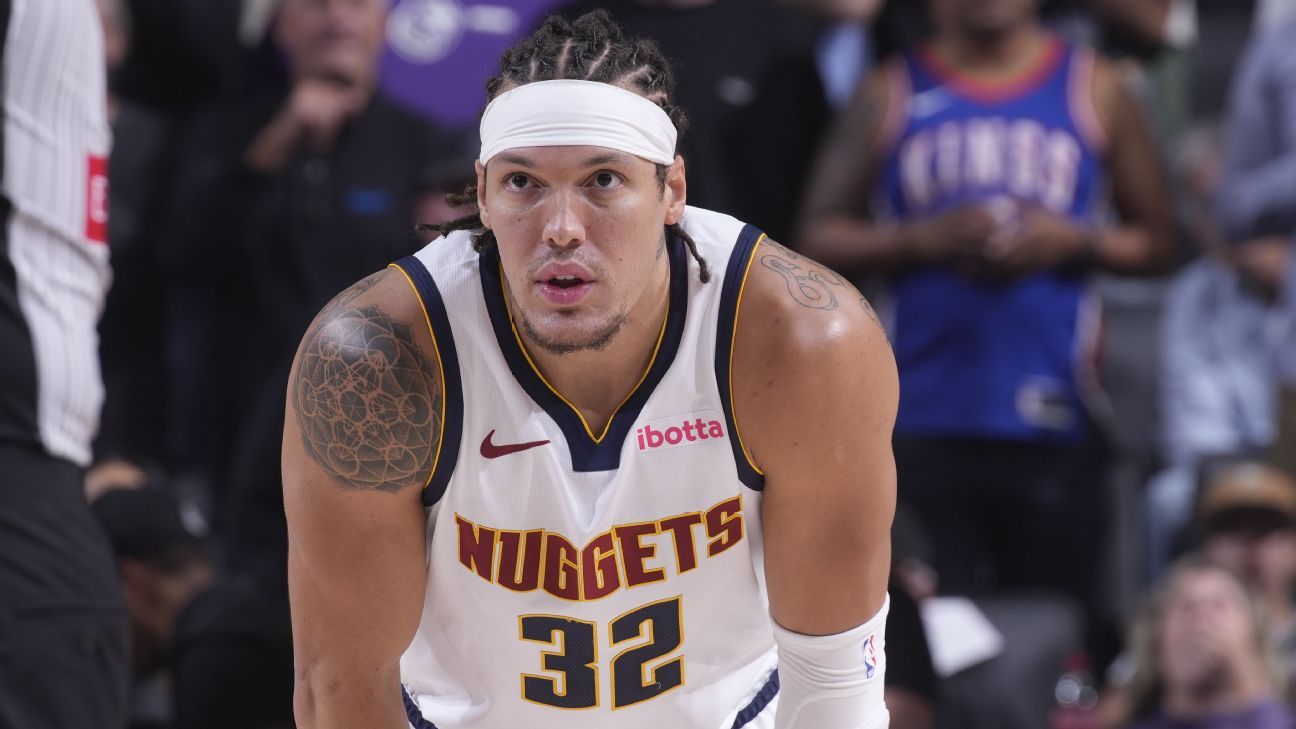
The Denver Nuggets are monitoring an Aaron Gordon injury after the versatile forward exited Friday's matchup against the Milwaukee Bucks with a hamstring strain.
The Denver Nuggets faced a significant scare on Friday night as a sudden Aaron Gordon injury forced the starting forward to exit their high-stakes matchup against the Milwaukee Bucks. Gordon, who has been a cornerstone of Denver’s frontcourt versatility and defensive identity, appeared to tweak his hamstring late in the second quarter. After limping toward the locker room, the team officially ruled him out for the remainder of the contest, leaving the defending champions shorthanded against one of the Eastern Conference’s elite powerhouses.
Details of the Aaron Gordon Injury in Milwaukee
The incident occurred during the closing minutes of the first half. Gordon was seen moving gingerly after a defensive rotation, clutching at the back of his leg. While he attempted to stay in the flow of the game for a subsequent possession, the discomfort was visible to the coaching staff. During the halftime intermission, the Nuggets' medical team evaluated the forward and quickly determined that he would not return to the floor.
This Aaron Gordon injury comes at a particularly sensitive time for Denver. The Nuggets are currently embroiled in a tight race for seeding in the Western Conference, where every win and loss carries immense weight. Gordon’s absence was immediately felt on both ends of the floor. Known for his ability to guard multiple positions and his chemistry with three-time MVP Nikola Jokic, Gordon provides a unique vertical threat and defensive toughness that is difficult to replicate with bench rotations.
Impact on the Nuggets’ Rotation and Defense
When analyzing the fallout of the Aaron Gordon injury, the most immediate concern is how head coach Michael Malone will adjust his rotations. Gordon is often tasked with guarding the opponent's best scoring wing or power forward. Against the Bucks, his absence meant more minutes for players like Peyton Watson and Zeke Nnaji, who bring energy but lack Gordon’s veteran savvy and refined offensive timing.
Gordon’s role in the Nuggets' offense is equally vital. He is widely considered one of the best 'cutters' in the NBA, frequently finding open space behind the defense to receive precision passes from Jokic. Without him, the floor spacing changes significantly. The Aaron Gordon injury forces the Nuggets to rely more heavily on their perimeter shooting, as they lose that elite lob threat and physical presence in the dunker spot. If Gordon is sidelined for an extended period, the pressure will mount on Michael Porter Jr. and the second unit to provide more consistent rebounding and interior scoring.
Assessing the Severity of Hamstring Strains
Hamstring issues are notoriously fickle in professional basketball. While the team has characterized the Aaron Gordon injury as a strain, the degree of that strain will dictate his timeline for return. Grade 1 strains typically require a week or two of rest and rehabilitation, while more severe Grade 2 tears can sideline a player for a month or more. For a player like Gordon, whose game is built on explosiveness, jumping, and lateral quickness, rushing back from a hamstring injury is rarely an option.
The Nuggets’ medical staff is known for being cautious with their core stars. With the playoffs on the horizon, Denver will likely prioritize Gordon’s long-term health over immediate regular-season gains. Fans should expect a series of evaluations over the next 48 hours, including potential imaging to determine the exact extent of the damage. Until then, the Aaron Gordon injury remains a cloud hanging over a team that has largely stayed healthy throughout the current campaign.
Looking Ahead: Denver’s Schedule and Depth
The timing of the Aaron Gordon injury is far from ideal given Denver's upcoming schedule. The Western Conference remains a gauntlet, and losing a starter who averages nearly 32 minutes per game creates a massive void. The Nuggets will need to lean on their developmental players to step up. Peyton Watson, in particular, has shown flashes of being an elite defender, and this could be his opportunity to prove he can handle a starting-caliber workload.
However, replaceability is the biggest hurdle. There is no one else on the roster who mirrors Gordon’s specific skill set. His ability to act as a secondary playmaker and his selflessness in the offensive system are what made the Nuggets' starting five the most efficient lineup in the league last season. As the team awaits further news on the Aaron Gordon injury, the focus shifts to internal growth and tactical adjustments. The Nuggets have proven they can win through adversity before, but losing a player of Gordon’s caliber is a test of depth that no coach wants to face mid-season. Stay tuned for more updates as the team releases official medical reports following their return to Denver.
Stay informed
Follow SportsNow.
Join the reader list for future briefings and important newsroom updates.
Reader conversation
Your take on the story
Stay with the story
Related coverage
Open deskNuggets Lose Aaron Gordon: Star Forward Sidelined for Weeks with Strain
Hornets Sidelined: Kon Knueppel and Grant Williams Out for Entire Preseason