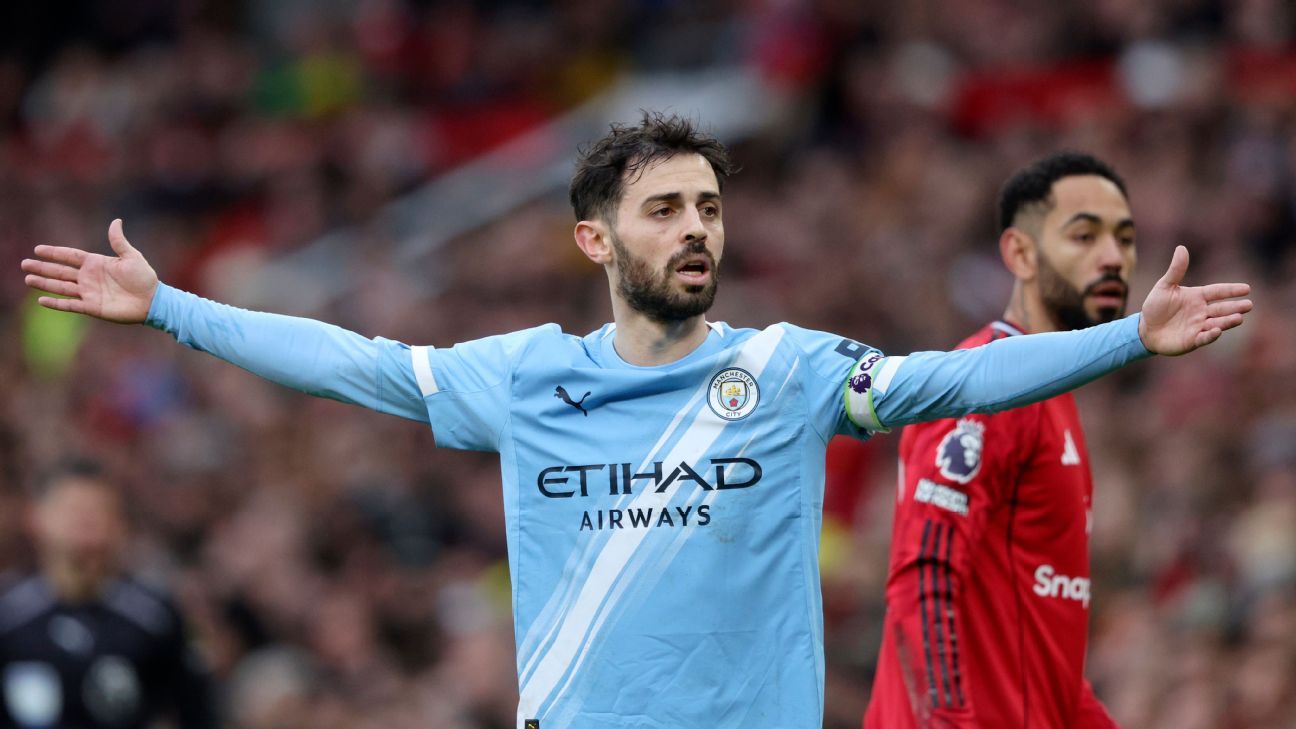
Following a stinging defeat in the Manchester derby, Bernardo Silva has voiced his frustration over what he perceives as a recurring bias in refereeing decisions favoring City's rivals.
Blue Moon Rises in Protest: Bernardo Silva Slams 'Inconsistent' Officiating After Derby Defeat
The echoes of the final whistle at Old Trafford had barely faded before the post-match post-mortem took a sharp turn toward the officiating. Manchester City’s midfield maestro, Bernardo Silva, did not hold back in his assessment of the contest, suggesting that when it comes to the Premier League’s biggest stages, the ‘50-50’ calls rarely seem to land in the champions' favor. This sentiment, delivered with a mixture of frustration and resignation, immediately set the tone for a heated debate that has since engulfed the English football landscape, putting the spotlight firmly on the consistency of refereeing decisions in high-stakes encounters.
Silva’s primary point of contention centered on a flashpoint involving Manchester United’s Diogo Dalot. The Portuguese international argued vehemently that his compatriot was fortunate to remain on the pitch, insisting that a challenge deserving of a red card was overlooked by the match officials. This particular incident, occurring at a crucial juncture of the game, involved a high boot that, in Silva's view, endangered a City player and warranted a more severe sanction than the yellow card issued. For Bernardo Silva, this wasn't an isolated incident but rather a symptom of a broader trend where City’s rivals appear to receive the benefit of the doubt in high-stakes moments, creating a perceived imbalance that consistently works against his team. The frustration in his voice was palpable as he recounted the sequence of events, highlighting the perceived double standards.
“It feels like we are always on the wrong side of the coin,” Bernardo Silva remarked during a tense post-match press conference, his usually composed demeanor replaced by a visible exasperation. The midfielder expressed a growing exhaustion with what he described as a lack of parity in officiating, hinting that the psychological pressure of the derby atmosphere might be influencing the whistle-blowers. He noted that while City focuses intently on their tactical execution and fluid attacking play, the marginal calls often dictate the momentum of these feisty encounters, effectively undermining their efforts and strategic planning. This feeling of being unfairly treated by the Bernardo Silva referee decisions has clearly been building within the City camp.
While critics may dismiss Bernardo Silva’s comments as sour grapes following a painful loss, the statistics from the match tell a story of a physical battle that frequently pushed the boundaries of the laws of the game. City dominated possession as usual, dictating the tempo and creating numerous opportunities, but found themselves frustrated by a United side that was allowed to play with a level of aggression that Silva believes crossed the line into illegality. The sheer number of fouls committed by the opposition, coupled with the perceived leniency shown by the referee in certain instances, only served to fuel Silva's post-match outburst. The data, when analyzed objectively, does lend some credence to the argument that the game was officiated with a certain degree of permissiveness towards the home side.
As the title race intensifies, these grievances highlight the mounting pressure on Premier League officials to maintain consistency and impartiality. Whether Bernardo Silva’s public outcry will prompt a shift in how City are refereed in future matches remains to be seen, but his words have certainly reignited the debate over consistency in the English top flight, a discussion that has become a perennial fixture in football discourse. For now, the Blues must lick their wounds and find a way to overcome both their opponents and the perceived injustices of the pitch, knowing that the Bernardo Silva referee comments have added another layer of scrutiny to future games.
The Broader Implications of Perceived Bias
Bernardo Silva's candid remarks extend beyond the immediate aftermath of a single derby defeat. They tap into a deeper vein of concern among players and managers regarding the subjective nature of officiating and the potential for unconscious bias, particularly in matches with high emotional stakes. The idea that certain teams, especially those with a history of dominance or a perceived 'big team' status, might receive preferential treatment is a narrative that has long circulated in football. Silva's frustration, therefore, resonates with many who feel that the playing field isn't always level, regardless of the quality of football on display.
The financial implications of Premier League results are astronomical, and a single refereeing decision can swing millions of pounds in prize money, European qualification, or even relegation. This immense pressure inevitably falls on the shoulders of the officials, but it also means that any perceived inconsistency is magnified. When a player of Bernardo Silva's stature, known for his calm demeanor and professionalism, speaks out so forcefully, it signals a significant level of discontent within the dressing room. It suggests that this isn't just a one-off complaint, but a culmination of frustrations over a period of time, leading to the Bernardo Silva referee criticism. This public stance could either galvanize support for City's cause or, conversely, lead to accusations of attempting to influence future decisions.
The VAR Conundrum: A Solution or Another Layer of Controversy?
The introduction of Video Assistant Referee (VAR) technology was heralded as the ultimate solution to eradicate contentious decisions and ensure fairness. However, as Bernardo Silva's comments implicitly suggest, VAR has often added another layer of complexity and controversy rather than resolving it. The interpretation of subjective fouls, such as the one involving Dalot, remains a significant challenge, even with the benefit of multiple replays. What one official deems a red card offense, another might see as a yellow, leading to the very inconsistency that Silva laments.
The "clear and obvious error" threshold for VAR intervention often leaves fans, players, and pundits bewildered, especially when seemingly blatant fouls are either missed or not upgraded upon review. This creates a situation where the technology, instead of providing clarity, sometimes exacerbates the feeling of injustice. The Bernardo Silva referee comments highlight the ongoing struggle to marry human judgment with technological assistance in a way that satisfies all stakeholders. The debate around VAR's effectiveness and its impact on the flow and integrity of the game continues to rage, and incidents like those cited by Silva only serve to fuel the fire, demanding a more transparent and consistent application of the rules, with or without technological aid.
Stay informed
Follow SportsNow.
Join the reader list for future briefings and important newsroom updates.
Reader conversation