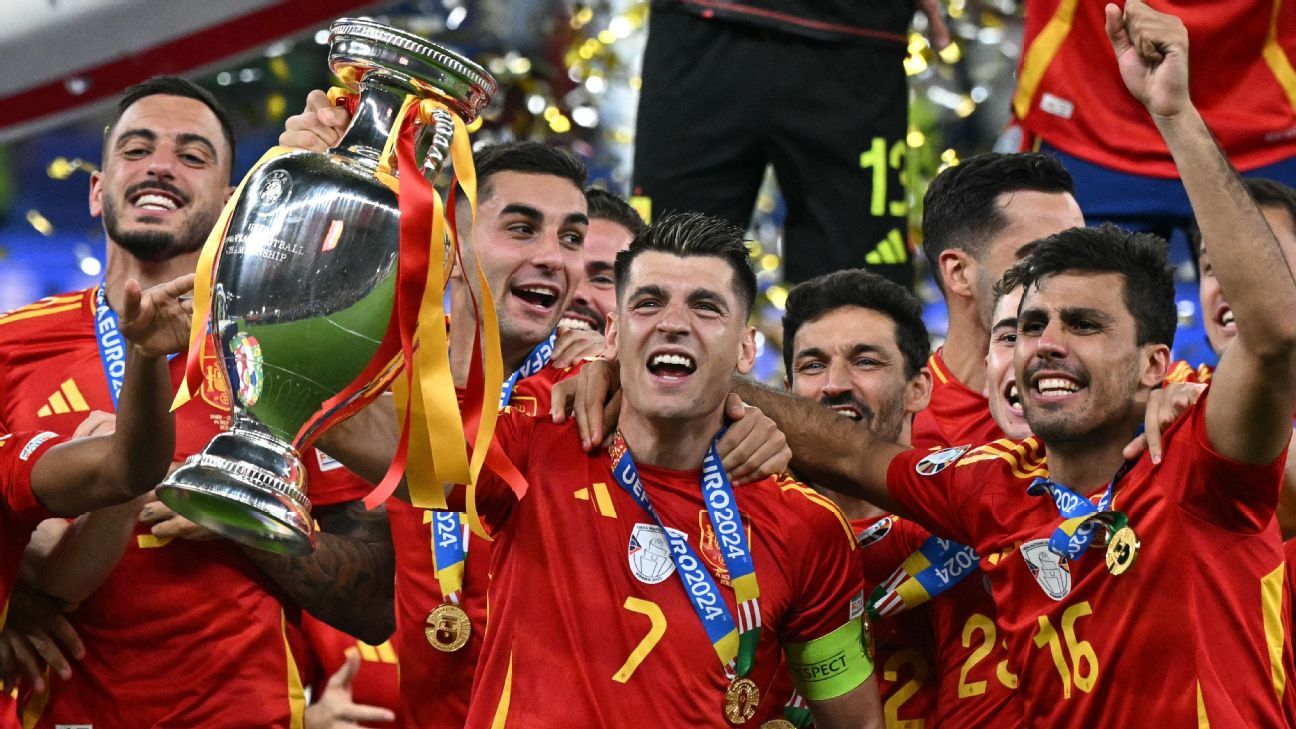
European football's governing body is facing an unexpected financial headwind as a volatile U.S. dollar triggers a massive multi-million dollar revenue shortfall.
Currency Crunch: How a Slumping Greenback Carved a $55 Million Hole in UEFA’s Coffers
In the high-stakes world of European football, the most dangerous opponent isn't always on the pitch. UEFA has revealed a staggering $55 million hit to its bottom line, but the culprit isn't a lack of ticket sales or broadcasting interest. Instead, the governing body has fallen victim to the ruthless fluctuations of the foreign exchange market, as the U.S. dollar plummeted roughly 9% against global currencies in the opening months of 2025. This significant UEFA dollar impact underscores the often-overlooked financial intricacies of global sports.
This financial sucker-punch highlights the vulnerability of sports giants that operate on a global scale. While UEFA’s primary operations are rooted in the Euro and Swiss Franc, a significant portion of its commercial portfolio—including massive sponsorship deals and international media rights—is often denominated in or pegged to the strength of the American dollar. When the 'Greenback' stumbles, those lucrative contracts lose their edge when converted back into European tender. This phenomenon creates a direct and measurable UEFA dollar impact, diminishing the actual value of agreements struck in a stronger currency. The sheer volume of these dollar-denominated contracts, from multi-year broadcasting rights with North American networks to global sponsorship agreements with multinational corporations, means that even a seemingly modest percentage shift in currency valuation can translate into tens of millions of dollars in losses. The intricate web of international finance, often invisible to the casual fan, plays a pivotal role in the financial health of organizations like UEFA.
The timing of this valuation drop couldn't be more inconvenient. As UEFA navigates a transformative era for the Champions League and prepares for future tournament cycles, a $55 million evaporation of expected revenue creates a complicated puzzle for financial planners. It serves as a stark reminder that while the beautiful game is won with goals, its stability is often dictated by the flickering numbers on a trading floor in New York or London. This unexpected shortfall directly impacts strategic investments, development programs, and even the prize money distributed to clubs, demonstrating the far-reaching consequences of the UEFA dollar impact. The organization had likely budgeted for these revenues based on earlier exchange rates, and the sudden shift necessitates a re-evaluation of financial commitments and future projections.
Market analysts point to a shifting global economic landscape in early 2025 as the catalyst for the dollar's 9% slide. Factors such as a perceived softening of the U.S. economy, changes in interest rate differentials with other major economies, and a general move by international investors towards more diversified portfolios likely contributed to the dollar's depreciation. For UEFA, this isn't just a statistical anomaly; it is a hard lesson in the necessity of aggressive currency hedging. Moving forward, the organization will likely face increased pressure to insulate itself from such volatility, ensuring that the wealth generated by the world's most elite footballers isn't lost to the whims of the forex market. The UEFA dollar impact serves as a wake-up call for more sophisticated financial risk management strategies.
The Broader Implications for Sports Governance
The $55 million hit to UEFA's coffers due to currency fluctuations is not an isolated incident but rather a symptom of a larger, systemic challenge facing major international sports organizations. Bodies like FIFA, the International Olympic Committee, and even national federations with significant international dealings, are constantly exposed to similar risks. Their revenue streams are global, often involving complex deals with broadcasters, sponsors, and merchandise partners across multiple continents, each operating in different currencies. The UEFA dollar impact highlights how even the most robust financial models can be undermined by external economic forces. This incident will undoubtedly prompt a closer examination of financial risk management protocols across the entire sports industry. Organizations may need to invest more heavily in dedicated treasury departments, staffed with experts in foreign exchange markets, or outsource these functions to specialized financial institutions. The traditional focus on maximizing commercial revenue will now have to be balanced with an equally strong emphasis on protecting that revenue from currency erosion. This could lead to more conservative financial planning, potentially impacting the scale of future investments in grassroots football, infrastructure projects, or even the expansion of existing competitions. The ripple effect of such a significant UEFA dollar impact could be felt throughout the global football ecosystem.
Mitigating Future Currency Risk: Strategies and Challenges
The immediate aftermath of this financial setback will see UEFA's financial strategists scrambling to implement more robust hedging mechanisms. Currency hedging involves using financial instruments, such as forward contracts or options, to lock in an exchange rate for a future transaction, thereby mitigating the risk of adverse currency movements. While these tools can be effective, they also come with costs and complexities. For instance, forward contracts require UEFA to commit to a specific exchange rate, which could mean missing out on potential gains if the dollar were to unexpectedly strengthen. Options, while offering more flexibility, typically involve upfront premiums. The challenge for UEFA will be to find a balance between protecting its revenues from a negative UEFA dollar impact and avoiding excessive costs associated with hedging.
Furthermore, UEFA might explore diversifying its currency holdings and revenue streams. While a significant portion of its commercial deals are dollar-denominated, renegotiating contracts to include clauses that allow for partial payment in Euros or Swiss Francs, or indexing payments to a basket of currencies, could be another long-term strategy. This would require significant negotiation power and cooperation from its commercial partners. The organization could also consider establishing more substantial reserves in various currencies to act as a buffer against future volatility. This incident serves as a crucial case study for how global sports entities must evolve their financial strategies to navigate an increasingly interconnected and volatile global economy, ensuring that the passion on the pitch is supported by sound financial management off it. The $55 million hole created by the UEFA dollar impact is a costly reminder that in modern sports, financial acumen is as vital as sporting prowess.
Stay informed
Follow SportsNow.
Join the reader list for future briefings and important newsroom updates.
Reader conversation