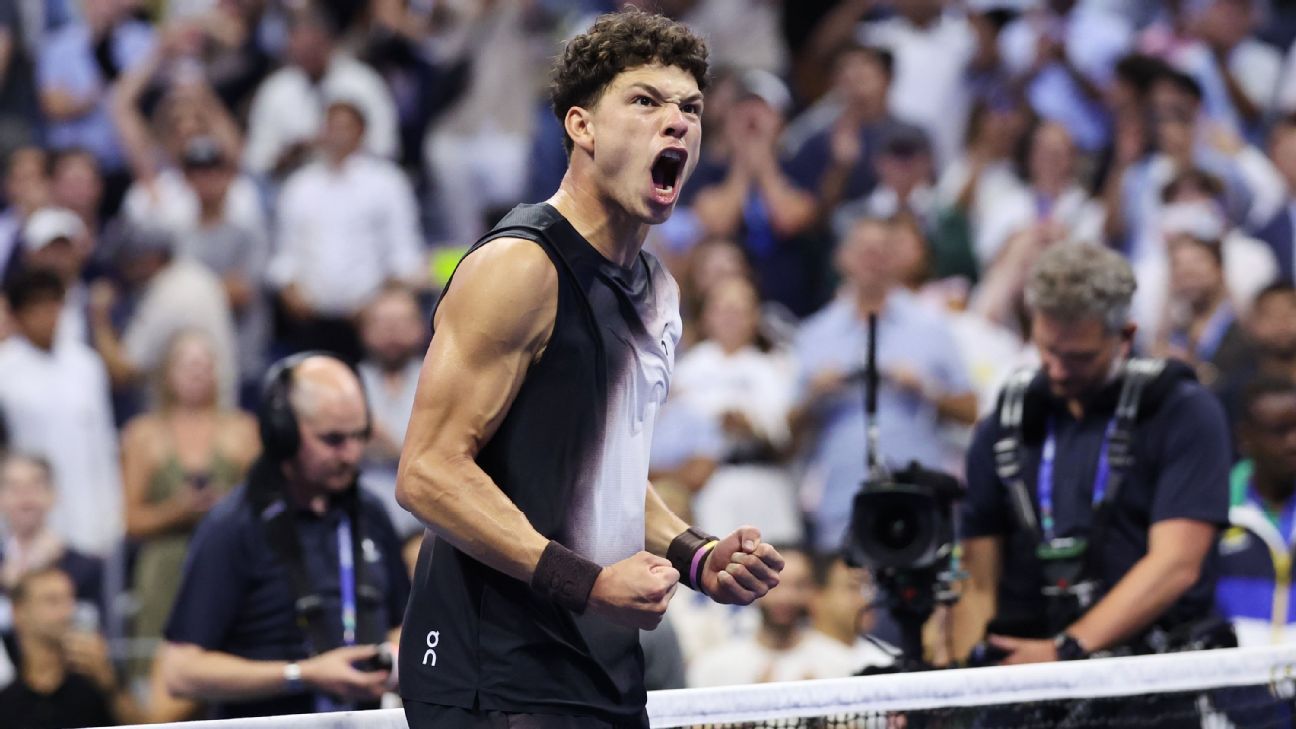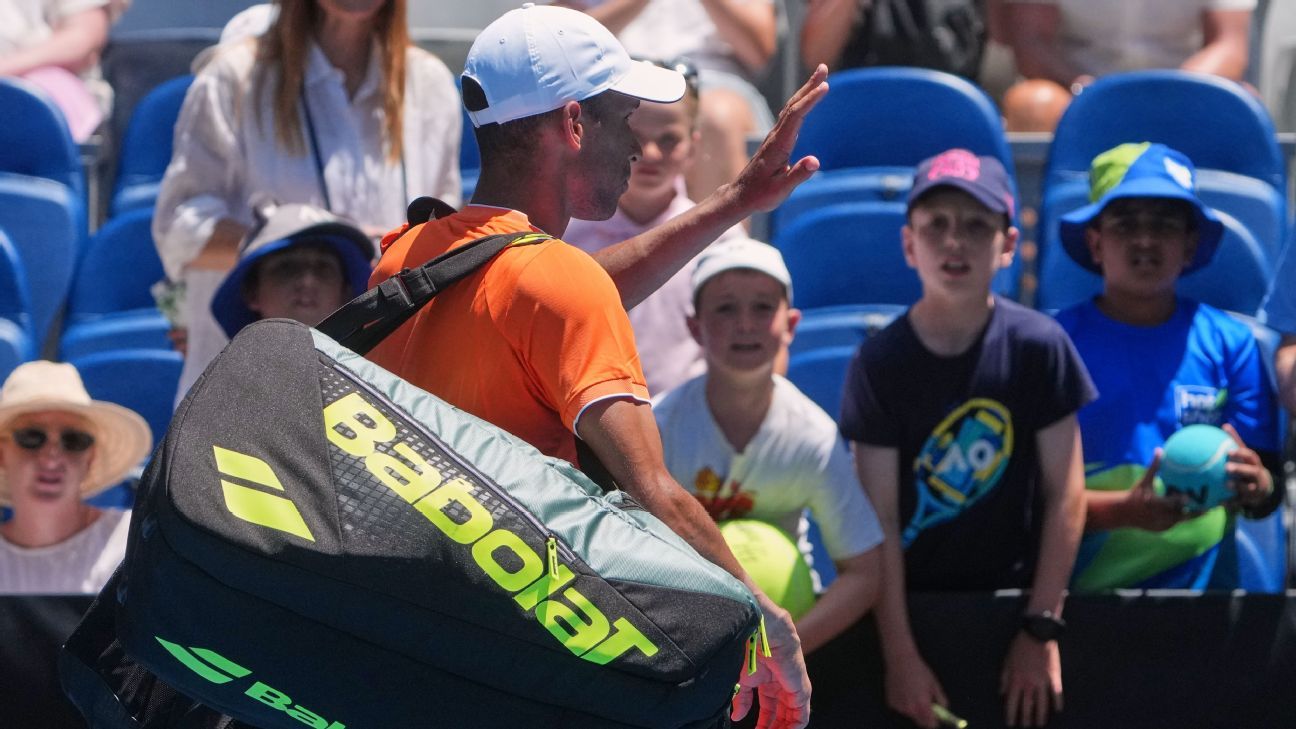
Seventh seed Felix Auger-Aliassime was forced to bid an early and agonizing farewell to Melbourne Park after severe cramping halted his opening-round clash against Nuno Borges.
Title: Heartbreak in Melbourne: Auger-Aliassime’s Australian Open Ends in Physical Collapse Category: TENNIS
The Australian Open is often a war of attrition, a brutal test of skill, mental fortitude, and, crucially, physical endurance. But few expected the first major casualty among the top-ten contenders to be undone by his own physiology. Felix Auger-Aliassime, the tournament’s seventh seed and a perennial threat on the hard courts, saw his Grand Slam dreams evaporate on Monday in a grueling encounter with Portugal's Nuno Borges. What began as a tactical chess match, showcasing moments of brilliant tennis from both players, ended as a physical tragedy, with the Canadian star forced to retire mid-match as his body simply gave out under the relentless Melbourne heat and humidity. This premature exit for Auger-Aliassime Australian Open hopes is a stark reminder of the sport's demanding nature.
From the outset, the match carried a heavy tension as Borges, ranked significantly lower, refused to be intimidated by his opponent's higher pedigree. The Portuguese player, known for his gritty baseline game and relentless retrieving, matched Auger-Aliassime stroke for stroke, often pushing the Canadian into uncomfortable positions. As the rallies lengthened, extending beyond twenty shots on numerous occasions, and the humidity rose, creating a sauna-like atmosphere on court, the signs of distress began to show on Auger-Aliassime’s face. Usually a specimen of peak athletic conditioning, renowned for his explosive power and agility, the Canadian began to struggle noticeably with his movement late in the match, clutching at his legs as severe cramping set in. Despite several valiant attempts to stretch out the discomfort during changeovers and push through the excruciating pain, the mobility that defines his dynamic, all-court game had completely vanished. His powerful serve, usually a weapon, lost its bite, and his groundstrokes lacked the customary depth and pace. The sight of Auger-Aliassime Australian Open campaign ending in such a manner was deeply concerning for fans and analysts alike.
For Nuno Borges, the victory marks a significant career milestone, propelling him into the second round of a Grand Slam for the first time, albeit one achieved under somber circumstances. The world-class resilience shown by the Portuguese underdog certainly played a crucial role in pushing Auger-Aliassime to his physical limits, forcing the higher-ranked player to scramble for every point and expend an extraordinary amount of energy. Borges's consistent depth and ability to absorb pace meant that Auger-Aliassime was constantly on the back foot, unable to dictate play as he usually prefers. While Borges moves on to the second round with newfound momentum and confidence, the tennis world is left questioning the preparation and recovery cycles required for such a demanding start to the season, especially given the increasingly extreme weather conditions often experienced in Melbourne.
This early exit is a crushing blow for Auger-Aliassime, who entered the year with sights firmly set on a deep run into the second week, potentially even challenging for the title. Instead of a triumphant trophy lift or a hard-fought semi-final, his tournament ends prematurely in the treatment room, serving as a stark reminder of how thin the margins are between victory and physical collapse in elite professional tennis. The Canadian will now look to recover both physically and mentally, recalibrating his training and scheduling for the remainder of the season. Meanwhile, the draw in Melbourne, now missing one of its top seeds, remains wide open for a new dark horse to emerge and seize the opportunity. The unexpected departure of Auger-Aliassime Australian Open hopes certainly shifts the dynamics of the men's singles bracket.
The Physical Toll of Modern Tennis
The incident with Felix Auger-Aliassime underscores a growing concern in professional tennis: the immense physical toll exacted by the modern game. Players are stronger, faster, and hit the ball harder than ever before, leading to longer, more brutal rallies. Coupled with the increasing frequency of extreme weather conditions, particularly at events like the Australian Open where temperatures can soar well above 35 degrees Celsius, the demands on a player's body are reaching unprecedented levels. This isn't an isolated incident; we've seen numerous retirements and withdrawals due to heatstroke, cramping, and exhaustion across various tournaments. The ATP and WTA tours, along with Grand Slam organizers, are constantly evaluating heat policies and player welfare, but the fundamental nature of the sport means that players will always push their physical boundaries. Auger-Aliassime's collapse highlights the fine line athletes walk between peak performance and catastrophic breakdown, and it raises questions about whether current training methodologies and tournament schedules adequately prepare players for these extreme conditions. The pressure to perform at every event, combined with the travel and rigorous training, leaves little room for error in physical preparation. The Auger-Aliassime Australian Open retirement will undoubtedly fuel further discussions on this critical topic.
Implications for Auger-Aliassime's Season
For Felix Auger-Aliassime, this early exit from the Australian Open is more than just a missed opportunity; it could have broader implications for his entire 2024 season. While the immediate focus will be on recovery, the psychological impact of such a dramatic physical failure can be significant. Doubts about fitness and endurance can creep in, affecting confidence in subsequent matches, especially in long, drawn-out encounters. He will need to work closely with his medical and coaching team to identify any underlying issues that may have contributed to the severe cramping, whether it was hydration, nutrition, specific training regimens, or simply an unfortunate combination of factors on the day.
Historically, players who suffer such high-profile physical breakdowns sometimes take time to regain their full competitive edge. However, Auger-Aliassime is known for his resilience and dedication. His team will likely conduct a thorough review of his pre-season preparation, match-day routines, and in-match strategies to minimize the risk of a recurrence. The goal will be to ensure that when he steps back onto court, particularly in hot and humid conditions, he is physically robust enough to withstand the rigors of Grand Slam tennis. This setback, while painful, could also serve as a crucial learning experience, forcing him to adapt and emerge even stronger. His return to form and how he addresses this physical vulnerability will be a key storyline to follow throughout the year, as he aims to put this unfortunate Auger-Aliassime Australian Open memory behind him.
Stay informed
Follow SportsNow.
Join the reader list for future briefings and important newsroom updates.
Reader conversation
Your take on the story
Stay with the story
Related coverage
Open desk
Alcaraz, Gauff, and Sinner Set for 1 Point Slam at Australian Open
Kei Nishikori Ends Professional Career With Japan Open Loss to Frances Tiafoe