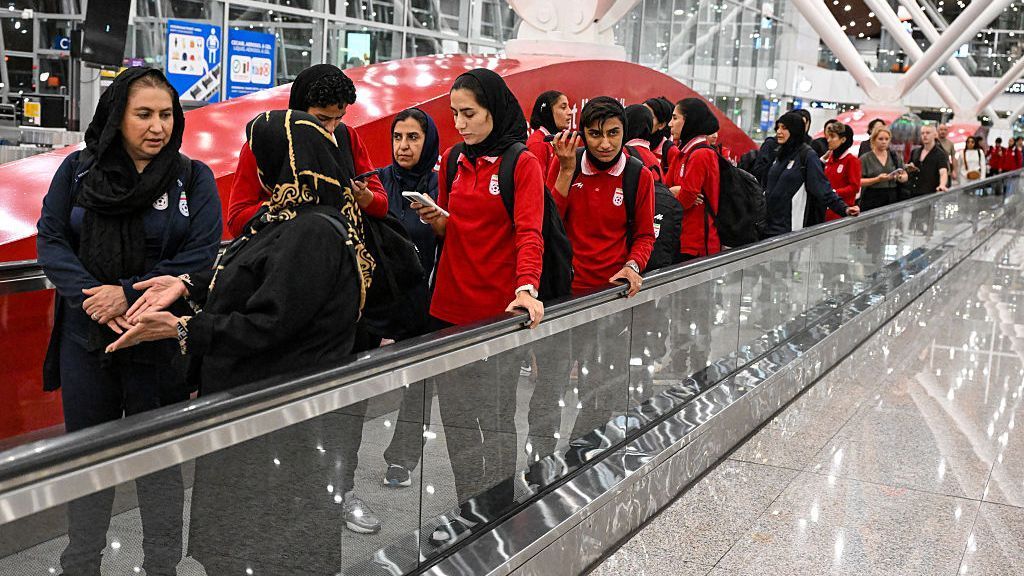
Captain Zahra Ghanbari and six colleagues remain in Australia on humanitarian visas after being labeled traitors by Iranian state media during the Women's Asian Cup.
Seven members of the Iranian women’s national soccer team, including captain Zahra Ghanbari, have officially secured humanitarian visas to remain in Australia. Home Affairs Minister Tony Burke confirmed the final tally on Wednesday morning in Canberra, noting that the group consists of six players and one staff member. Joining Ghanbari in seeking protection are Fatemeh Pasandideh, Zahra Sarbali, Atefeh Ramezanizadeh, and Mona Hamoudi. The final two individuals—one athlete and one official—finalized their asylum claims just hours before the remaining squad members boarded a flight departing from Sydney late Tuesday night. This legal intervention follows the team’s elimination from the Women’s Asian Cup over the weekend, a tournament that saw the squad arrive in February before the outbreak of war in Iran on February 28.
The Australian government initiated a high-stakes screening process at the border to identify individuals at risk of persecution. Each member of the traveling party was escorted into a private room by an interpreter and a government representative, ensuring no team minders or officials from the Iranian federation were present to exert influence. These individual interviews allowed the women to speak freely about their fears regarding the current political climate in their home nation. Minister Burke emphasized that the offer of asylum was presented as a voluntary choice, with no pressure applied to those who felt obligated to return to their families. The resulting humanitarian visas provide these seven individuals with a legal pathway toward permanent residency within the Commonwealth.
Tensions surrounding the team escalated after their opening match of the tournament, during which the players refused to sing the Iranian national anthem. This act of silent protest led to state-controlled media outlets in Iran branding the athletes as "wartime traitors." Such a designation carries severe legal implications under the current regime, including the potential for execution or the state-sanctioned seizure of personal and family assets. Refugee advocate Ara Rasuli highlighted that the threat of retaliation against relatives served as the primary deterrent for those who chose to board the return flight despite the ongoing bombardment of their cities.
Football Australia CEO Martin Kugeler confirmed that the governing body has been in constant communication with federal authorities to manage the logistics of the team’s departure and the safety of those staying behind. The scene at the airport on Tuesday evening was marked by significant unrest as members of the Iranian Australian community staged a protest. Demonstrators attempted to block the terminal entrances, pleading with the remaining players not to return to a conflict zone where their safety could not be guaranteed. Security personnel were required to maintain a corridor for the departing athletes, many of whom were visibly distressed by the choice between personal liberty and the safety of kin left in Iran.
The timeline of these events is rooted in the sudden shift of the geopolitical landscape during the competition. When the Iranian delegation landed in Australia, the conflict had not yet commenced. The transition from international athletes to asylum seekers occurred rapidly as the February 28 invasion transformed their homeland into a war zone. For the five players who initially came forward 24 hours before the flight, the decision was a response to the specific rhetoric used by the regime during the group stages. The final two members of the group waited until the absolute last moment, submitting their requests as the team bus prepared to leave the hotel for the airport terminal.
Australia’s Department of Home Affairs has not disclosed the specific locations where the seven individuals are currently being housed, citing privacy and security concerns. The humanitarian visa program used in this instance is designed for those who face a documented risk of harm in their country of origin. By granting these visas, the Australian government has acknowledged the credible threat posed by the "traitor" label used by Iranian state media. The remaining members of the squad, who did not seek or were not granted asylum, are expected to land in Tehran following a multi-leg journey, facing an uncertain future under the scrutiny of a government that has already publicly condemned their conduct on the world stage.
This mass defection represents one of the most significant instances of athletic asylum in recent Australian history. The legal status afforded to Ghanbari and her teammates ensures they will not be forced back into a jurisdiction where they face political prosecution. While the Women’s Asian Cup continues for the remaining nations, the Iranian team’s participation has concluded with a fractured roster and a permanent change in the lives of seven women. The Australian government maintains that its border protocols were followed strictly to provide a safe environment for these high-profile decisions to be made without coercion or fear of immediate reprisal from team handlers.
Stay informed
Follow SportsNow.
Join the reader list for future briefings and important newsroom updates.
Reader conversation
Your take on the story
Stay with the story
Related coverage
Open desk
Arsenal Secure 3-0 Champions League Win Over Lille Following Triple Substitution

Saudi Air Strikes Raise Security Concerns for January Asian Cup