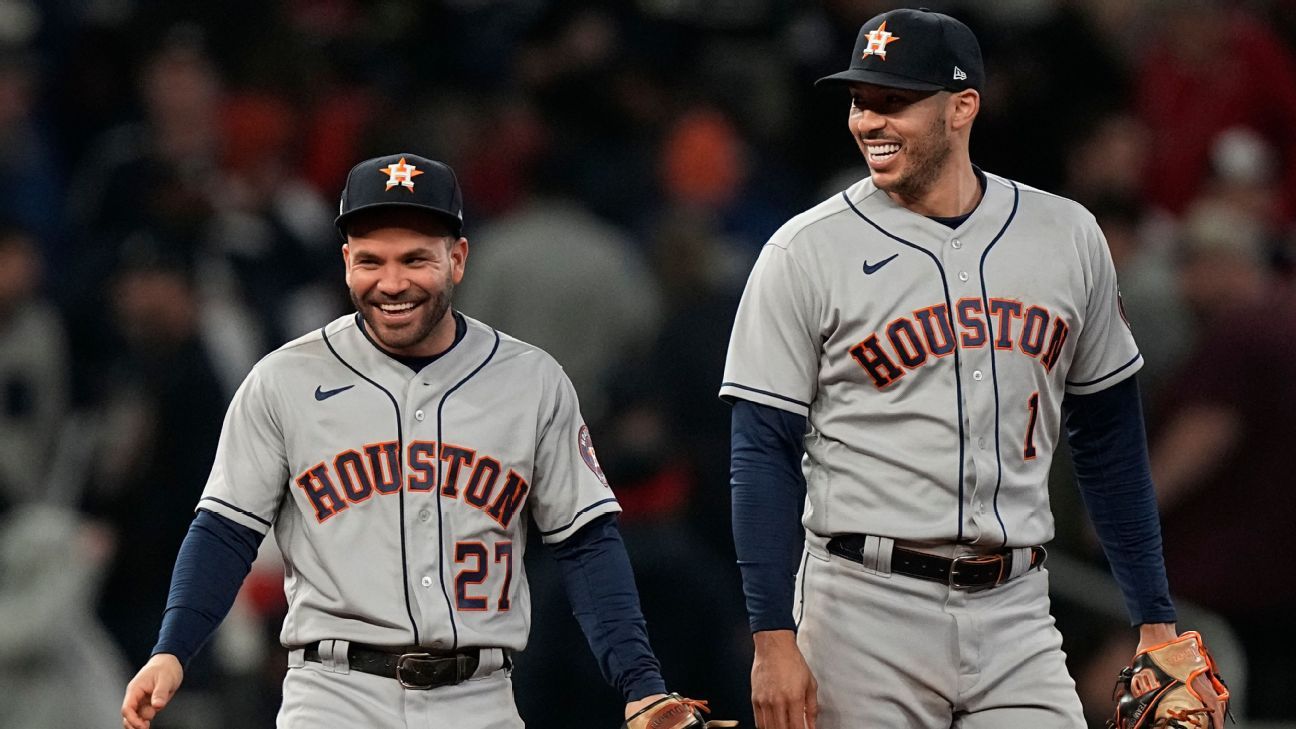
Houston Astros stars Jose Altuve and Carlos Correa will officially miss the World Baseball Classic due to complex WBC insurance issues regarding potential injuries.
The landscape of international baseball has taken a significant hit as two of the game’s brightest stars, Jose Altuve and Carlos Correa, have officially withdrawn from the upcoming World Baseball Classic. While fans were eager to see the Houston Astros middle infield duo represent their respective nations, the decision ultimately came down to a matter of logistics rather than a lack of desire. Specifically, complex WBC insurance issues have created a barrier that neither the players nor their respective organizations could overcome.
For Altuve and Correa, the risk of participating without comprehensive financial protection proved too great. In the modern era of professional sports, where contracts reach hundreds of millions of dollars, the intersection of international glory and financial security is a delicate tightrope. The absence of these two perennial All-Stars highlights a growing concern within Major League Baseball (MLB) regarding how elite talent is protected during non-MLB sanctioned events.
The Financial Barrier of WBC Insurance Issues
At the heart of this withdrawal are the WBC insurance issues that frequently plague high-salaried athletes. When a player participates in the World Baseball Classic, they must be covered by an insurance policy that protects their MLB team in the event of a catastrophic injury. If a player has a pre-existing medical condition or a history of specific injuries, insurance underwriters often refuse to provide coverage for those specific body parts or the contract as a whole.
In the case of Altuve and Correa, both players have dealt with various ailments over the past few seasons. While they are currently healthy and productive for the Astros, insurance companies look at historical data to assess risk. If an underwriter deems a player 'uninsurable' for the tournament, the player’s MLB team has the right to block their participation. The team cannot afford to lose a $30 million-per-year asset without the guarantee that their salary will be reimbursed if they are sidelined while playing for a national team.
Impact on the World Baseball Classic Rosters
The loss of Altuve and Correa is a massive blow to the tournament's star power. Altuve, a former MVP and the heartbeat of the Astros' dynasty, was expected to be a cornerstone for the Venezuelan national team. His ability to spark an offense at the top of the order is nearly unparalleled in the game today. Without him, Venezuela loses not just a gold-glove caliber second baseman, but a veteran leader with extensive postseason experience.
Similarly, Carlos Correa’s absence leaves a void in the Puerto Rican roster. Correa has long been a vocal proponent of international play, famously leading Puerto Rico to deep runs in previous iterations of the tournament. Known for his clutch hitting and elite defensive range at shortstop, Correa is the type of player who thrives under the bright lights of the WBC. These WBC insurance issues have effectively stripped the tournament of two of its most marketable and talented infielders, leaving fans wondering if the system needs a complete overhaul.
Why MLB Teams Prioritize Protection
From the perspective of the Houston Astros and other MLB front offices, the priority will always be the 162-game regular season and the quest for a World Series title. While teams generally support their players' desire to represent their countries, they are also cognizant of the massive investments they have made. When WBC insurance issues arise, it provides a legal and financial safety net for the club to keep their players in spring training, where the environment is more controlled and the risk of high-intensity injury is theoretically lower.
Critics argue that these insurance hurdles prevent the World Baseball Classic from becoming the 'World Cup of Baseball' that it aspires to be. If the best players in the world cannot take the field due to paperwork and premiums, the prestige of the event is naturally diminished. However, until a more robust, centralized insurance fund is created to cover all participating MLB players regardless of injury history, we will likely continue to see stars like Altuve and Correa watching from the sidelines.
The Future of International Baseball Participation
Moving forward, the MLB Players Association and tournament organizers must address these recurring WBC insurance issues to ensure the long-term viability of the event. One potential solution is the creation of a specialized pool of funds contributed by all participating federations to cover 'high-risk' players who are denied traditional insurance. Without a change in the current structure, the tournament risks becoming an event for prospects and role players rather than the superstars who drive global viewership.
For now, Jose Altuve and Carlos Correa will focus their efforts on the upcoming MLB season in Houston. While their absence from the international stage is disappointing for fans in Venezuela and Puerto Rico, the reality of the business side of baseball remains undefeated. The complications surrounding WBC insurance issues serve as a stark reminder that in professional sports, the signature on the insurance policy is often just as important as the signature on the contract.
Stay informed
Follow SportsNow.
Join the reader list for future briefings and important newsroom updates.
Reader conversation
Your take on the story
Stay with the story