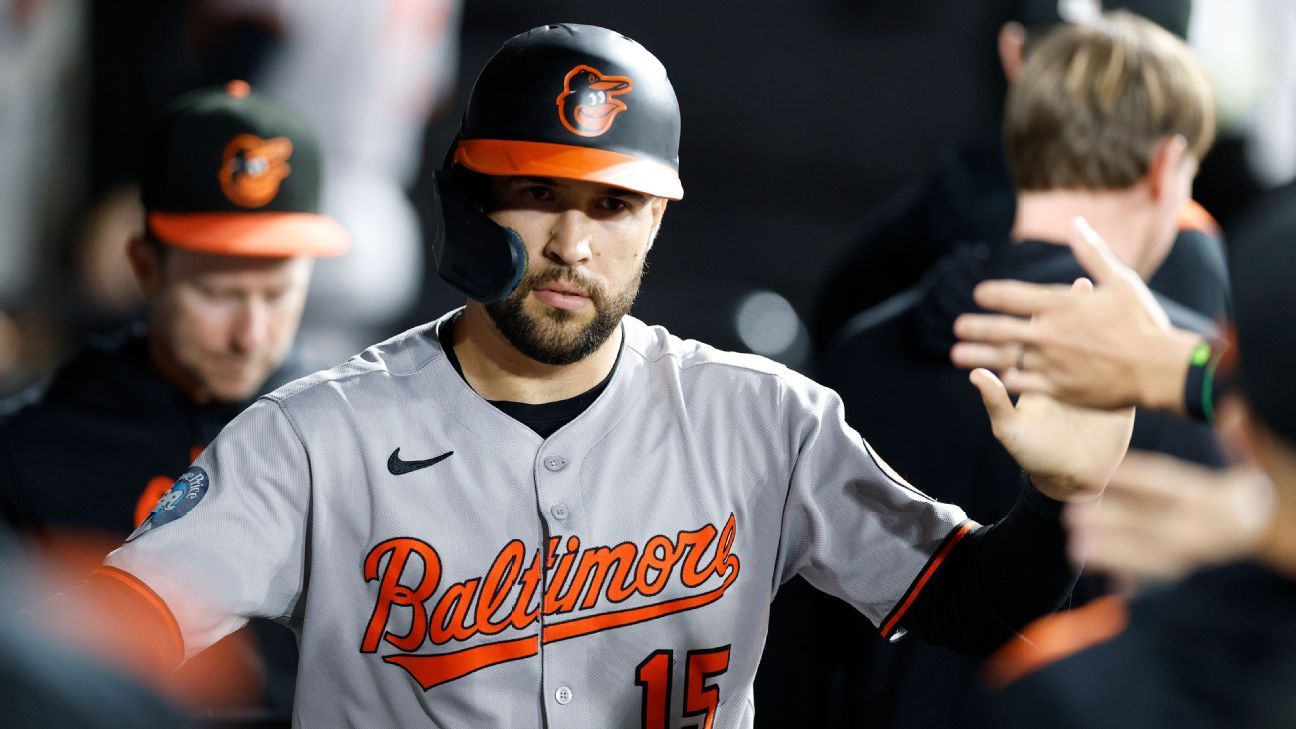
The Chicago Cubs sign Dylan Carlson to a minor league deal, offering the former top prospect a fresh start and a chance to compete for a roster spot in Mesa.
The Chicago Cubs have officially made a move to bolster their organizational depth as the Cubs sign Dylan Carlson to a minor league contract. This deal, which includes a non-roster invitation to Major League Spring Training, represents a classic 'buy-low' opportunity for President of Baseball Operations Jed Hoyer and the Cubs front office. Carlson, once considered one of the most promising young talents in the National League Central, now finds himself fighting for a roster spot on the North Side of Chicago after a turbulent couple of seasons.
At just 26 years old, Carlson brings a pedigree that few minor league signees possess. As a former first-round pick and a top-10 global prospect according to MLB Pipeline just a few years ago, the switch-hitting outfielder has shown flashes of brilliance. However, injuries and inconsistency led to a fall from grace in St. Louis and a subsequent trade to the Tampa Bay Rays, where he struggled to find his footing. By securing this deal, the Cubs are betting that a change of scenery and the hitting laboratory at Sloan Park can unlock the potential that once made Carlson a foundational piece for a division rival.
The Strategic Fit for the Cubs Outfield
When the Cubs sign Dylan Carlson, they aren't just looking for a body to fill out the Triple-A Iowa roster; they are looking for versatile insurance. Currently, the Cubs' outfield is anchored by Ian Happ, Pete Crow-Armstrong, and Seiya Suzuki, with Cody Bellinger also factoring into the mix. However, with the physical demands of a 162-game season, depth is paramount. Carlson’s ability to play all three outfield positions at a high defensive level makes him an ideal candidate for a fourth or fifth outfielder role.
His switch-hitting profile is another factor that likely intrigued the Cubs' scouting department. Throughout his career, Carlson has historically performed better against left-handed pitching. If he can regain his form, he provides manager Craig Counsell with a valuable late-inning substitution or a platoon partner against tough southpaws. The flexibility to move him across the grass allows the Cubs to be more creative with their lineups, potentially giving veterans like Happ or Suzuki more days off or opportunities to serve as the designated hitter.
Analyzing Dylan Carlson’s Career Trajectory
To understand why the Cubs sign Dylan Carlson now, one must look back at his 2021 rookie campaign. During that season, Carlson finished third in the NL Rookie of the Year voting, slashing .266/.343/.437 with 18 home runs and 65 RBIs. He looked every bit like a future All-Star. Unfortunately, wrist and ankle injuries began to take their toll in subsequent seasons, sapping his power and affecting his swing mechanics.
His stint with the Tampa Bay Rays in late 2024 was particularly difficult, as he struggled to maintain a consistent approach at the plate. However, the underlying metrics suggest that when healthy, Carlson still possesses elite bat-to-ball skills and a disciplined eye. For the Cubs, the cost of this experiment is negligible. If Carlson thrives in Spring Training, they have a bargain-bin contributor. If he fails to regain his form, they can move on without any significant financial burden on their payroll.
Impact on Spring Training Competition
As the Cubs sign Dylan Carlson to a minor league deal with a big-league invite, the competition in Mesa just got significantly more interesting. Carlson will be competing against other non-roster invitees and younger prospects for a spot on the 26-man roster. This internal competition is exactly what Craig Counsell desires as he enters his second year at the helm. It pushes the fringe players to perform at their peak from day one of camp.
Furthermore, Carlson’s presence provides a safety net in case of early-season injuries. The Cubs saw firsthand last year how quickly depth can evaporate. Having a player with over 400 games of MLB experience waiting in the wings—or potentially making the team out of camp—is a luxury. Fans should keep a close eye on Carlson’s exit velocity and health during the Cactus League schedule, as those will be the primary indicators of whether this reclamation project will be a success.
Why This Move Signals the Cubs' 2025 Philosophy
The decision to have the Cubs sign Dylan Carlson reflects a broader organizational philosophy of accumulating high-ceiling talent at a low cost. While the Cubs are expected to be active in the trade and free-agent markets for larger pieces, these marginal moves often determine the success of a season. If the Cubs can fix Carlson's swing or help him regain his confidence, they have essentially found a starting-caliber player for a fraction of the market rate.
In conclusion, while the headline might not be as flashy as a superstar signing, the acquisition of Dylan Carlson is a savvy baseball move. It addresses depth, adds a switch-hitting element to the bench, and brings in a hungry player looking to prove he still belongs in the Major Leagues. For Dylan Carlson, Chicago represents a second chance; for the Cubs, it represents a calculated gamble on a former star whose best days might still be ahead of him.
Stay informed
Follow SportsNow.
Join the reader list for future briefings and important newsroom updates.
Reader conversation