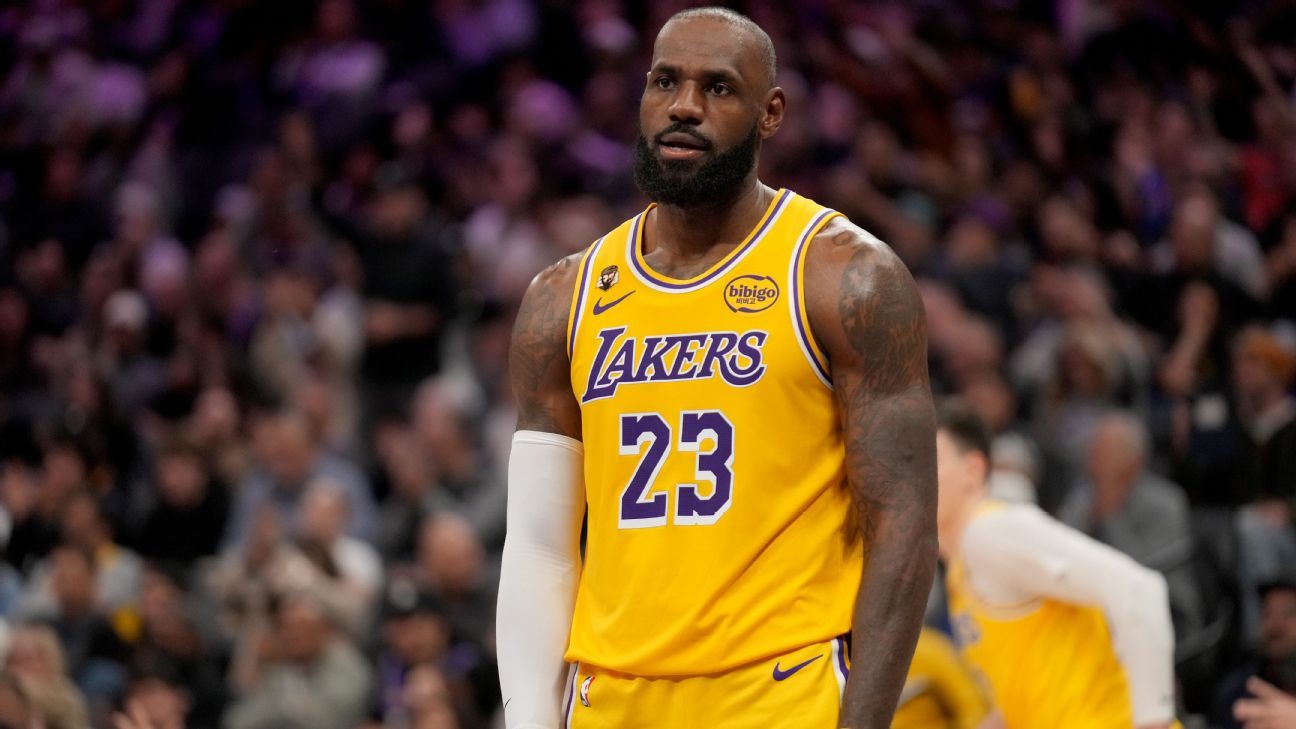
A historically poor night from beyond the arc left the Los Angeles Lakers searching for answers as they surrendered 124 points in a demoralizing loss to Sacramento.
Cold Concrete in the Crypt: Slumping Lakers Fire Blanks as Kings Reign Supreme
The rim must have looked like a thimble to the Los Angeles Lakers on Monday night. In a performance that saw the purple and gold turn the perimeter into a graveyard of missed opportunities, the Lakers stumbled to a 124-112 defeat at the hands of the Sacramento Kings. It wasn’t just a loss; it was a rhythmic failure of the modern game’s most vital weapon, as L.A. managed a miserable 8-of-36 from deep. This abysmal 22.2% shooting percentage from beyond the arc was a stark contrast to the Kings' efficient 42.9% (15-of-35), highlighting a critical disparity that ultimately decided the Lakers Kings game. The energy in the Crypto.com Arena, usually electric, slowly dissipated as the Lakers' offensive struggles mounted, leaving a palpable sense of frustration among the home faithful.
While the Kings have often played the role of the NBA’s underdog, they looked like world-beaters against a Lakers defense that appeared stuck in mud. Sacramento exploited every rotation lapse, feasting on wide-open looks and punishing the Lakers for their lack of urgency. De'Aaron Fox, with his blistering speed and improved jump shot, consistently broke down the Lakers' perimeter defense, creating opportunities for both himself and his teammates. Domantas Sabonis, meanwhile, orchestrated from the high post, dissecting the Lakers' interior with pinpoint passes and opportunistic scoring. By the time the fourth quarter rolled around, the 'hapless' Kings label had been thoroughly shed, replaced by a clinical execution that left the home crowd in a stunned silence. The Kings' offensive flow was a masterclass in modern basketball, a stark reminder of how quickly a well-oiled machine can dismantle a struggling opponent, especially in a crucial Lakers Kings game.
In the locker room, the narrative was centered on self-inflicted wounds. The prevailing sentiment among the roster was that their own shooting woes bled into their defensive identity. When the shots don't fall, the legs get heavy, and on this night, the Lakers' legs looked like lead. They didn't just miss shots; they missed the spark required to contain a hungry divisional rival. LeBron James, visibly frustrated, acknowledged the team's lack of cohesion on both ends of the floor, emphasizing the need for greater effort and focus. Anthony Davis, despite a strong individual scoring performance, echoed similar sentiments, pointing to the collective mental fatigue that seemed to set in as their shots continued to clank off the iron. The psychological impact of missed open looks can be profound, leading to a defensive slippage that a team like the Kings is perfectly equipped to exploit. This self-analysis is a crucial step, but translating it into tangible improvements on the court will be the real challenge following this disappointing Lakers Kings game.
Statistically, the night was a grim milestone. Allowing 124 points while shooting just 22% from three-point range is a mathematical recipe for disaster in the modern NBA. The Kings, on the other hand, shot an impressive 50.6% from the field overall, showcasing their offensive prowess and the Lakers' defensive shortcomings. Rebounding was also an issue, with the Kings outrebounding the Lakers, further limiting second-chance opportunities for L.A. and providing more possessions for Sacramento's potent offense. As the team looks toward the rest of the schedule, this performance serves as a stark reminder that in a league driven by spacing and sharpshooting, the Lakers are currently firing blanks. If they can’t find their range—and their defensive grit—the climb back to the top of the Western Conference will be a steep one. The implications of this Lakers Kings game extend beyond just one loss; it exposes fundamental flaws that need immediate addressing.
The Three-Point Conundrum: A Modern NBA Imperative
The Lakers' struggles from beyond the arc are not an isolated incident but rather a recurring theme that has plagued the team at various points this season. In an era where the three-point shot has become arguably the most important offensive weapon, consistently failing to convert from deep puts immense pressure on other facets of the game. Teams are increasingly designed to stretch the floor, create driving lanes, and punish defenses that sag or over-help. When a team like the Lakers cannot consistently hit open threes, it allows opponents to pack the paint, making it harder for stars like LeBron James and Anthony Davis to operate effectively inside. This creates a vicious cycle: missed threes lead to clogged lanes, which in turn leads to more difficult shots and fewer offensive rebounds.
Furthermore, the psychological toll of missed three-pointers can be significant. Players start to doubt their shots, leading to hesitation or rushed attempts. This can quickly erode team confidence and impact defensive effort, as players become demoralized by their inability to score. The Lakers' coaching staff faces a critical challenge in either improving the team's current shooters' efficiency or finding personnel adjustments that can inject more consistent long-range threats into the lineup. The modern NBA demands a certain level of three-point proficiency, and until the Lakers can meet that standard, they will continue to face uphill battles, as vividly demonstrated in this recent Lakers Kings game.
Defensive Lapses and Rotational Woes
While the offensive struggles were glaring, the Lakers' defensive effort against the Kings also left much to be desired. Sacramento's ability to generate wide-open looks was not solely due to their offensive brilliance but also a direct consequence of the Lakers' defensive lapses. Communication breakdowns were evident, leading to missed switches and late rotations. The Kings frequently exploited the space created by the Lakers' slow close-outs, allowing their shooters to get comfortable and knock down uncontested shots. This lack of defensive cohesion is particularly concerning for a team that prides itself on its defensive identity, especially with stalwarts like Anthony Davis anchoring the paint.
The Kings' dynamic backcourt of De'Aaron Fox and Kevin Huerter consistently put pressure on the Lakers' perimeter defenders. Fox's speed was a nightmare, often leaving defenders in his wake and forcing help defenders to commit, which then opened up opportunities for Sacramento's other shooters and cutters. The Lakers' transition defense also struggled, giving up easy buckets to the fast-breaking Kings. In a league where every possession matters, these defensive breakdowns are simply unacceptable. The coaching staff will need to re-emphasize defensive principles, improve communication, and ensure that every player is fully engaged on that end of the floor. A strong defense can often compensate for an off-shooting night, but when both facets of the game falter, as they did in this Lakers Kings game, the outcome is almost inevitable. The path forward requires a renewed commitment to both offensive efficiency and defensive tenacity.
Stay informed
Follow SportsNow.
Join the reader list for future briefings and important newsroom updates.
Reader conversation