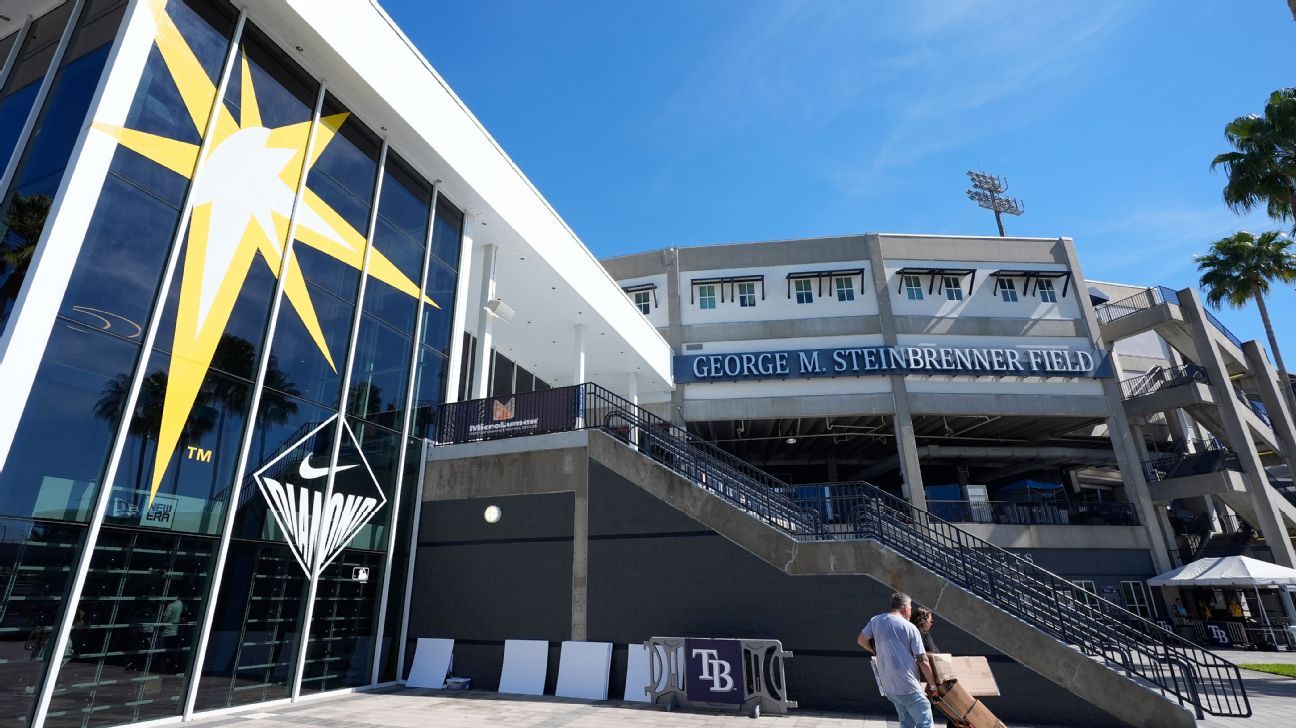
Florida Governor Ron DeSantis and MLB Commissioner Rob Manfred have officially voiced their support for the new Rays Tampa Stadium proposal, marking a major step forward.
The long-standing saga of professional baseball in the Tampa Bay region took a significant turn this week as high-profile political and athletic leadership converged on a singular vision. Florida Governor Ron DeSantis and Major League Baseball Commissioner Rob Manfred have both publicly signaled their support for the proposed Rays Tampa Stadium project. While the road to a new home for the Tampa Bay Rays has been paved with obstacles for over a decade, this dual endorsement provides the strongest momentum the franchise has seen in years.
Speaking at a press conference on Tuesday, Governor DeSantis emphasized the importance of the Rays to the state’s economic and cultural landscape. While he remained cautious regarding the specific allocation of state funds, his verbal backing of a permanent home in Tampa suggests a shift in the political winds. Similarly, Commissioner Manfred reiterated the league's desire to keep the team in the market, provided a modern, sustainable facility can be constructed. The Rays Tampa Stadium is no longer just a hypothetical drawing; it is now a priority for the highest offices in the sport and the state.
A Unified Front for the Rays Tampa Stadium
The alignment between the Governor’s office and the MLB Commissioner’s office is a critical development for a team that has consistently ranked near the bottom of the league in attendance despite high levels of on-field success. For years, the primary hurdle for the Rays has been the location and quality of Tropicana Field in St. Petersburg. The proposed Rays Tampa Stadium aims to move the team closer to the demographic heart of the region, making games more accessible to the corporate hubs and residential centers of Tampa.
Commissioner Rob Manfred has been vocal about the need for the Rays to resolve their stadium situation. In his remarks, he highlighted that the current facility is no longer viable for a modern MLB franchise. By supporting the Rays Tampa Stadium initiative, Manfred is signaling to investors and local municipalities that the league is committed to the Tampa market, but only if the infrastructure matches the team's competitive output. This pressure from the league office often serves as the catalyst for local governments to finalize funding packages and zoning agreements.
Economic Implications and Urban Development
A new Rays Tampa Stadium represents more than just a place to play ball; it is being framed as a massive urban redevelopment project. Proponents of the move argue that a stadium in the Ybor City area or near downtown Tampa would generate thousands of jobs and stimulate hundreds of millions of dollars in private investment. Governor DeSantis touched upon the potential for sports tourism, noting that Florida remains a premier destination for baseball fans during Spring Training and the regular season alike.
However, the question of "who pays?" remains the elephant in the room. While the support for the Rays Tampa Stadium is high, the specifics of the financial split between the team ownership, the city of Tampa, and Hillsborough County have yet to be fully disclosed. Historically, DeSantis has been wary of using direct state subsidies for professional sports venues, but he has shown a willingness to support infrastructure improvements that benefit the surrounding community. This distinction could be the key to unlocking the necessary resources for the project to break ground.
The Timeline and Next Steps for MLB in Florida
Despite the enthusiasm shown by Manfred and DeSantis, the timeline for the Rays Tampa Stadium remains fluid. The Rays' lease at Tropicana Field is set to expire in 2027, creating a ticking clock for all parties involved. Construction of a modern MLB stadium typically takes three to four years, meaning a final agreement must be reached within the next twelve to eighteen months to avoid a period where the team is left without a home.
League insiders suggest that Manfred’s public support is a strategic move to force a resolution. MLB wants to move toward expansion, but Manfred has repeatedly stated that expansion will not happen until the stadium situations for the Rays and the Oakland Athletics are settled. Therefore, the success of the Says Tampa Stadium project has national implications for the growth of the sport. If Tampa can secure this deal, it clears one of the final hurdles for MLB to add two new franchises to the league.
Fans and Community Reaction
For the fans, the prospect of a Rays Tampa Stadium is a dream long deferred. The current trek to St. Petersburg is often cited as the primary reason for low midweek attendance. A centrally located stadium in Tampa would likely see a significant lift in season ticket sales and corporate sponsorships. The community reaction has been largely positive, though local taxpayers remain vigilant about the potential costs.
In conclusion, while the Tuesday announcement lacked the granular details of a signed contract, the symbolic weight of having both Ron DeSantis and Rob Manfred in the same corner cannot be overstated. The Rays Tampa Stadium is now the focal point of the franchise's future. As negotiations move behind closed doors, the pressure is on local leaders to turn this high-level support into a concrete reality that keeps the Rays in Florida for generations to come.
Stay informed
Follow SportsNow.
Join the reader list for future briefings and important newsroom updates.
Reader conversation
Your take on the story
Stay with the story