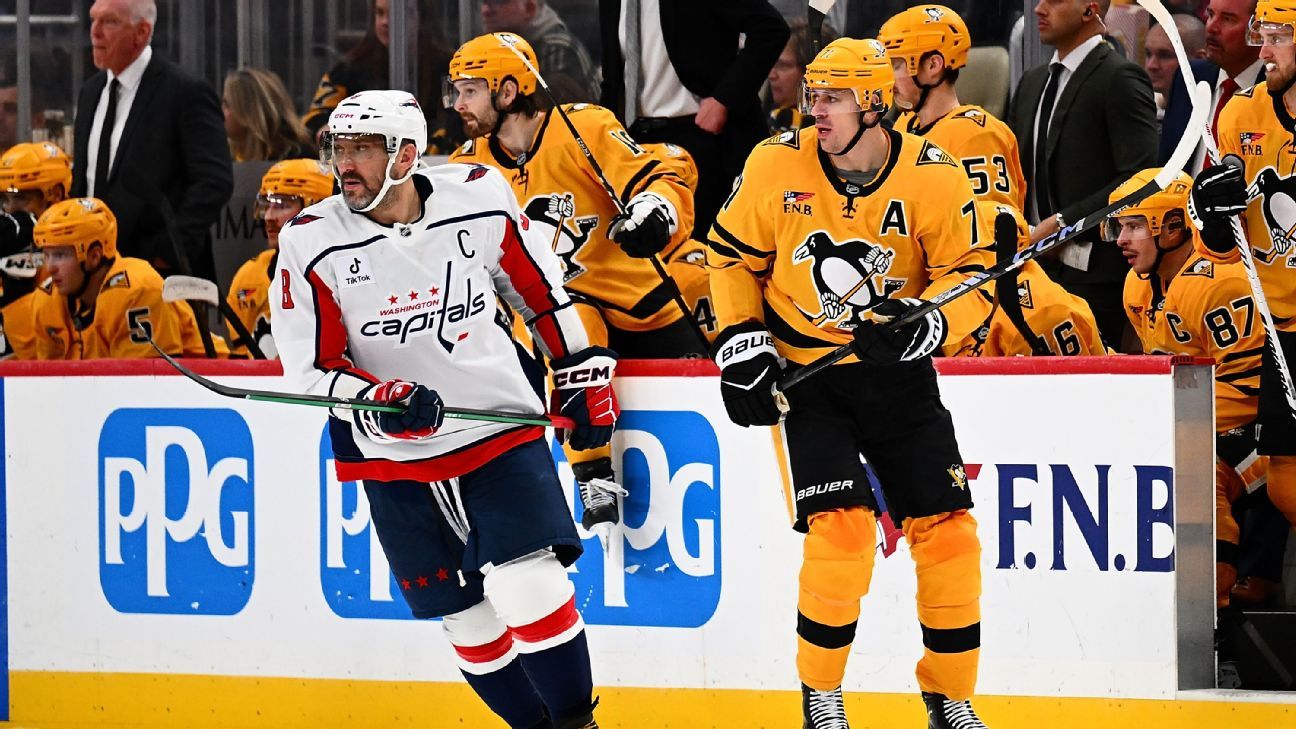
Despite their indefinite absence from international play, Russia’s current NHL talent pool represents a 'gold medal' squad that may never get its moment on the world stage.
Title: Frozen Out: The Formidable Olympic Ghost Roster Russia Won't Be Bringing to Milano-Cortina Category: NHL Current Content: The 2026 Winter Olympics in Milano-Cortina promise to be a historic return to best-on-best hockey, a moment eagerly anticipated by fans and players alike after a decade-long hiatus for NHL participation. However, a massive shadow looms over the tournament bracket, casting a pall over what could have been an unparalleled display of global hockey talent. With the International Ice Hockey Federation (IIHF) maintaining its ban on Russian participation due to ongoing geopolitical conflicts, one of the sport's traditional superpowers remains a ghost. This decision, while rooted in complex global affairs, has profound implications for the competitive landscape of the Olympic hockey tournament. On paper, however, the hypothetical roster Russia could assemble for Milano-Cortina is not just competitive; it is arguably the most terrifying offensive juggernaut in the modern era of the game, a true "Dream Team" that will only exist in the realm of speculation.
At the sharp end of the spear, the depth of Russian offensive talent is staggering, a testament to their rich hockey development system. A potential top line featuring the perennial scoring brilliance of Nikita Kucherov, fresh off another dominant NHL season, alongside the elite playmaking of Artemi Panarin, whose vision and puck-handling are second to none, and the sheer power and goal-scoring prowess of Kirill Kaprizov, would undoubtedly keep opposing goaltenders awake at night. This isn't even touching on the 'Great Eight,' Alex Ovechkin, who, despite his age, continues to defy expectations and would likely be chasing Olympic glory one last time, adding a veteran presence and an unmatched shot. Then there's Matvei Michkov, the budding phenom representing the next generation of Russian brilliance, whose dazzling skill and offensive instincts have drawn comparisons to some of the game's all-time greats. The sheer volume of high-end, game-breaking forwards means Russia Olympic Hockey would have an embarrassment of riches. In terms of pure finishing ability, creativity, and explosive speed, no other nation—not even traditional powerhouses like Canada or the USA—can boast such a concentrated collection of offensive specialists, making their absence all the more poignant.
While the blue line has historically been the program's Achilles' heel, often relying on offensive-minded defensemen at the expense of defensive solidity, the 2026 iteration looks remarkably sturdy and well-rounded. Led by the smooth-skating Mikhail Sergachev, who brings a blend of offensive upside and responsible defensive play, and the emerging Ivan Provorov, known for his physicality and ability to log heavy minutes, the defensive corps would provide a mobile, physical foundation that previous Russian squads sometimes lacked. Add to this potential contributions from players like Dmitry Orlov, known for his two-way game, and Vladislav Gavrikov, a reliable stay-at-home defender, and the Russian defense would be far more formidable than in past tournaments. The real equalizer, however, sits between the pipes. Russia is currently enjoying a golden age of goaltending, a phenomenon rarely seen in any single nation. With Igor Shesterkin, Andrei Vasilevskiy, and Ilya Sorokin representing three of the top five netminders on the planet, all capable of stealing games single-handedly, the options are unparalleled. In a short tournament format like the Olympics, having any one of those three in peak form makes a team nearly impossible to beat, providing an impenetrable last line of defense for Russia Olympic Hockey.
The Unseen Impact: A Void in the Tournament Narrative
The absence of Russia Olympic Hockey from Milano-Cortina creates a significant void in the tournament's narrative and competitive balance. For decades, matchups between Russia (or the Soviet Union) and nations like Canada, the USA, Sweden, and Finland have been the stuff of legend, defining moments in hockey history. The intensity, the skill, and the often politically charged atmosphere surrounding these games elevated the entire event. Without Russia, a major protagonist is missing from this global drama. While other nations will undoubtedly rise to the occasion and provide thrilling hockey, the potential for iconic clashes against a Russian squad stacked with NHL superstars is lost. Fans will be deprived of seeing Kucherov go head-to-head with Connor McDavid, or Vasilevskiy facing off against a barrage of American talent. This isn't merely about one team; it's about the erosion of historical rivalries that fuel the passion and excitement of Olympic hockey. The competitive landscape shifts dramatically, potentially making the path to gold slightly less arduous for other top contenders, but at the cost of denying fans the ultimate test of skill and nerve.
Long-Term Repercussions for Russian Hockey Development
Beyond the immediate impact on the 2026 Olympics, the ban on Russia Olympic Hockey participation could have significant long-term repercussions for the development of Russian hockey. While the country continues to produce elite talent, the Olympic stage serves as a crucial proving ground and a powerful motivator for young players. The dream of representing one's country at the highest level, competing against the world's best, inspires dedication and pushes athletes to new heights. When that dream is unattainable, even for the most talented individuals, it can dampen enthusiasm and potentially affect the pipeline of future stars. Furthermore, the exposure gained from Olympic participation is invaluable for players, boosting their profiles and often leading to greater opportunities. Without this international showcase, Russian players, particularly those not already in the NHL, might find it harder to gain recognition on the global stage. The isolation, if prolonged, could lead to a stagnation in tactical development and a reduced exchange of ideas with other hockey cultures, potentially impacting Russia's standing as a hockey superpower in the decades to come.
Ultimately, this 'Dream Team' remains a collection of 'what-ifs,' a tantalizing glimpse into a reality that will not materialize. As the NHL prepares to send its stars back to the Olympic stage for the first time in a decade, the absence of the Russian flag means the tournament will lack some of its most high-octane stars and one of its most compelling narratives. For hockey purists, it is a bittersweet reality: the talent within the Russian hockey system is at an all-time high, arguably peaking at this very moment, but the world may never see this specific generation of Russian icons unite for one final, glorious run at Olympic gold. The ghost roster of Russia Olympic Hockey will haunt the Milano-Cortina tournament, a reminder of the immense talent sidelined by geopolitical strife.
Stay informed
Follow SportsNow.
Join the reader list for future briefings and important newsroom updates.
Reader conversation