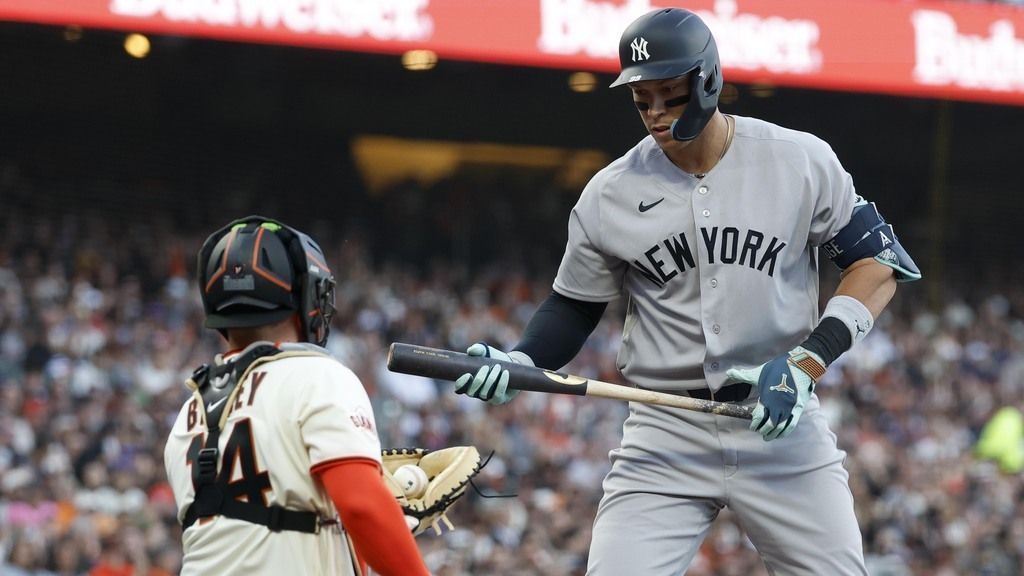
Major League Baseball launched the Automated Ball-Strike System during the New York Yankees' opener at San Francisco on Wednesday night.
Major League Baseball officially integrated the Automated Ball-Strike System (ABS) into regular-season play during the New York Yankees' season opener at San Francisco on Wednesday night. This technological shift allows teams to challenge calls using a network of 12 Hawk-Eye cameras. Under the new protocols, each club receives two challenges per game, retaining them only upon a successful appeal. If a contest enters extra innings, a team that has exhausted its initial allotment is granted one additional challenge per frame. The digital strike zone is defined as a two-dimensional plane at the midpoint of home plate, spanning 53.5% of a batter's height at the top and 27% at the bottom.
Statistical data from the previous season shows that human umpires reached a record-high accuracy rate of 92.83% across 368,898 regular-season pitches. This performance averaged 10.88 missed calls per game, a significant improvement from the 2016 season when officials averaged 16.58 misses per game with an 89.31% accuracy rate. Despite this progress, former umpire Richie Garcia, who served from 1975 to 1999, expressed concern that the technology humiliates officials in front of crowds reaching 40,000 people. Garcia famously missed a 2-2 strike call on Mark Langston's pitch to Tino Martinez in the 1998 World Series opener, which preceded a tiebreaking grand slam and an eventual four-game sweep by New York.
Spring Training Challenge Statistics and Player Performance
Data from 2026 spring training reveals varying success rates for appeals across the league. Philadelphia led all clubs in batter-initiated challenges with a 61% success rate, followed closely by the Chicago Cubs at 60%. Conversely, Texas and Arizona recorded the lowest success rates at 33% each. On the defensive side, St. Louis topped the league by successfully overturning 75% of challenged calls, while Cincinnati followed at 71% and Cleveland at 70%. The Los Angeles Dodgers and Baltimore Orioles struggled with defensive challenges, posting success rates of 43% and 45%, respectively. Overall, the Yankees secured the highest volume of successful challenges with 54, while Arizona, the Dodgers, and the New York Mets tied for the league low with 20 wins each.
Individual player performance under the challenge system showed distinct leaders. Philadelphia’s Christian Cairo achieved a perfect 100% success rate on four challenges. Boston's Willson Contreras initiated the highest volume of batter challenges, successfully overturning six out of seven calls. Among catchers, Pedro Pages of St. Louis went 8 for 8 in successful appeals, while P.J. Higgins of Cincinnati went 7 for 7 and Milwaukee’s Jeferson Quero finished 6 for 6. In contrast, Edgar Quero of the Chicago White Sox was successful on only 2 of 11 challenges, Payton Henry of the Yankees went 1 for 9, and Austin Wynns of the Athletics failed to overturn any of his 7 challenges.
Evolution of Electronic Evaluation and Rule Book Discrepancies
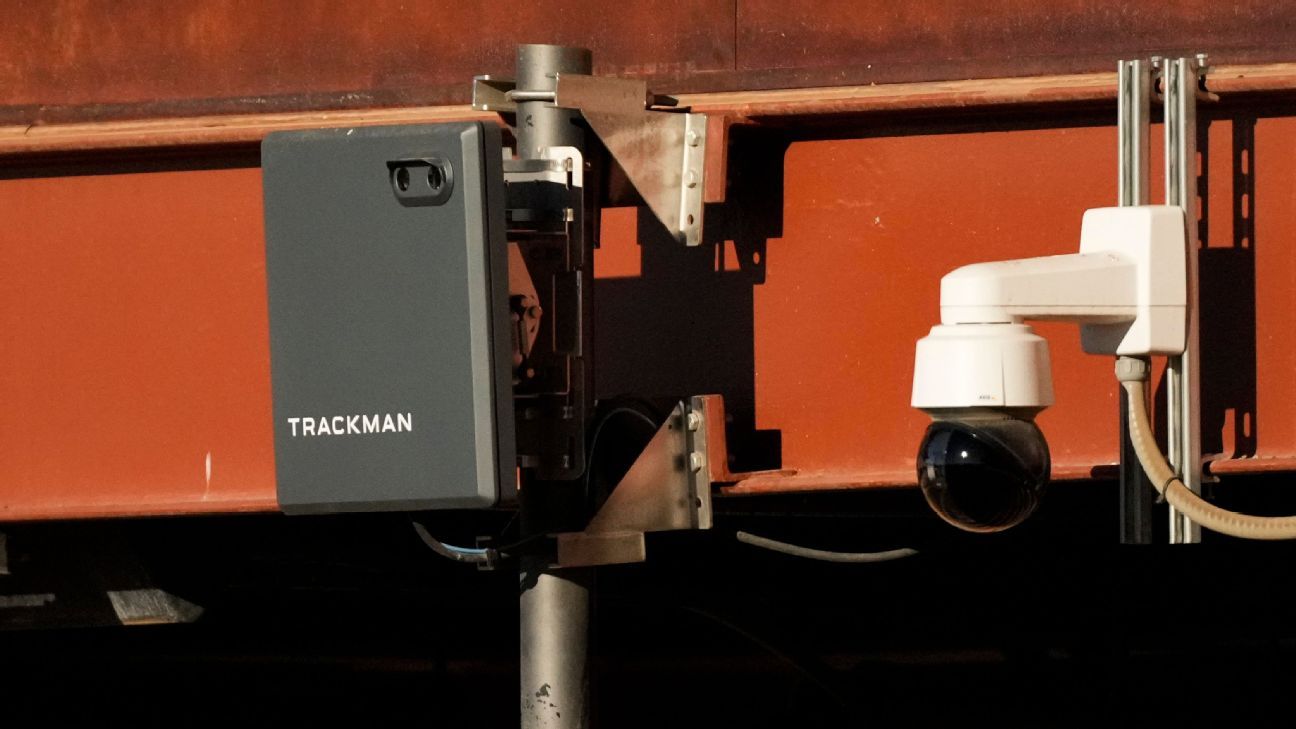
The implementation of this hardware marks the culmination of a quarter-century of electronic monitoring. MLB first introduced the Umpire Information System via Questec in select parks in 2001, before expanding to league-wide Zone Evaluation (Z-E) in 2009 through the PITCHf/x system. In 2017, TrackMan’s doppler radar became the standard as part of MLB Statcast. Since 2014, umpires have also been subject to expanded video review for base path decisions. Ted Barrett, an umpire from 1994 to 2022, noted that officials now receive Z-E evaluations for every game worked behind the plate, creating a high-pressure environment where performance is measured against computer-generated data.
The ABS strike zone differs fundamentally from the traditional rule book definition. While the rule book describes a three-dimensional cube ranging from the hollow beneath the kneecap to the midpoint between the shoulders and the top of the uniform pants, the computer uses a flat box based on specific percentages of a hitter's height. Sam Holbrook, an MLB umpire from 1996 to 2022, stated that while humans cannot be 100% correct, the technology may help correct egregious misses that are frequently scrutinized on social media. Barrett added that umpires will likely adjust their personal zones to match the digital criteria because their professional evaluations are now tied directly to the system's readings.
Impact on the Umpiring Profession
The psychological toll of instant feedback is a primary concern for veteran officials. Barrett highlighted the mental difficulty of being overturned twice at first base, describing it as an immediate notification of failure. However, he also acknowledged the relief of not costing a team a pennant or a run due to a missed call. Across 1,907 total challenges tracked during the spring period, batters won 46% of their 887 attempts, while defensive units won 60% of their 1,020 challenges. This data suggests that pitchers and catchers are currently more effective at identifying missed strikes than hitters are at identifying missed balls. As digital determinations become a permanent fixture, the younger generation of players and fans continues to prioritize the certainty of these readings over the traditional human element of the game.
Stay informed
Follow SportsNow.
Join the reader list for future briefings and important newsroom updates.
Reader conversation
Your take on the story
Stay with the story