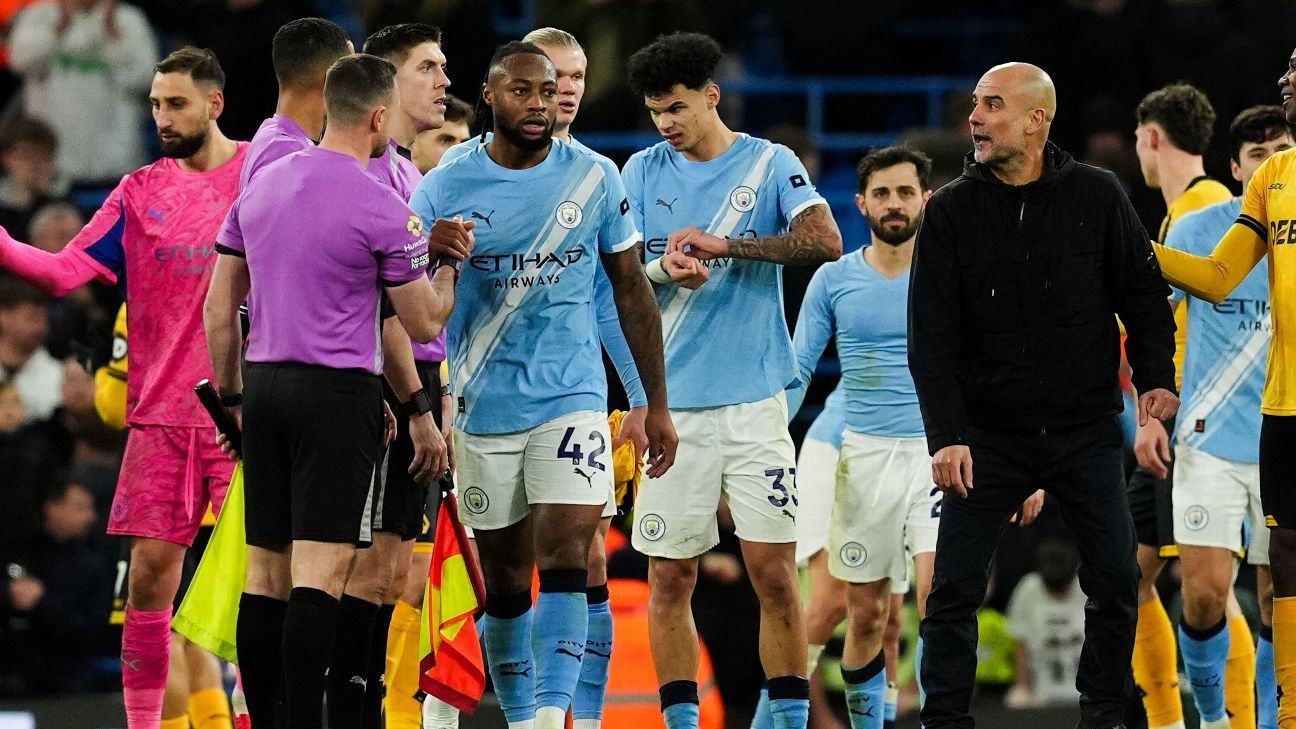
Manchester City manager Pep Guardiola has doubled down on his recent Guardiola referee criticism, insisting it is his responsibility to defend the club's interests.
Manchester City manager Pep Guardiola has once again found himself at the center of a Premier League officiating firestorm. Following a wave of backlash regarding his public comments about debutant official Farai Hallam, the Catalan tactician has refused to retreat. Instead, he has intensified his Guardiola referee criticism, asserting that his vocal dissatisfaction is not merely a reaction to a single game, but a fundamental duty he owes to his players, the supporters, and the institution of Manchester City.
Speaking in a defiant press conference, Guardiola addressed the scrutiny he has faced from the Football Association and various punditry circles. While many expected a more conciliatory tone given the relative inexperience of the official in question, Pep remained steadfast. He argued that the standards of the Premier League demand elite performance from everyone on the pitch, including those in black uniforms. For Guardiola, silence in the face of perceived injustice is not an option when the stakes of the title race are so incredibly high.
The Duty to Protect Manchester City’s Interests
At the heart of the latest Guardiola referee criticism is the manager’s belief that he acts as a shield for his squad. Guardiola emphasized that his primary role is to ensure a fair playing field for a group of athletes who work tirelessly to maintain their position at the pinnacle of world football. When decisions go against his team—especially those he deems inconsistent—he feels a moral obligation to speak out.
"I am here to defend my club," Guardiola told reporters. "If I don't speak up when I see something that isn't right, I am not doing my job. It isn't about one person or one referee; it is about the consistency that this league deserves." This protective stance has become a hallmark of Pep’s tenure in Manchester. While some view it as psychological pressure on officials, Guardiola frames it as a necessary part of the high-pressure environment that defines elite-level soccer. He believes that by highlighting these issues, he is forcing a conversation about the quality of officiating that will ultimately benefit the sport.
Addressing the Farai Hallam Controversy
The specific catalyst for this latest round of Guardiola referee criticism was the performance of Farai Hallam. Critics have argued that Guardiola’s public dismantling of a debutant official was unnecessary and potentially damaging to the recruitment of future referees. However, the City boss rejects the notion that an official's experience level should grant them immunity from professional critique.
In the eyes of the City coaching staff, the errors made during the match were not subjective interpretations but fundamental lapses in game management. Guardiola pointed out that in a league where a single point can determine the difference between a championship and a silver medal, there is no room for a 'learning curve' during live matches. By doubling down on his stance, Pep is signaling to the PGMOL (Professional Game Match Officials Limited) that Manchester City will not accept mediocrity, regardless of who is holding the whistle.
The Strategic Impact of Public Pressure
History suggests that there is often a method to the madness of Guardiola referee criticism. Throughout his career at Barcelona, Bayern Munich, and now City, Pep has used the media as a tool to influence the narrative surrounding his team. By keeping the spotlight on officiating standards, he ensures that referees are acutely aware of the scrutiny they will face when officiating a City match.
This strategy serves two purposes. First, it creates a 'siege mentality' within his own dressing room, bonding the players together against perceived external injustices. Second, it serves as a preemptive strike, ensuring that officials are mindful of their decision-making in future high-stakes fixtures. While the FA may view this as bringing the game into disrepute, Guardiola views it as a calculated tactical maneuver designed to marginalize any potential disadvantage his team might face on the pitch.
Navigating the Fallout and Future Implications
As the Premier League season progresses, the relationship between managers and officials remains under a microscope. The Guardiola referee criticism is part of a broader trend of high-profile managers—including the likes of Mikel Arteta and Jurgen Klopp—becoming increasingly vocal about VAR and on-field decisions. This collective pressure is forcing the league to reconsider how it handles transparency and communication regarding refereeing errors.
For Manchester City, the immediate concern is whether this public stance will result in a touchline ban or significant fines for their manager. However, Guardiola seems unbothered by the prospect of personal sanctions. His focus remains entirely on the pitch and the protection of his players. As long as he feels his team is being treated unfairly, the football world can expect the Guardiola referee criticism to continue. In the relentless pursuit of perfection that defines the Etihad era, every detail matters—and Pep Guardiola will not stay silent if he believes those details are being handled incorrectly.
Stay informed
Follow SportsNow.
Join the reader list for future briefings and important newsroom updates.
Reader conversation