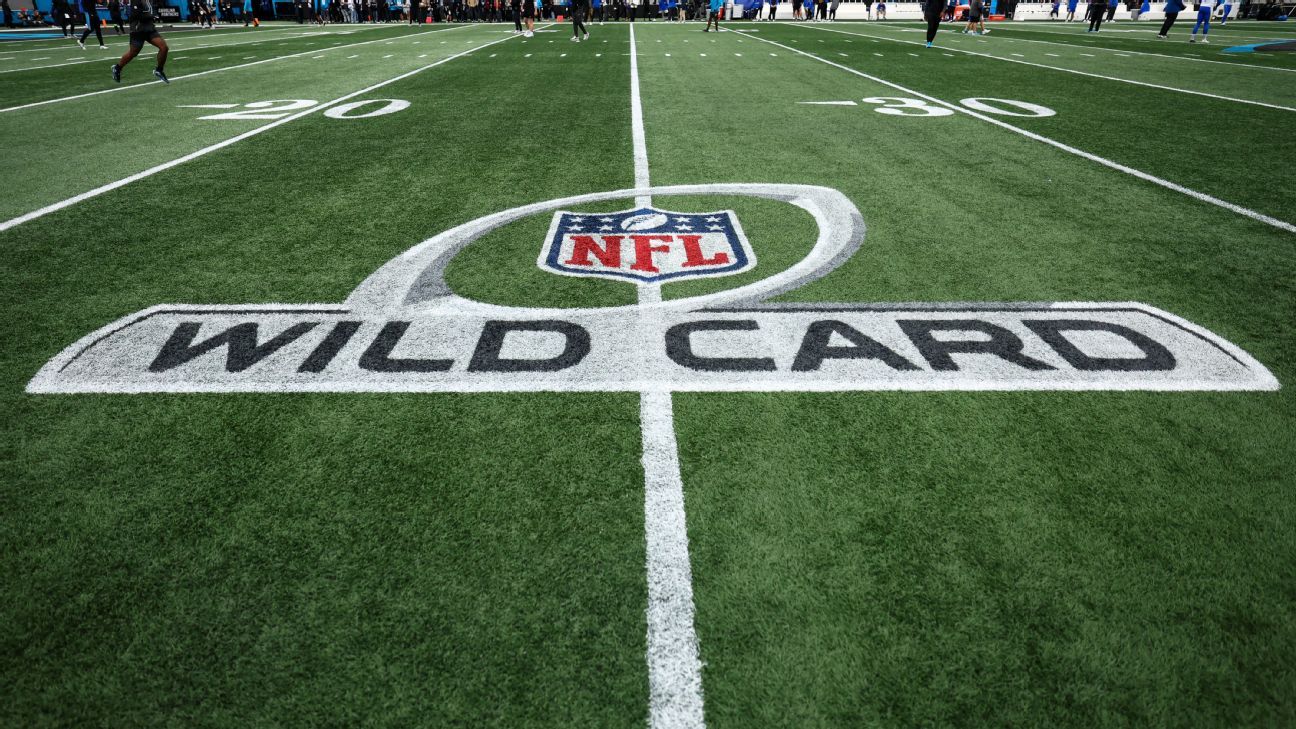
In a playoff atmosphere where every inch usually matters, a significant officiating error regarding a touchback went completely undetected by officials and coaching staffs alike.
Title: The Ghost Touchback: How an Officiating Blunder Slipped Past Everyone in the Rams-Panthers Wild-Card Clash Category: NFL Current Content: In the high-stakes pressure cooker of the NFL playoffs, we are told that details make the difference between a Super Bowl run and a long trip home. However, during last weekend’s Wild-Card showdown between the Los Angeles Rams and the Carolina Panthers, a glaring statistical and procedural error proved that sometimes, even the pros can miss what’s right in front of them. In a bizarre lapse of situational awareness, an incorrect touchback ruling went entirely unchallenged, leaving fans and analysts scratching their heads after the fact. This isn't just about a missed call; it's about a collective blind spot that allowed a fundamental error to permeate the highest levels of professional football.
Moving with the frantic pace of postseason football, the officiating crew mishandled a routine change of possession, failing to spot a ball that should have been marked under vastly different circumstances. The play in question involved a punt that sailed deep into the Panthers' territory. Instead of being downed near the goal line or even recovered for a potential fumble, the ball was inexplicably ruled a touchback, granting the Panthers possession at their own 20-yard line. What makes the blunder truly remarkable isn't just the stripes' failure to blow the whistle correctly; it’s the fact that both sidelines—stacked with highly paid coordinators and eagle-eyed spotters in the booth—let the moment pass without a single protest. It was a collective 'glitch in the matrix' that saw twenty-two players and two coaching staffs simply move on as if nothing was wrong. The Rams, who would have benefited from better field position, seemed just as oblivious as the Panthers, who gained an unwarranted advantage.
While the error didn't ultimately flip the final result of the contest, it raises uncomfortable questions about the efficacy of current officiating oversight in the league's most critical moments. In an era dominated by frame-by-frame replays and high-definition scrutiny, the 'Ghost Touchback' serves as a humbling reminder that human error remains an undefeated opponent. For the Rams and Panthers, this missed call is now a footnote in the box score, a curious anomaly in an otherwise intense playoff game. But for the league, it’s a wake-up call that even the most obvious mistakes can go unnoticed when the lights are at their brightest, prompting a deeper look into the mechanisms designed to prevent such occurrences.
The Anatomy of the Oversight: How the Ghost Touchback Happened
To fully grasp the magnitude of the 'Ghost Touchback,' it's crucial to dissect the moments leading up to and immediately following the call. The play began with a Rams punt from their own 40-yard line. The ball, a spiraling missile, landed inside the Panthers' 5-yard line, taking a high bounce. A Panthers returner, seemingly misjudging the trajectory, allowed the ball to bounce further. Crucially, the ball then appeared to be touched by a Rams player before it crossed the plane of the goal line. According to NFL rules, if a kicking team player touches the ball before it enters the end zone, and the receiving team then gains possession, the ball should be spotted at the point of the touch. If the ball had instead been downed by the Rams player before crossing the goal line, it would have been a muffed punt, potentially leading to a recovery or at least excellent field position for the kicking team.
However, none of this transpired. The officials, perhaps caught up in the speed of the play or distracted by other action, immediately signaled a touchback. There was no discussion, no huddle among the crew, and no apparent review. The chain of events suggests a fundamental misinterpretation or complete oversight of the rulebook in real-time. What's even more perplexing is the lack of challenge from the Rams' sideline. Head Coach Sean McVay, known for his meticulous preparation and aggressive in-game management, typically has a dedicated staff member monitoring every play for potential challenges. Yet, the 'Ghost Touchback' sailed right past them, a testament to the chaotic environment of playoff football where even the most obvious errors can be swallowed by the moment.
Broader Implications for Officiating and Coaching
The 'Ghost Touchback' isn't just an isolated incident; it shines a spotlight on systemic vulnerabilities within NFL officiating and coaching protocols. For officiating, it raises questions about the effectiveness of the current replay system and the communication among the officiating crew. While coaches have a limited number of challenges, certain plays, like scoring plays or turnovers, are automatically reviewed. A touchback, while not a scoring play, is a significant change of possession and field position, arguably warranting a higher level of scrutiny. The fact that this particular touchback, which was clearly erroneous upon later review, did not trigger any form of automatic review or intervention from the booth, is concerning. It suggests that the thresholds for intervention might need to be re-evaluated, especially in high-leverage playoff games.
From a coaching perspective, the incident serves as a stark reminder of the immense pressure and the potential for collective oversight. With dozens of coaches, analysts, and spotters in the booth and on the sidelines, it's astonishing that no one on the Rams' staff flagged the play. This could be attributed to a number of factors: the sheer speed of the game, the focus on the next play, or perhaps even a momentary lapse in concentration from those tasked with identifying such errors. The 'Ghost Touchback' underscores the need for robust, redundant systems within coaching staffs to ensure that every critical play is scrutinized, even when the officials themselves miss it. It forces teams to consider whether their current challenge protocols are truly foolproof or if they, too, are susceptible to the human element that allowed this significant error to pass unnoticed.
In conclusion, while the 'Ghost Touchback' may not have altered the final score, its reverberations extend far beyond a single game. It challenges our assumptions about the infallibility of professional officiating, even with advanced technology, and highlights the incredible difficulty of maintaining perfect situational awareness in the most intense sporting environments. For the NFL, it's a critical learning moment, prompting introspection into how such a glaring procedural misstep could occur and, more importantly, how to prevent future 'Ghost Touchbacks' from haunting the league's biggest stages.
Stay informed
Follow SportsNow.
Join the reader list for future briefings and important newsroom updates.
Reader conversation
Your take on the story
Stay with the story