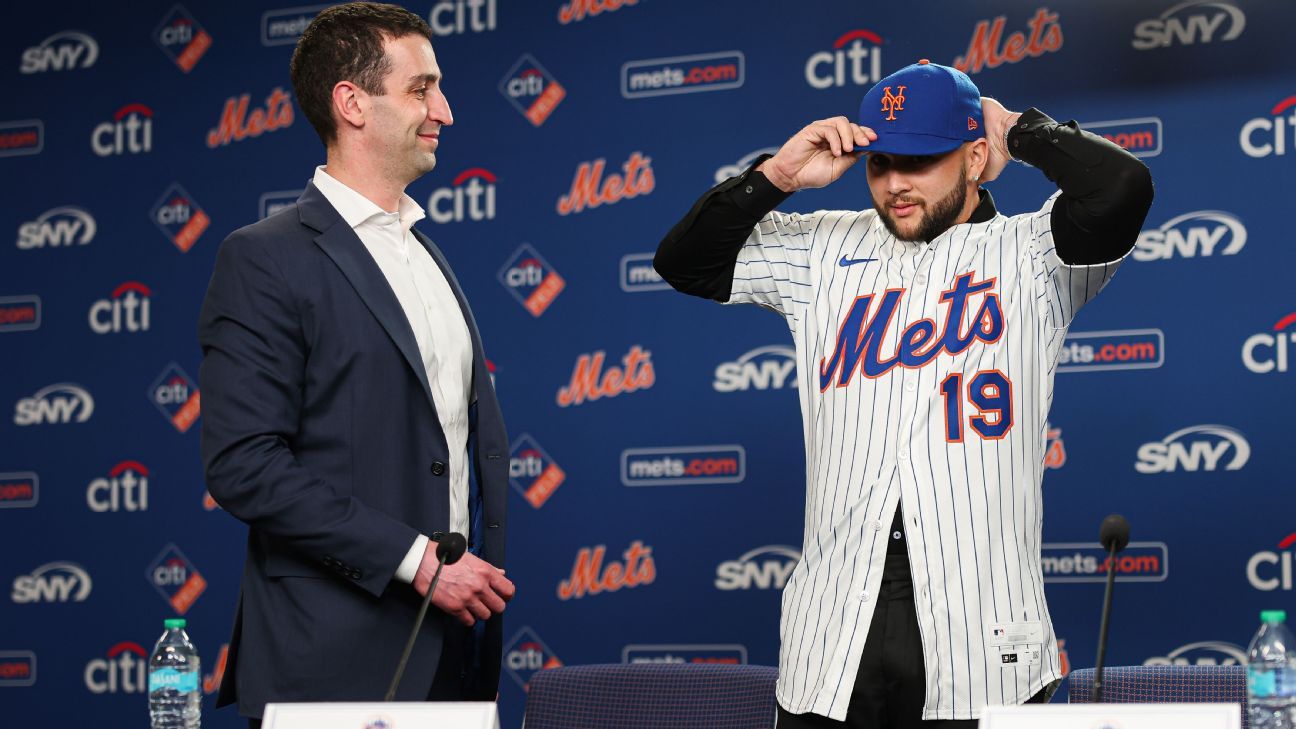
We take an analytical look at the current NY Mets roster to determine if the front office's strategic shifts have positioned the team for a deeper postseason run.
The New York Mets entered the winter with a cloud of uncertainty hanging over Citi Field. After a disappointing 2023 campaign that saw the highest payroll in baseball history fail to reach the postseason, fans were bracing for a total teardown. However, the evolution of the NY Mets roster under new President of Baseball Operations David Stearns has been more of a surgical recalibration than a fire sale. As we approach the heat of the season, the central question remains: Is this team actually better than the one we last saw?
To understand the current state of the NY Mets roster, one must first understand the philosophy of the new front office. Stearns has prioritized depth, defensive flexibility, and pitching upside over the headline-grabbing, record-breaking contracts that defined the previous regime. While the absence of a 'megastar' signing like Yoshinobu Yamamoto might feel like a letdown to some, the aggregate value of the moves made suggests a high-floor team capable of sustained winning.
A Revolving Door in the Starting Rotation
The most significant changes to the NY Mets roster have occurred within the pitching staff. The departures of future Hall of Famers like Justin Verlander and Max Scherzer (traded during the 2023 deadline) left a massive void at the top of the rotation. To fill these gaps, the Mets have pivoted toward 'high-upside' arms on shorter-term commitments.
Luis Severino and Sean Manaea represent the core of this new strategy. Severino, once an ace across town with the Yankees, brings a power arm that—if healthy—provides top-of-the-rotation production at a fraction of the cost. Manaea offers a different look from the left side with a revamped velocity profile. When you add these pieces to a rotation led by Kodai Senga, the NY Mets roster looks younger and more athletic on the mound. While they lack the name recognition of previous years, the statistical projections suggest a more reliable group that won't leave the bullpen taxed by the fourth inning every night.
Defensive Upgrades and Lineup Continuity
Offensively, the NY Mets roster remains anchored by the 'Big Three' of Francisco Lindor, Pete Alonso, and Brandon Nimmo. Keeping this core intact was vital for clubhouse stability. However, the secondary pieces have seen a significant upgrade in terms of run prevention. The addition of Harrison Bader in center field is a game-changer. By slotting Bader in center, Nimmo moves to left field, instantly creating one of the most elite defensive outfields in the National League.
Defense was a quiet Achilles' heel for New York last season. By prioritizing glove-first players like Bader and Joey Wendle, the Mets are betting that improved run prevention will offset any slight dips in offensive production. Furthermore, the development of young stars like Francisco Alvarez and Brett Baty remains the X-factor. If these homegrown talents take the proverbial 'next step,' the NY Mets roster suddenly possesses a blend of veteran leadership and youthful explosion that was missing a year ago.
The Bullpen Facelift
Perhaps the most overlooked aspect of the NY Mets roster construction this year is the bullpen. Beyond the return of the elite Edwin Díaz, the front office has scoured the market for high-leverage arms with unique metrics. The signing of Jorge López and the acquisition of several 'optionable' arms means the Mets can now shuffle their relief corps based on matchups and fatigue—a luxury they did not have during their late-season collapse in 2023.
Díaz remains the heartbeat of the pitching staff. His return from a knee injury suffered during the World Baseball Classic is the single biggest 'addition' to the team. A healthy Díaz transforms the NY Mets roster from a middle-of-the-pack group into a team that can shorten games to seven innings. The confidence he instills in the rest of the relief unit cannot be overstated.
The Verdict: Are They Actually Better?
Determining if the NY Mets roster is 'better' depends on your definition of the word. If 'better' means having more star power, the answer is likely no. But if 'better' means being a more cohesive, well-rounded, and financially flexible unit, then the answer is a resounding yes.
The 2024 Mets are built to survive the grueling 162-game marathon. They have more depth at Triple-A Syracuse than they’ve had in a decade, ensuring that an injury to a starter won't derail the entire season. David Stearns has built a roster that values efficiency and marginal gains. While they may not be the favorites to win the NL East over the powerhouse Braves, the NY Mets roster is now firmly positioned to compete for a Wild Card spot and, more importantly, to remain competitive for years to come. The 'wild' offseason has resulted in a team that is smarter, faster, and much more difficult to play against.
Stay informed
Follow SportsNow.
Join the reader list for future briefings and important newsroom updates.
Reader conversation