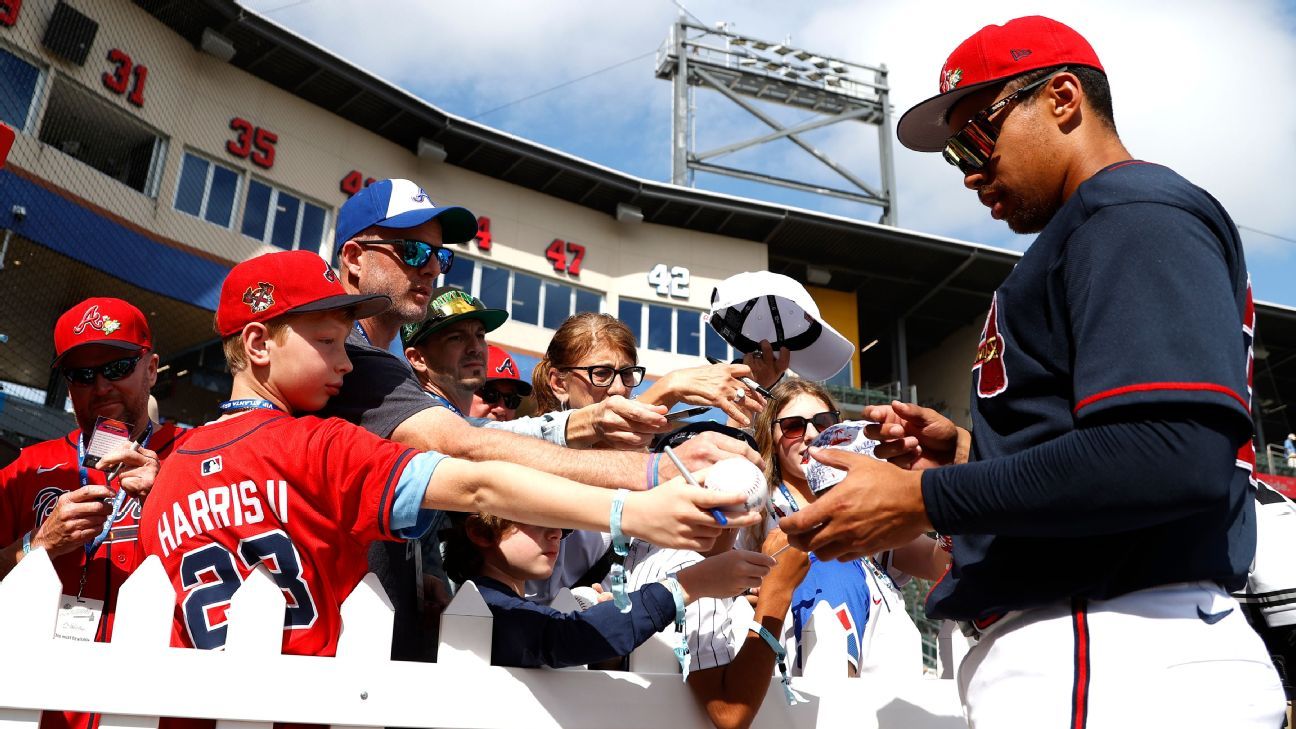
Kansas City Royals shortstop Bobby Witt Jr. and Washington Nationals outfielder James Wood detail the specific coaching tips that fueled their rise to MLB.
The Little League Baseball World Series is currently underway in Williamsport, Pennsylvania, featuring the nation's top youth talent. On Sunday, August 24, 2026, at 7 p.m. ET, the Atlanta Braves and Milwaukee Brewers will compete in the Little League Classic, a featured event broadcast on ESPN. Ahead of this matchup, over 15 current and former major league players detailed the specific guidance that shaped their professional trajectories, ranging from technical hitting approaches to the instruction not to dig holes in the outfield.
Kansas City Royals shortstop Bobby Witt Jr. identified his core principles as working hard, staying humble, and maintaining a focus on constant improvement. Washington Nationals outfielder James Wood noted that his travel ball coach consistently instructed him to hit to the middle of the field. Despite being larger than his peers and possessing natural power, Wood utilized this advice to prove his capabilities as a contact hitter. Meanwhile, St. Louis Cardinals pitcher Riley O'Brien emphasized that while working hard is a cliché, it must be paired with genuine enjoyment to prevent the sport from feeling like a job.
Pitching Perspectives and Mental Discipline
Cincinnati Reds pitcher Brady Singer highlighted the social longevity of the game, noting that childhood teammates often become lifelong friends because youth baseball lacks trade deadlines. Singer advises current players to identify their natural abilities early and avoid trying to be something they are not. Colorado Rockies catcher Hunter Goodman follows his father’s advice to "control what you can control," focusing on individual preparation rather than the unpredictable outcomes inherent in baseball performances.
Cleveland Guardians pitcher Cade Smith advocates for a process-oriented mindset, suggesting that trusting the daily routine over specific results allows a player to compete with freedom. Smith also stresses the importance of academic success, stating that good grades are essential for opening doors to next-level opportunities. Tampa Bay Rays pitcher Nick Martinez operates under his father's directive to play as if someone—whether a scout, coach, or fan—is always watching, a practice he believes earns player respect.
Multi-Sport Participation and Athletic Longevity
Bryan Baker of the Tampa Bay Rays argues against early sports specialization. Having played multiple sports through high school, Baker credits his long-term athleticism and lack of burnout at ages 10 through 12 to the versatility pushed by his father and grandfather. Cleveland Guardians pitcher Foster Griffin offers practical field discipline, telling youth players to pay attention and refrain from digging holes in the outfield grass. Milwaukee Brewers pitcher Kyle Harrison encourages reserved or shy players to ask questions of their teammates to better understand their surroundings.
Matt McLain, second baseman for the Cincinnati Reds, recalls his father teaching him that effort and attitude are the only two controllable factors. McLain expressed concern regarding 10-year-olds using Trackman technology, questioning if the fun is being removed from the game. Chase Burns, also of the Reds, suggests that while scholarships and draft opportunities are future goals, young players should focus on daily improvement and enjoyment rather than the pressure of making the big leagues.
Leadership and Historical Reflections
Minnesota Twins outfielder Byron Buxton maintains a philosophy of being a good teammate regardless of personal performance. Buxton stated that his father taught him that treating people well leads to a career without regrets. Washington Nationals shortstop CJ Abrams warns against hanging one's head after failure, noting that a negative reaction to the game's frequent setbacks leads to poor outcomes. Los Angeles Dodgers pitcher Brock Stewart advises players to cherish their time in travel ball, reflecting on how he once rushed to grow up only to wish he could return to those youth moments.
Philadelphia Phillies interim manager Don Mattingly shared a specific connection with his Little League coach, Pete Studer. During Mattingly's youth, Studer told him every Sunday at church that he wanted tickets once Mattingly reached the major leagues. Years later, after Mattingly joined the New York Yankees, he discovered Studer lived in nearby Yonkers and successfully provided his former coach with tickets to a game. Max Meyer of the Miami Marlins concludes that because the sport involves extreme highs and lows, success is most attainable when a player views the game as fun rather than a profession.
Stay informed
Follow SportsNow.
Join the reader list for future briefings and important newsroom updates.
Reader conversation