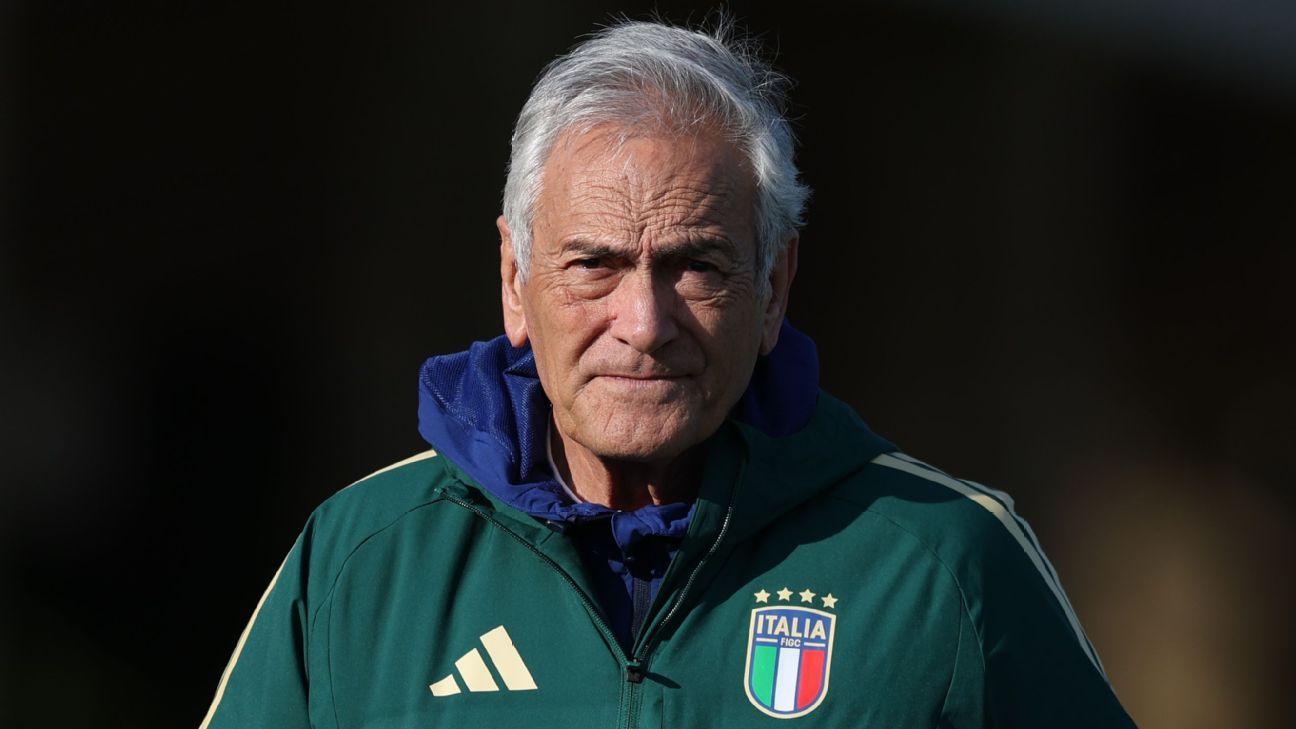
FIGC president Gabriele Gravina resigned on Thursday after Italy lost a qualifying playoff to Bosnia and Herzegovina on penalties.
Italy’s football federation president Gabriele Gravina resigned on Thursday, exactly 48 hours after the national team failed to qualify for a third consecutive World Cup. The Azzurri’s path to the 2026 tournament in North America ended on Tuesday following a penalty shootout defeat against Bosnia and Herzegovina in a qualifying playoff. This latest Gabriele Gravina resignation marks the end of a tenure that began in 2018 when he replaced Carlo Tavecchio, who had also stepped down following a failed qualification campaign for the 2018 tournament.
The fallout from the loss to Bosnia and Herzegovina extended beyond the presidency, as Gianluigi Buffon announced he is stepping down as the national team’s delegation chief. Buffon, the 2006 World Cup-winning goalkeeper and Italy’s record-appearance holder with 176 caps, stated it was only fair to allow his successor the freedom to select their own staff. This leadership vacuum is expected to result in the ouster of Italy coach Gennaro Gattuso. Sports Minister Andrea Abodi had already signaled for a total overhaul of the FIGC on Wednesday, citing the need for new leadership after Gravina oversaw two unsuccessful qualification cycles.
Historical Context of Italy's World Cup Struggles
Italy’s inability to reach the 48-team tournament in North America adds to a decade-long decline in the nation’s global standing. The four-time champions have not participated in a World Cup since 2014, having been eliminated in previous qualifying playoffs by Sweden for the 2018 edition and North Macedonia for 2022. Even when the team did qualify in 2010 and 2014, they failed to advance past the group stage on both occasions. Remarkably, the Azzurri have not contested a World Cup knockout match since the 2006 final, where they defeated France on penalties to claim the title.
Despite the consistent failure to reach the world stage, Gravina’s tenure did include a high point when Italy secured the European Championship trophy in 2021. However, coaches association president Renzo Ulivieri noted that the sport has been in significant trouble since 2006. The current crisis has prompted calls for structural reform from various stakeholders within the Italian game. Players' association president Umberto Calcagno emphasized that rapid changes are necessary, specifically suggesting new regulations to promote the use of more domestic players within Serie A.
FIGC Election and Parliamentary Hearings
To address the leadership void, an election has been scheduled for June 22 to select a new FIGC president. Until then, the federation remains in a state of transition as it seeks to recover from the political pressure that forced Gravina’s departure. Before his final exit, Gravina announced he would attend a hearing in Italy's parliament next Wednesday. This session is intended to discuss the general wellbeing of Italian soccer and the steps required to modernize the federation's infrastructure.
Andrea Abodi’s public demand for a change in leadership served as the primary catalyst for the events on Thursday. He argued that the overhaul must start at the top of the FIGC to rectify the systemic issues that led to three straight tournament absences. The loss to Bosnia and Herzegovina served as the final breaking point for a federation that has struggled to find stability since the 2006 victory in Berlin.
Future Implications for the Azzurri
With the 2026 World Cup now out of reach, the Italian national team faces a prolonged period without competitive global football. The departure of Buffon removes a link to the 2006 championship squad, leaving the delegation chief role vacant alongside the presidency. As the June 22 election approaches, the focus shifts to whether the new leadership can implement the regulations suggested by Umberto Calcagno regarding Serie A player quotas.
The upcoming parliamentary hearing on Wednesday will provide Gravina one final opportunity to address the challenges he faced during his six-year term. While he oversaw the 2021 continental success, his legacy remains tied to the unprecedented streak of World Cup absences. The federation must now navigate the selection of a new coaching staff if Gattuso is indeed removed, as the national team looks toward a future without its most experienced administrative and on-field figures.
Stay informed
Follow SportsNow.
Join the reader list for future briefings and important newsroom updates.
Reader conversation
Your take on the story
Stay with the story