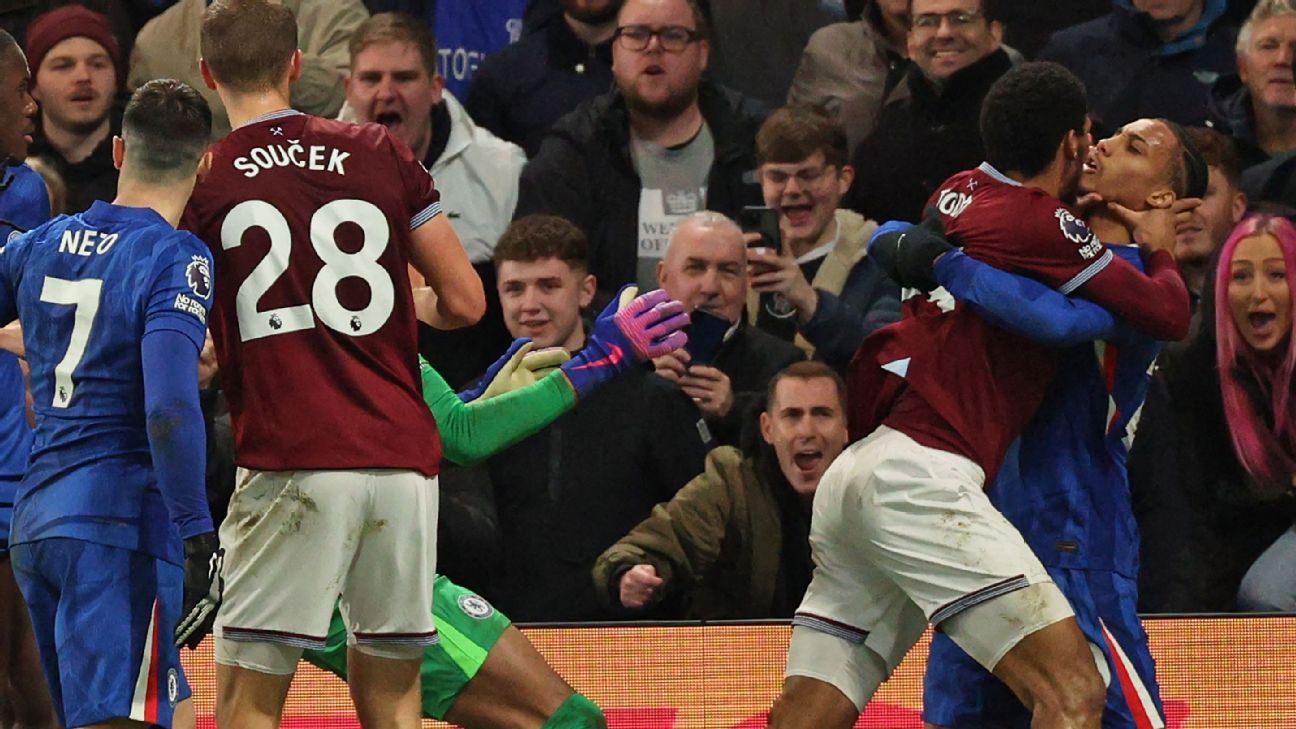
The late-game drama between Chelsea and West Ham showcased the power of the VAR melee review in identifying individual offenses during mass confrontations.
The Premier League is no stranger to high-octane drama, but the recent London derby between Chelsea and West Ham took intensity to a new level. In the dying moments of a match already simmering with tension, a flashpoint ignited a mass confrontation that threatened to overshadow the football itself. This incident provided a fascinating case study into the VAR melee review process, demonstrating how technology can bring order to a situation that looks like total chaos to the naked eye.
When a dozen players are pushing, shoving, and shouting, the referee on the pitch faces an impossible task. They cannot possibly see every stray elbow or provocative gesture. This is where the Video Assistant Referee (VAR) steps in. The VAR melee review is not just about checking for a goal or a penalty; it is a forensic deconstruction of human behavior under pressure, ensuring that the integrity of the game remains intact even when tempers flare.
The Mechanics of a VAR Melee Review
When a mass confrontation breaks out, the VAR team at Stockley Park immediately shifts into a high-intensity monitoring mode. Unlike a standard offside check, which focuses on a single frame and a specific line, a VAR melee review requires the officials to monitor multiple angles simultaneously. They are looking for 'clear and obvious' violent conduct or serious foul play that the on-field referee might have missed while trying to separate the groups.
The process begins with the 'Lead VAR' identifying the primary instigators. While the broadcast might show a wide shot of the scrum, the VAR room is looking at tight crops and slow-motion replays. They categorize actions into three tiers: minor infractions (usually handled with a yellow card by the on-field ref), aggressive behavior, and violent conduct. The latter is the primary focus of the VAR melee review, as it warrants a straight red card. By isolating individual players from the crowd, the technology ensures that no one escapes punishment simply because they were hidden behind a teammate.
Chelsea vs West Ham: A Case Study in Conflict Resolution
The London derby between Chelsea and West Ham was the perfect environment for such a technological intervention. As the clock ticked down and the scoreline remained precarious, a foul in the midfield acted as a catalyst. Within seconds, players from both sides were embroiled in a heated exchange. To the fans in the stadium, it was a blur of blue and claret shirts. To the officials, it was a data set to be analyzed through a VAR melee review.
During this specific incident, the VAR spent several minutes reviewing the footage while the on-field referee managed the players. This 'silent check' is crucial. It allows the game to breathe while the technical team ensures they haven't missed a punch or a headbutt. In this instance, the VAR melee review confirmed that while the optics were poor, the actual physical contact did not cross the threshold into violent conduct. This prevented the referee from making a reactionary decision that could have unfairly altered the outcome of the match or resulted in unnecessary suspensions for future fixtures.
Why the Melee Review is Essential for Modern Football
Some critics argue that VAR slows down the game and kills the emotion of the moment. However, when it comes to mass confrontations, the VAR melee review is an essential deterrent. Before the introduction of this technology, players often felt they could 'get away' with subtle acts of aggression during a scrum. A quick pinch, a stamp on the foot, or a hidden shove were common tactics used to provoke opponents.
With the knowledge that a VAR melee review will examine every second of the footage, players are becoming more calculated. The 'eye in the sky' acts as a psychological referee. Furthermore, it protects the officials. In the past, a referee might have guessed who the primary aggressor was, leading to accusations of bias or incompetence. Now, the referee can rely on objective evidence. If a red card is shown following a VAR melee review, it is backed by multiple camera angles, making it much harder for clubs to appeal the decision successfully.
The Future of Managing On-Field Confrontations
As technology evolves, the VAR melee review process will likely become even faster. We are seeing the integration of AI-assisted tracking that can highlight specific 'points of contact' between players automatically. This would allow the VAR to skip directly to the most relevant footage, reducing the time the game is paused.
In the context of the Chelsea and West Ham match, the efficiency of the review allowed the game to conclude with the focus on the result rather than a post-match disciplinary hearing. The VAR melee review proved that even in the most heated London derbies, there is a system in place to maintain justice. While football will always be a game of passion, the ability to deconstruct a melee ensures that passion doesn't devolve into lawlessness. For fans and players alike, the transparency provided by a thorough VAR melee review is a vital component of the modern Premier League experience.
Stay informed
Follow SportsNow.
Join the reader list for future briefings and important newsroom updates.
Reader conversation
Your take on the story
Stay with the story
Related coverage
Open desk
Manchester City Appeals Guilty Verdict in Premier League Financial Case

Hypothetical Premier League Draft: Hull City Selects Erling Haaland First Overall