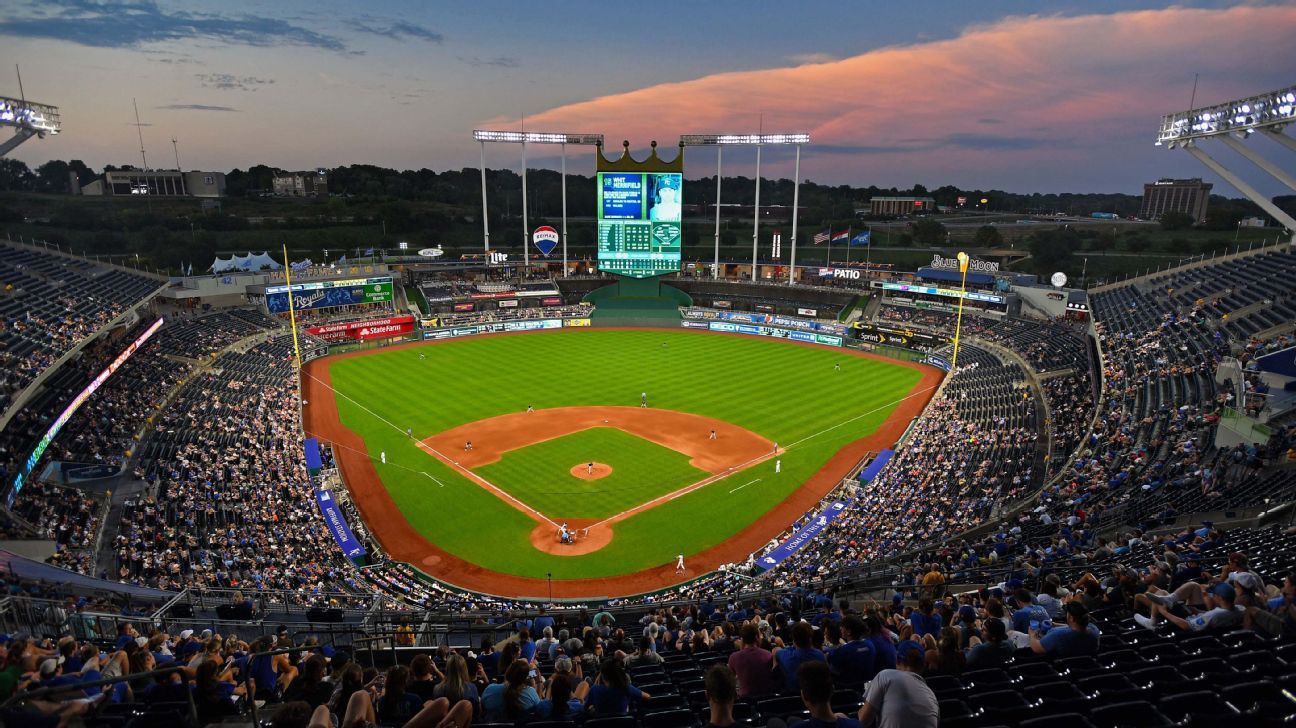
Kansas City Royals owner John Sherman confirmed a heightened sense of urgency regarding the team's future home before Monday's opener against the Minnesota Twins.
Kansas City Royals owner John Sherman addressed the media on Monday prior to the team’s home opener against the Minnesota Twins, emphasizing a growing urgency regarding the Royals stadium lease at Kauffman Stadium. The current agreement for the aging venue at the Truman Sports Complex is scheduled to expire following the 2031 Major League Baseball season. With stadium construction typically requiring a timeline of four to five years, the buffer for a final decision has narrowed to a few months. Sherman indicated that while setting firm deadlines is risky, the pace of negotiations is accelerating to ensure a generational home is secured.
The search for a new venue has spanned the Kansas City metropolitan area, though the club has recently narrowed its focus. While a site in the suburb of Overland Park, Kansas, has been officially eliminated from contention, three primary geographic areas remain under consideration. The Royals are currently evaluating locations in downtown Kansas City, Missouri, as well as sites across the Missouri River in Clay County. Additionally, the team is exploring a potential move across the state line into Kansas City, Kansas. This latter option would align the franchise with the Kansas City Chiefs, who announced in December their intention to construct a $3 billion domed stadium near the Kansas Speedway.
A pivotal moment in the search for a new facility occurred in April 2024 when Jackson County voters overwhelmingly rejected a tax extension intended to fund a downtown ballpark for the Royals and renovations for the Chiefs' Arrowhead Stadium. This electoral defeat dissolved the joint plan between the two franchises, which currently sit only a few hundred yards apart in Jackson County. Since that vote, the Chiefs have identified their future path near the Kansas Speedway through a public-private partnership, leaving the Royals to finalize their own independent arrangements within the next few months. Sherman noted that site control and public financing frameworks are the two most critical elements currently being negotiated.
During the opening weekend of the current season, Sherman observed the Atlanta Braves' operations at Truist Park to study the impact of integrated districts. He noted the high energy levels and economic activity within the restaurants and retail facilities surrounding the Atlanta stadium, comparing the atmosphere to a college game day. The Royals owner expressed interest in a similar "all-you-can-do" development model that features hotels and shops to engage fans before and after games. He specifically highlighted that private financing for such a district becomes significantly easier to secure once the primary stadium site and public contribution components are established.
As the Royals and Chiefs prepare to vacate their current homes, Jackson County executive Phil LeVota has initiated a transition plan for the 400-acre Truman Sports Complex. A newly created task force is scheduled to convene for the first time next month to prevent the county-owned land from sitting idle once the teams depart. This committee has been given a 90-day window to deliver formal recommendations for the future use of the site. Sherman acknowledged the complexity of these multi-jurisdictional processes but maintained that progress is being made toward a resolution that will define the team's location for the next several decades.
The financial architecture of the proposed project hinges on a combination of public investment and private capital. Sherman clarified that the team is not seeking a 100% publicly funded stadium, but rather a partnership that reflects the economic benefits a new district would bring to the region. The 2031 expiration date serves as a hard ceiling for the current residency, making the 2025 calendar year critical for securing legislative or voter approval for any new funding mechanisms. Without a clear path forward by the end of the current fiscal year, the timeline for a 2032 opening becomes increasingly precarious.
In Clay County, officials have previously discussed a sales tax measure that could potentially support a stadium project, though no formal ballot language has been finalized. This northern alternative offers a different demographic reach compared to the downtown Missouri core. Meanwhile, the Kansas City, Kansas, proposal leverages the existing STAR bonds framework, a tool frequently used in the Sunflower State for major tourism and entertainment developments. Each of these three remaining jurisdictions presents a unique set of political hurdles and infrastructure requirements that the Royals' front office must weigh against the 2031 deadline.
Sherman’s recent comments also touched upon the necessity of modernizing the fan experience to compete with other entertainment options in the Midwest. Kauffman Stadium, which opened in 1973, lacks the premium seating configurations and concourse amenities found in newer MLB parks. The owner stressed that the next stadium must be a 365-day destination rather than a facility that remains dark for 284 days a year. By integrating residential units and office spaces into the ballpark footprint, the Royals aim to create a sustainable revenue stream that supports a competitive payroll on the field.
Environmental impact studies and traffic flow assessments are currently underway for the top-tier sites. These technical evaluations are necessary precursors to any formal land acquisition. Sherman noted that the organization is working with urban planners to ensure that any chosen location is accessible via public transit and existing highway networks. The goal is to minimize the displacement of current residents while maximizing the revitalization of underutilized urban or suburban parcels. As the clock ticks toward the end of the decade, the Royals remain committed to a transparent process that involves community stakeholders across the bi-state area.
Stay informed
Follow SportsNow.
Join the reader list for future briefings and important newsroom updates.
Reader conversation