A controversial challenge on Jérémy Doku left fans divided, but the VAR's decision to stick with a yellow card for Diogo Dalot offers a fascinating look into the 'orange card' debate.
Living on the Edge: Why Diogo Dalot Escaped a Red Card in High-Stakes Manchester Derby Clash
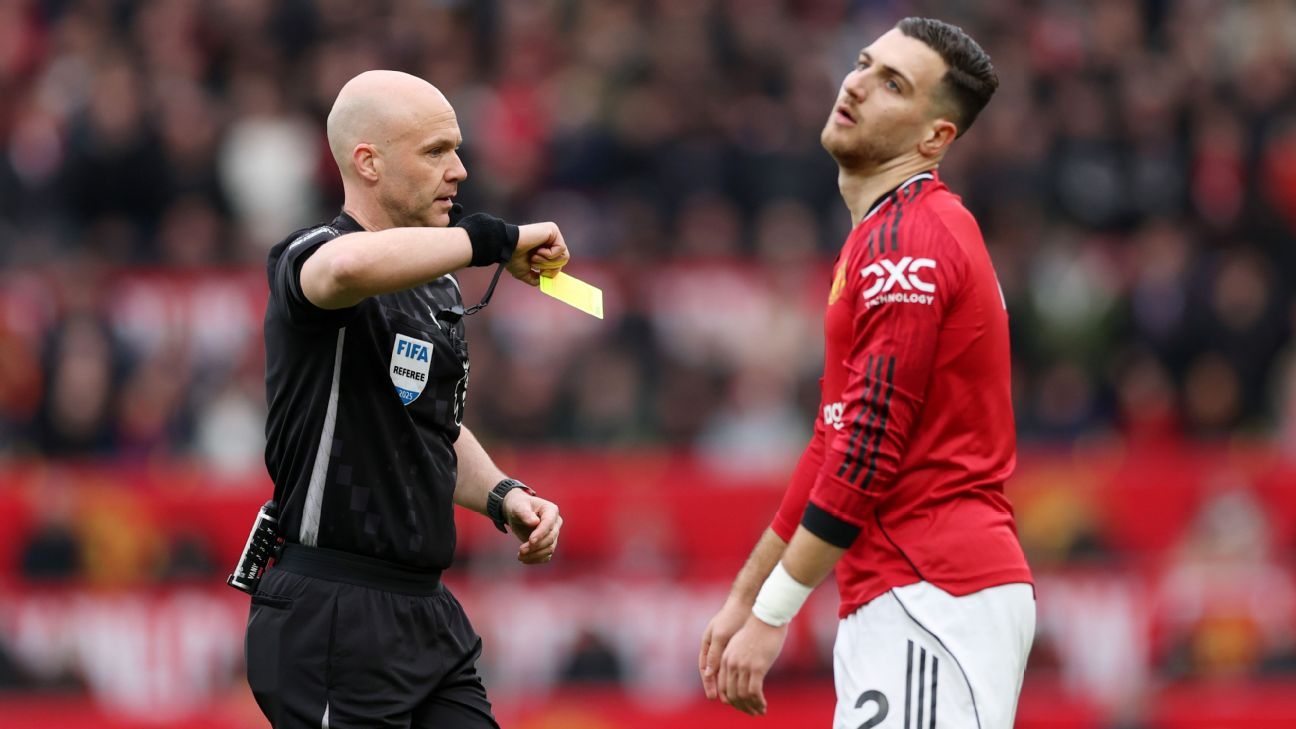
The Manchester Derby is rarely short on fireworks, but a flashpoint involving Diogo Dalot and Jérémy Doku has reignited the perennial debate over where recklessness ends and serious foul play begins. When Dalot’s studs made high contact with Doku’s knee, the collective intake of breath at Old Trafford was audible. Referee Michael Oliver reached for his pocket and produced a yellow card, but for several agonizing moments during the ensuing VAR check, the United faithful feared their defender was headed for an early shower. This pivotal moment, occurring in such a high-stakes encounter, immediately became a talking point, overshadowing much of the on-field action for a period. The potential for a Dalot red card loomed large, threatening to drastically alter the complexion of the match.
Critically, the VAR officials aligned with Oliver’s on-field assessment, deeming the challenge a 'reckless' act rather than one showing 'excessive force.' While the contact was undeniably high, the mitigating factors appeared to be the lack of momentum and the fact that Dalot’s leg wasn't fully extended with a locked knee. In the eyes of the Stockley Park officials, it was a classic 'orange card' scenario—a challenge that sits uncomfortably between two punishments but fails to meet the high threshold required to overturn a referee’s initial subjective call. The nuances of Law 12, specifically regarding "serious foul play," hinge on the use of excessive force or brutality, neither of which VAR ultimately determined was present in Dalot's tackle. The decision highlighted the subjective nature of these calls, even with the aid of technology, and the fine line between a dangerous challenge and one that warrants an outright dismissal.
However, the decision has left pundits and rival supporters questioning the consistency of the officiating. Had Doku’s foot been planted firmly in the turf, the resulting impact could have been catastrophic, often a key metric in 'endangering the safety of an opponent.' By escaping with just a booking, Dalot was given a lifeline that allowed United to remain tactically intact, but the incident serves as another reminder of the razor-thin margins that define modern VAR interventions. The potential for serious injury, even if not realized, often plays a significant role in how such challenges are perceived, and many felt Doku was fortunate to avoid a more severe outcome. This perceived leniency for the Dalot red card incident fueled frustration among Manchester City fans and neutral observers alike, who argued that player safety should always be paramount.
As the dust settles, the consensus remains split. For proponents of the 'game isn't gone' school of thought, it was a firm challenge handled correctly by a referee who wanted to maintain the flow of the match. For others, it was a missed opportunity to crack down on dangerous play. Regardless of which side you land on, Dalot will know he played with fire—and managed to walk away with only a singed reputation rather than a multi-match ban. The psychological impact of such a close call can be significant for a player, serving as a stark reminder of the fine margins in professional football.
The 'Orange Card' Conundrum: A Deeper Dive into VAR's Limitations
The term "orange card" has become an unofficial but widely understood descriptor for challenges that exist in a grey area between a yellow card and a straight red. These are fouls that are clearly more than just a caution but perhaps don't quite meet the stringent criteria for a dismissal, particularly when VAR is involved. The incident involving Dalot and Doku perfectly encapsulated this dilemma. While the contact was high and undoubtedly dangerous, the lack of malicious intent, coupled with the absence of a fully extended leg or excessive follow-through, provided enough ambiguity for VAR to uphold the on-field decision.
This scenario highlights a fundamental limitation of VAR: it's designed to correct "clear and obvious errors," not to re-referee every decision. For a yellow card to be upgraded to a red, the VAR official must be convinced beyond reasonable doubt that the referee's initial judgment was unequivocally wrong. In the case of the potential Dalot red card, the mitigating factors, however slight, were sufficient to prevent that threshold from being met. This often leads to frustration among fans and pundits who, viewing slow-motion replays, might perceive a challenge as more severe than the live-action, split-second decision made by the referee. The debate around these "orange card" moments will likely continue as long as VAR is a part of the game, as the subjective interpretation of intent and danger remains a complex challenge for officials.
Precedent and Consistency: The Unending VAR Debate
The consistency of VAR decisions, or lack thereof, is a constant source of contention in modern football. Every week, similar incidents are judged differently across various leagues and even within the same competition. The decision not to issue a Dalot red card inevitably drew comparisons to previous dismissals for high tackles, some of which appeared less impactful than Dalot's challenge. This perceived inconsistency erodes trust in the system and fuels accusations of bias or incompetence.
For instance, earlier in the season, players have been sent off for similar high contact, even if the speed or force seemed comparable. The context of the game, the reputation of the players involved, and even the stadium atmosphere can subtly influence initial refereeing decisions, which VAR then has to either uphold or overturn. The lack of a definitive, universally applied rubric for "excessive force" or "endangering the safety of an opponent" means that human interpretation will always play a significant role. Until clearer guidelines are established and consistently enforced, every controversial VAR decision, like the one involving Dalot, will continue to spark heated debate and leave fans questioning the fairness and reliability of the technology. The incident serves as a stark reminder that while VAR was introduced to minimize errors, it has, in many ways, amplified the discussions around subjective judgment calls in the beautiful game.
Stay informed
Follow SportsNow.
Join the reader list for future briefings and important newsroom updates.
Reader conversation
Your take on the story
Stay with the story
Related coverage
Open desk
Michael Carrick Dismisses Concerns Over Manchester United Future Before Leeds Clash

Mourinho Backs Vinícius Júnior to Rediscover Form Following Villarreal Red Card