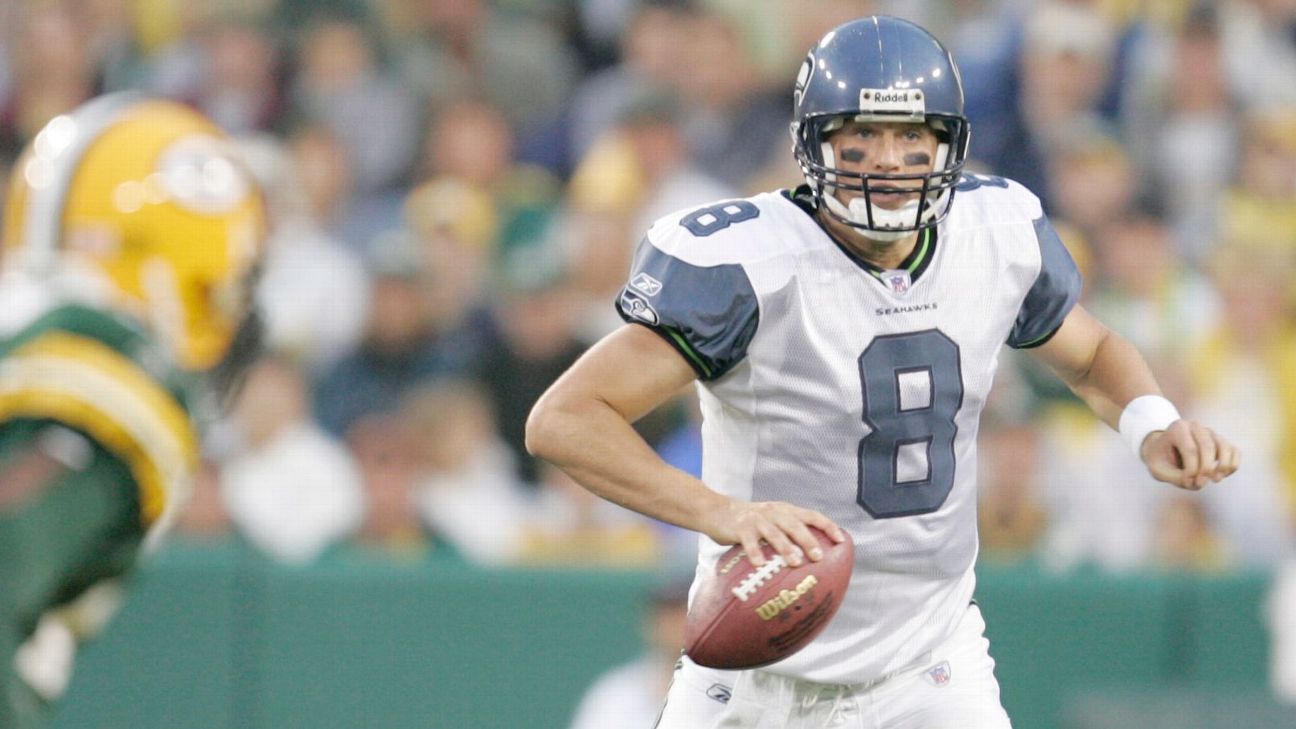
Three-time Pro Bowler Matt Hasselbeck completed two days of brain scans and mental tests to assist researchers in identifying CTE markers in living patients.
Former NFL quarterback Matt Hasselbeck recently completed a two-day battery of brain scans and cognitive tests at Boston University to assist researchers in the effort to diagnose chronic traumatic encephalopathy (CTE) in living patients. The 50-year-old veteran of 17 NFL seasons, four years at Boston College, and a childhood of contact sports underwent an MRI, a PET scan involving a radioactive tracer, and mental exercises such as reciting the alphabet backward and counting down from 100 by sevens. This research, supported by a $15 million grant from the National Institutes of Health awarded in 2025, aims to distinguish the specific proteins of CTE from those of Alzheimer’s disease.
Hasselbeck, who played for the Green Bay Packers, Seattle Seahawks, Tennessee Titans, and Indianapolis Colts between 1998 and 2015, reported having at least three concussions before entering college. These injuries occurred during football, basketball, and ice skating. While he acknowledges additional concussions during his professional and collegiate career, the exact number remains unknown due to a historical locker room culture that discouraged reporting head trauma. The three-time Pro Bowl selection has also committed to donating his brain for research following his death, joining a list of over 100 former NFL players diagnosed with the degenerative disease, including Hall of Famers Junior Seau and Ken Stabler.
Clinical Testing and Research Methodology
Michael Alosco, the co-director of clinical research at the Boston University CTE Center, is leading the study which currently operates across sites in Massachusetts, Arizona, Florida, Texas, and California. The research requires two specific demographics: former professional or college football players and individuals diagnosed with Alzheimer’s who have no history of repetitive head impacts. Nicholas Ashton, the principal investigator at the Phoenix site, noted that approximately 10 patients have participated at the Arizona location so far. Because CTE symptoms—including memory loss, depression, and violent mood swings—often mimic other illnesses, current diagnoses are largely based on guesswork until an autopsy can be performed.
Bryan Savage, a 56-year-old former linebacker from Division III Union College, also traveled to Boston to participate in the study. Unlike Hasselbeck, Savage has been diagnosed with depression and ADHD in recent years and sought to determine if these conditions were linked to his football career. Although his scans appeared normal for his age, Savage has also pledged to donate his brain to the project. Researchers are specifically looking for biomarkers that differentiate CTE from Alzheimer’s, as previous diagnostic methods used for the latter have proven ineffective for the former.
Evolution of Player Safety and Reporting
During his tenure as an ESPN analyst from 2016 to 2023 and his time as a player, Hasselbeck observed a significant shift in how the league handles head injuries. He noted that early in his career, players were expected to claim they were "good" immediately after hits, whereas by the mid-2010s, honesty regarding symptoms became more prevalent. Hasselbeck attributed this change to his work with the NFLPA and the league to implement safety protocols. He expressed a desire to support former teammates who played special teams or defense, noting that while he felt relatively unscathed in middle adulthood, many of his peers have not been as fortunate.
Alosco emphasized that the current study is a critical step in bridging the gap between CTE and Alzheimer’s research, the latter of which is more advanced due to decades of data collection from living subjects. The ultimate goal of the multi-site study is to expand to hundreds of participants to establish a reliable diagnostic marker. Once a method for identifying the disease in living patients is perfected, Alosco believes the medical community can transition into starting treatment trials for those suffering from the cognitive and behavioral effects of repetitive head trauma.
Stay informed
Follow SportsNow.
Join the reader list for future briefings and important newsroom updates.
Reader conversation