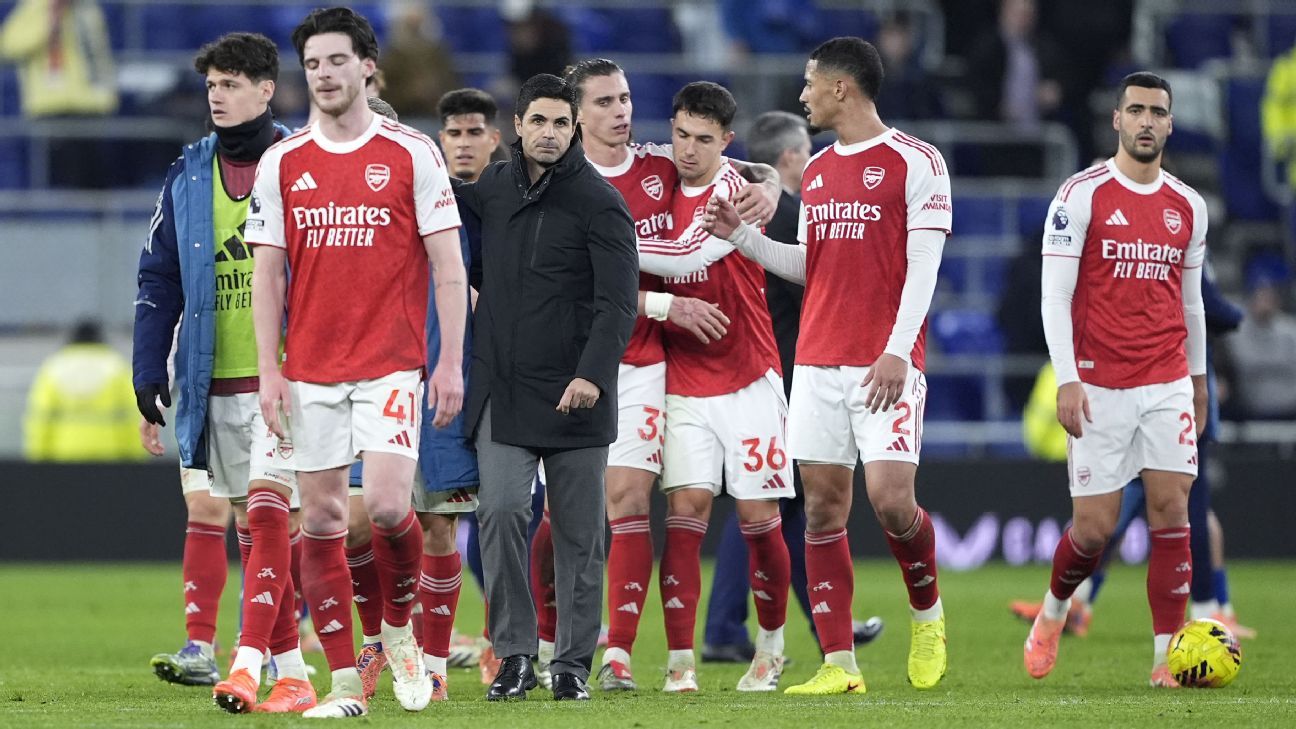
Arsenal manager Mikel Arteta is making a public plea to officials to increase Premier League squad sizes to protect player welfare and tactical flexibility.
Arsenal manager Mikel Arteta has sparked a significant debate across the English top flight by publicly calling for an increase in Premier League squad sizes starting from the 2024/25 season. The Spaniard, who has guided the Gunners into consecutive title charges, believes the current limitations on matchday rosters are outdated and fail to account for the physical toll of the modern game. Arteta’s comments come at a time when the fixture calendar is becoming increasingly congested, leaving managers with difficult decisions regarding player rotation and injury management.
Speaking ahead of Arsenal’s upcoming fixtures, Arteta admitted he is practically “begging” the league to reconsider the current rules. As it stands, Premier League clubs are permitted to name 20 players in a matchday squad, consisting of the starting XI and nine substitutes. While five substitutions are now allowed during a game, Arteta argues that the pool of available talent on the bench needs to be deeper to ensure teams can navigate the grueling demands of domestic and European competitions.
The Logic Behind Increasing Premier League Squad Sizes
Arteta’s primary argument for expanding Premier League squad sizes centers on player welfare. With the introduction of the new Champions League format and the expansion of the FIFA Club World Cup, elite players are facing more minutes on the pitch than ever before. By allowing more players to be named in the matchday squad, managers would have greater flexibility to manage workloads and integrate younger talents without sacrificing tactical options.
"We are begging for that," Arteta stated during a recent press conference. "The level of the league is so high, and the physical demands are so extreme. When you look at the number of injuries occurring across all clubs, it’s clear that we need more tools to protect the athletes." Arteta pointed out that other major European leagues and international tournaments have already experimented with larger benches, often allowing up to 23 or 26 players to be dressed for a match. He believes the Premier League, often cited as the most intense league in the world, should be leading the way in this evolution.
Tactical Flexibility and Youth Development
Beyond the physical aspect, the push for larger Premier League squad sizes has significant tactical implications. For a manager like Arteta, who thrives on tactical versatility, having more options on the bench allows for more specific game-state adjustments. Whether it is bringing on a specialized defensive unit to see out a win or introducing a creative spark against a low block, the current limit of nine substitutes can sometimes feel restrictive when injuries hit the first-team core.
Furthermore, increasing the roster size would provide a clearer pathway for academy graduates. Currently, young players often miss out on matchday experiences because managers must prioritize senior backup options. If Premier League squad sizes were expanded to 22 or 23 players, it would allow managers to include one or two promising youngsters in every matchday environment, exposing them to the pressures of the top flight without the immediate necessity of them playing 90 minutes. This could prove vital for the long-term health of the English national team and the sustainability of club recruitment models.
Addressing the Competitive Balance Concerns
Critics of the proposal to increase Premier League squad sizes often argue that it would unfairly benefit the "Big Six" clubs. The logic suggests that wealthier teams with deeper pockets can afford to stack their benches with high-quality internationals, further widening the gap between the top and bottom of the table. If a team like Manchester City or Arsenal can carry 25 elite players, smaller clubs with tighter budgets may struggle to keep pace.
However, Arteta and his supporters argue that the current system actually punishes smaller squads more severely. When a mid-table club suffers three or four key injuries, their matchday bench often becomes depleted of any real quality, making it impossible to compete. By expanding the allowed Premier League squad sizes, every team—regardless of their budget—gains the ability to carry more specialized cover, potentially leveling the playing field during the injury-heavy winter months.
The Road Ahead for Premier League Rule Changes
For Arteta’s wish to become a reality, a formal proposal would need to be put forward at the Premier League’s annual general meeting. Such a change requires a majority vote from the 20 member clubs. While there is no guarantee of a consensus, the momentum appears to be shifting. Several other high-profile managers, including Jurgen Klopp and Pep Guardiola, have previously voiced similar concerns regarding the sustainability of the current schedule.
As the 2024/25 season approaches, the pressure on the Premier League to adapt is mounting. Whether it is through expanding Premier League squad sizes or implementing more frequent mid-season breaks, the consensus among coaching staffs is clear: the status quo is no longer sustainable. For Arsenal and Mikel Arteta, the hope is that the league will listen to those on the front lines before the physical toll on the players reaches a breaking point.
Stay informed
Follow SportsNow.
Join the reader list for future briefings and important newsroom updates.
Reader conversation
Your take on the story
Stay with the story
Related coverage
Open desk
Manchester City Appeals Guilty Verdict in Premier League Financial Case
Hypothetical Premier League Draft: Hull City Selects Erling Haaland First Overall