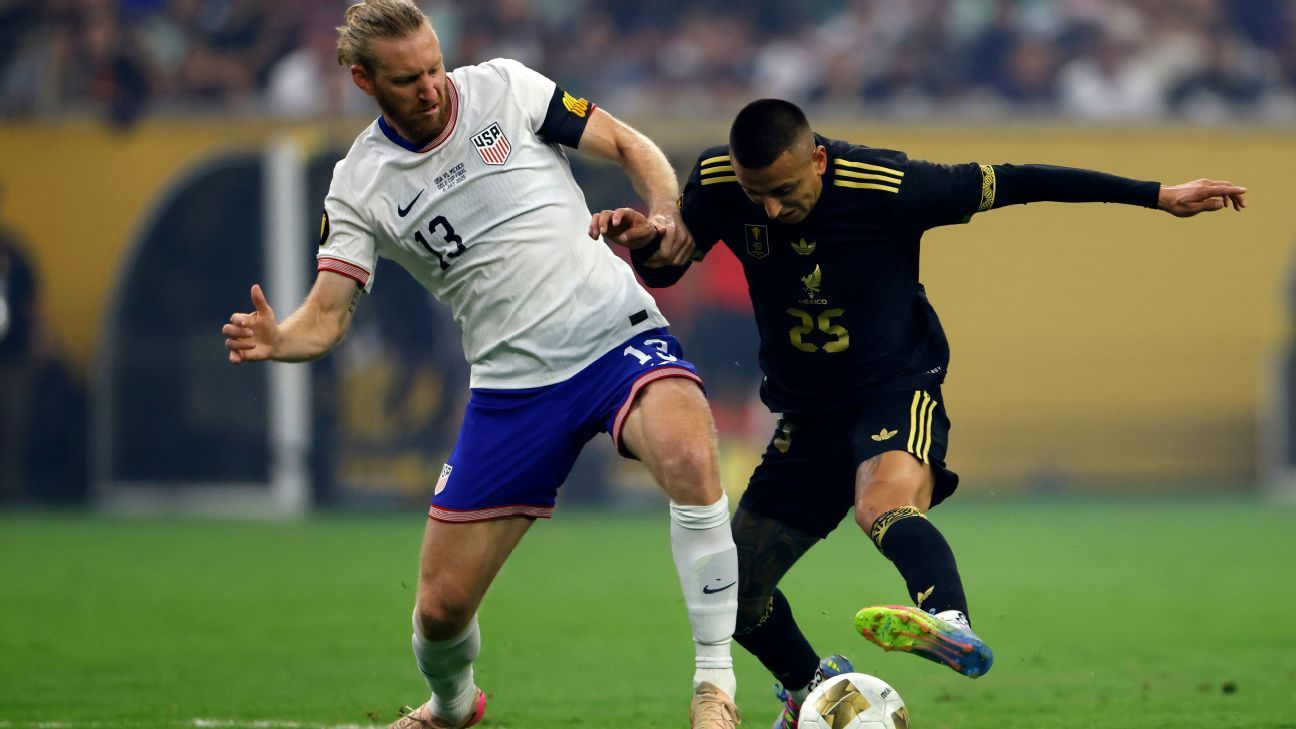
Concacaf has officially confirmed the 2030 World Cup qualifying format, revealing that six nations will earn direct entry to the prestigious centennial tournament.
The landscape of international soccer is shifting once again as FIFA prepares for a historic celebration of the beautiful game. Concacaf has officially confirmed that 2030 World Cup qualifying will provide a massive opportunity for North American, Central American, and Caribbean nations, with six automatic qualifying spots guaranteed for the region. This decision marks a significant era for the USMNT and their neighbors as they navigate a path toward the centennial tournament, which is set to be hosted across three continents.
Following the expanded 48-team format debuting in 2026, the 2030 World Cup qualifying cycle will be the first time teams in this region face a traditional qualification process under the new scale without the luxury of automatic host bids. While the 2026 tournament sees the United States, Mexico, and Canada qualify automatically as hosts, the 2030 cycle will force these giants back into the heat of competitive regional play, raising the stakes for every matchday.
The Breakdown of Concacaf’s Seven Potential Slots
The most significant takeaway from the recent announcement is the sheer volume of representation Concacaf could have on the world stage. Beyond the six direct 2030 World Cup qualifying berths, a seventh spot remains a distinct possibility. One additional nation from the region will advance to an intercontinental playoff, where they will face off against a representative from another confederation for a final ticket to the tournament.
This expansion reflects FIFA’s broader strategy to increase global participation and provide more pathways for emerging soccer nations. For mid-tier Concacaf teams like Panama, Jamaica, and Costa Rica, the new 2030 World Cup qualifying structure offers a more realistic dream of reaching the final stage. The safety net of six spots ensures that the traditional powerhouses are less likely to miss out due to a single bad result, but it also increases the pressure on smaller nations to capitalize on this unprecedented access.
USMNT and the Return to Competitive Qualifying
For the United States Men’s National Team (USMNT), the 2030 World Cup qualifying cycle represents a return to the grind of the 'Octagonal' or whatever new format Concacaf chooses to implement. After bypassing the qualification process for 2026, the American squad will need to prove their dominance in the region once again. The 2030 tournament itself is unique, featuring opening matches in Uruguay, Argentina, and Paraguay to honor the 100-year anniversary of the first World Cup, before moving primarily to Spain, Portugal, and Morocco.
Navigating 2030 World Cup qualifying will require depth and tactical consistency. As the U.S. continues to develop talent in European top flights and MLS, the qualification matches will serve as a vital testing ground. The intensity of playing in hostile environments across Central America is something that cannot be replicated in friendlies. Coaches and fans alike will be watching closely to see how the squad handles the pressure of securing one of those six coveted direct spots.
Impact on the Concacaf Competitive Balance
The allocation of six spots fundamentally changes the math for the entire region. In previous decades, Concacaf usually fought for three direct spots and a playoff position. By doubling the direct entries, FIFA has essentially ensured that any slip-up by a major nation is no longer a total disaster, while simultaneously creating a 'gold rush' for the nations that have historically sat on the bubble.
We are likely to see a more aggressive approach from Caribbean nations, who have invested heavily in scouting dual-national players. With 2030 World Cup qualifying offering so many paths to the big stage, the investment in national team programs across the region is expected to skyrocket. Countries like Curacao, Haiti, and Trinidad & Tobago will view 2030 as their best chance in a generation to return to—or debut on—the world’s biggest sporting stage.
Looking Ahead to the Centennial Celebration
The 2030 World Cup is not just another tournament; it is a celebration of a century of soccer history. Because the tournament is spread across Spain, Portugal, Morocco, and South America, the logistical demands on qualifying teams will be immense. However, before teams can worry about travel schedules between Madrid and Montevideo, they must first survive the gauntlet of 2030 World Cup qualifying within their own confederations.
Concacaf’s confirmation of the six-plus-one slot allocation sets the stage for a thrilling four-year cycle. As the 2026 tournament concludes on North American soil, the focus will immediately shift to these new qualifying rules. Fans can expect a high-stakes environment where every goal matters, as the region looks to send its strongest-ever contingent to the centennial celebration. Whether you are a fan of the USMNT, El Tri, or an underdog looking to make history, the road to 2030 is now officially mapped out, and the competition promises to be more inclusive and intense than ever before.
Stay informed
Follow SportsNow.
Join the reader list for future briefings and important newsroom updates.
Reader conversation
Your take on the story
Stay with the story