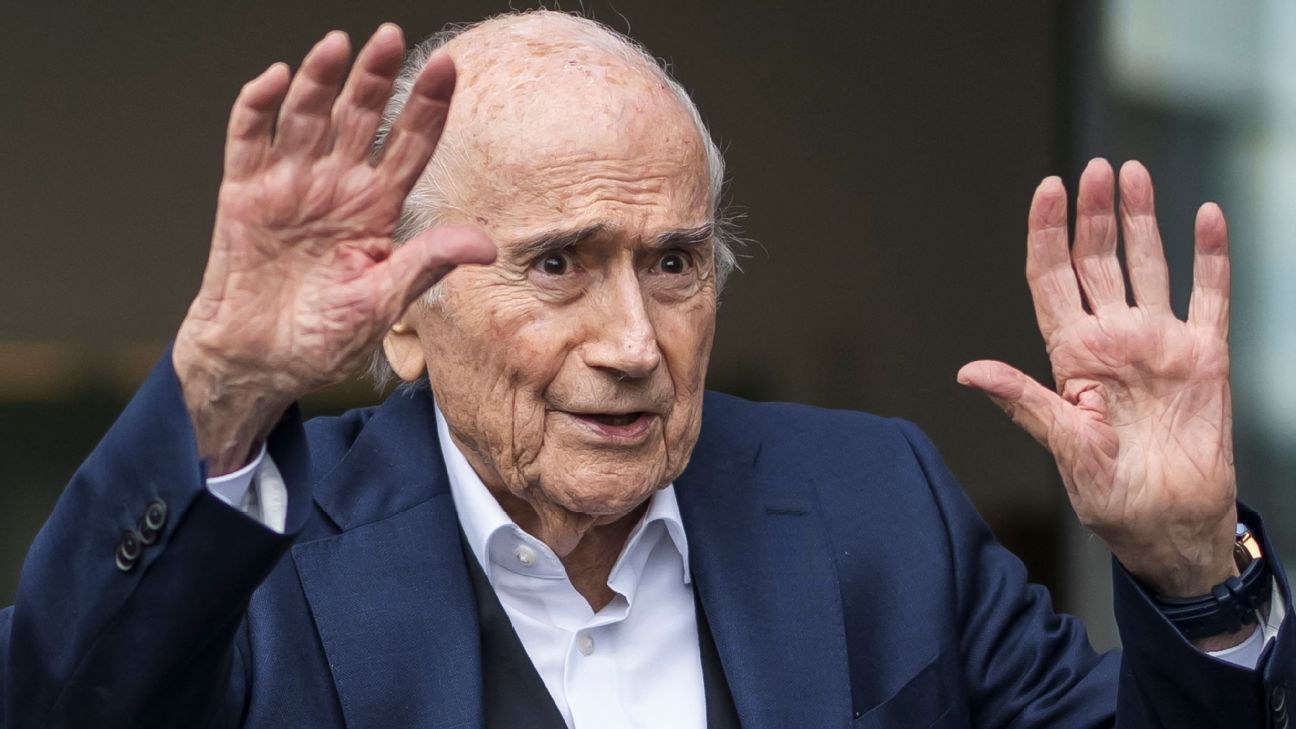
Sepp Blatter World Cup boycott comments have sent shockwaves through the soccer world as the former FIFA president backs calls to avoid the upcoming tournament.
The landscape of international soccer is no stranger to political friction, but the latest comments from former FIFA president Sepp Blatter have ignited a fresh firestorm. In a move that has surprised many in the sporting community, the disgraced former head of football’s global governing body has publicly endorsed a Sepp Blatter World Cup boycott movement. Blatter’s support for fans staying away from the tournament, which is slated to be hosted in the United States, stems from his vocal disapproval of the current American administration’s policies both domestically and on the international stage.
Blatter, who led FIFA for 17 years before being ousted amid a massive corruption scandal in 2015, remains a polarizing figure. However, his influence and ability to command headlines remain intact. By backing a boycott of the world’s most prestigious sporting event, Blatter is tapping into a growing sentiment of unease regarding the intersection of sports and global politics. This development marks a significant shift in his usual stance of keeping 'politics out of football,' a mantra he often repeated during his tenure.
The Motivation Behind the Sepp Blatter World Cup Boycott
To understand why a Sepp Blatter World Cup boycott is being discussed, one must look at the specific criticisms leveled at the United States government. Blatter pointed toward the conduct of President Donald Trump and his administration as the primary catalyst for his support of a fan-led protest. According to Blatter, the political climate created by the U.S. leadership makes it difficult for the tournament to serve as a unifying global force, which is the traditional mission of the FIFA World Cup.
Blatter’s comments suggest that the hosting rights—which were awarded to the 'United' bid of the USA, Canada, and Mexico—might be overshadowed by diplomatic tensions. He argued that if fans feel that the host nation does not represent the values of inclusivity and international cooperation, they have a right to exercise their power through absence. This rhetoric is particularly striking coming from a man who oversaw the awarding of World Cups to Russia and Qatar, both of which faced significant human rights criticisms and boycott calls of their own.
Historical Context of World Cup Protests
This is not the first time the soccer world has faced the prospect of a stay-away movement, but the Sepp Blatter World Cup boycott endorsement adds a layer of irony to the situation. Throughout the history of the tournament, various nations and activist groups have threatened to skip the event due to political disagreements. From the 1978 World Cup in Argentina during a military dictatorship to the 2022 event in Qatar, the tournament has always been a lightning rod for social commentary.
What makes this instance unique is the involvement of a former FIFA president in actively encouraging fans to avoid the games. Usually, FIFA officials—past and present—work tirelessly to promote ticket sales and television viewership. Blatter’s decision to break rank suggests a deep-seated resentment toward the current direction of the organization and perhaps a personal vendetta against the American judicial system, which was instrumental in the investigation that led to his downfall and the arrest of several high-ranking FIFA officials.
Impact on the United 2026 Organizing Committee
The organizers of the North American tournament now face a public relations challenge. While a Sepp Blatter World Cup boycott may not realistically result in empty stadiums—given the immense popularity of soccer in the U.S., Mexico, and Canada—it does create a narrative of controversy that sponsors and stakeholders prefer to avoid. The 'United' bid was built on the premise of unity and a record-breaking financial return, and any talk of a boycott threatens to dampen the celebratory atmosphere of the build-up.
Industry analysts suggest that the actual impact on ticket sales will likely be minimal, as the demand for World Cup matches historically far exceeds supply. However, the symbolic weight of Blatter’s words cannot be ignored. It provides a platform for critics of the U.S. administration to voice their concerns through the lens of sport. For FIFA’s current leadership under Gianni Infantino, these comments are likely seen as an unwelcome distraction from their efforts to modernize the game and distance the organization from the 'Blatter era.'
The Future of Sports and Political Activism
As we move closer to the tournament, the conversation surrounding the Sepp Blatter World Cup boycott highlights a broader trend: the era of the 'neutral' athlete and the 'apolitical' sporting event is over. Fans are increasingly looking at the ethics of host nations and the behavior of world leaders when deciding where to spend their money and support.
Whether or not fans actually stay away in large numbers, the dialogue has shifted. Blatter, despite his controversial legacy, has managed to insert himself back into the center of the global soccer conversation. As the U.S. prepares to welcome the world, it must now navigate not just the logistical hurdles of a 48-team tournament, but also the complex geopolitical landscape that Sepp Blatter has so publicly highlighted. The world will be watching to see if this boycott gains traction or if the love of the beautiful game will ultimately transcend the political fray.
Stay informed
Follow SportsNow.
Join the reader list for future briefings and important newsroom updates.
Reader conversation
Your take on the story
Stay with the story