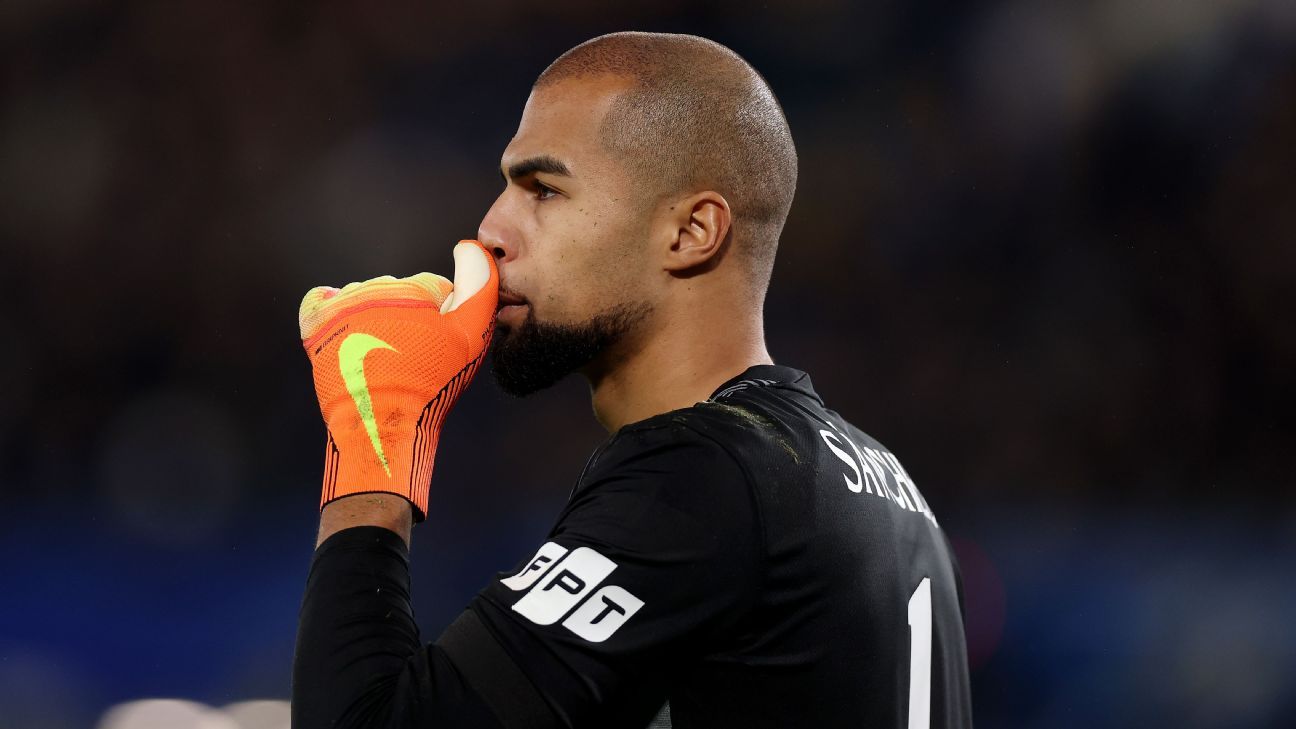
Chelsea coach Liam Rosenior has made a public plea for supporters to direct their frustration toward him rather than Robert Sánchez following the goalkeeper's costly errors in the Carabao Cup semifinal.
Title: Shielding the Keeper: Liam Rosenior Shoulders the Burden for Sanchez’s Stamford Bridge Slips Category: SOCCER Current Content: The bright lights of a Carabao Cup semifinal often expose the thinnest of margins, and for Chelsea, those margins evaporated during a chaotic first-leg defeat to Arsenal. In the wake of a 3-2 loss at Stamford Bridge, the post-match post-mortem has centered largely on goalkeeper Robert Sánchez, whose two high-profile distribution errors gifted the Gunners the advantage. However, rather than letting his No. 1 twist in the wind, Chelsea’s Liam Rosenior stepped into the firing line with a defiant message for the Blues faithful: “Blame me, not him.”
Rosenior’s stance is a calculated masterclass in player protection. By demanding the ball be played out from the back, Chelsea have adopted a high-risk, high-reward philosophy that places immense pressure on the goalkeeper’s footwork and decision-making. Against a relentless Arsenal press, that philosophy buckled. Yet, Rosenior refused to scapegoat the Spaniard, insisting that the mistakes were a structural byproduct of the tactical instructions handed down from the touchline rather than a simple lapse in individual talent. This unequivocal support from the manager is crucial, especially for a player like Sánchez who is still finding his feet in a new, demanding environment. Rosenior defends Sánchez with a conviction that speaks volumes about his leadership.
“I am the one asking Robert to play that way,” Rosenior explained to reporters, his tone a mix of frustration with the result and fierce loyalty to his squad. He underscored that the modern game demands a goalkeeper who doubles as a playmaker, and with that evolution comes the inevitable risk of catastrophic error. By taking the heat, Rosenior is clearly attempting to preserve Sánchez’s confidence ahead of a daunting second leg at the Emirates, where the atmosphere will be even more unforgiving. The pressure on goalkeepers in possession-based systems is immense, and Rosenior understands that isolating Sánchez would only exacerbate the problem. His public declaration serves as a shield, absorbing the immediate criticism and allowing his player to focus on improvement rather than dwelling on past mistakes. The message is clear: Rosenior defends Sánchez, and by extension, his tactical vision.
Despite the silver lining of a spirited three-goal contest, the reality for Chelsea is a steep uphill climb. To overturn a deficit against an Arsenal side that looks increasingly inevitable, the Blues will need to find a balance between their stylistic ambitions and defensive pragmatism. Whether the Stamford Bridge crowd heeds Rosenior’s call for patience remains to be seen, but the coach has made one thing clear: if this ship goes down, he is prepared to go down with the captain’s orders. This commitment to his players and his philosophy, even in the face of adversity, defines Rosenior's leadership.
The Evolution of the Goalkeeper and the Inherent Risks
The role of the goalkeeper in modern football has undergone a radical transformation over the past decade. No longer is the primary expectation simply to stop shots and command the penalty area. Today, the goalkeeper is often the first attacker, an integral part of the build-up play, and a crucial component in dictating the tempo of the game. This evolution, championed by managers like Pep Guardiola and Jürgen Klopp, demands exceptional footwork, vision, and composure under pressure. Robert Sánchez, like many contemporary shot-stoppers, has been coached to embrace this proactive role. He is expected to receive the ball from defenders, assess passing lanes, and execute precise passes to bypass an opponent's press, often with attackers closing him down rapidly.
However, with this expanded role comes an inherent increase in risk. A misplaced pass from a midfielder in the center circle might lead to a counter-attack, but a similar error from a goalkeeper deep in their own box almost invariably results in a goal. The margin for error is razor-thin, and the consequences are magnified. Rosenior's tactical approach, which emphasizes playing out from the back, deliberately places Sánchez in these high-pressure situations. While the rewards of successfully breaking a press can be significant – creating numerical advantages further up the pitch – the cost of failure is equally high. Rosenior defends Sánchez not just as an individual, but as a player operating within a system that inherently carries these risks. He acknowledges that these errors are not simply individual failings but a potential consequence of the very strategy designed to give Chelsea an edge.
Psychological Impact and Managerial Support
The psychological toll of high-profile errors on a goalkeeper can be immense. Unlike outfield players who might make several mistakes during a game that go unnoticed, a goalkeeper's blunders are often glaring and directly lead to goals, etching themselves into the memories of fans and pundits alike. The immediate aftermath of such errors can shatter confidence, leading to tentative decision-making and a reluctance to engage in the very actions that are demanded by the tactical system. This is precisely why Rosenior's public backing of Sánchez is so vital. By taking personal responsibility, Rosenior effectively deflects the immediate torrent of criticism away from his player, creating a buffer zone for Sánchez to process the events and rebuild his mental fortitude.
This act of solidarity sends a powerful message not only to Sánchez but to the entire squad. It demonstrates that the manager trusts his players, even when mistakes occur, and that he is willing to stand by them through difficult periods. Such unwavering support can be a cornerstone of team cohesion and resilience. In the high-stakes environment of professional football, where careers can be defined by moments of brilliance or despair, a manager who publicly defends his player can be the difference between a temporary dip in form and a prolonged crisis of confidence. Rosenior defends Sánchez with the understanding that a goalkeeper's mental state is as crucial as their physical abilities, especially heading into a crucial second leg where every decision will be scrutinized.
Looking Ahead: Balancing Ambition and Pragmatism
The second leg at the Emirates presents a fascinating tactical conundrum for Chelsea. On one hand, Rosenior has clearly articulated his commitment to playing out from the back, a philosophy he believes is fundamental to Chelsea's long-term success. To abandon it entirely would be to undermine his own vision and potentially signal a lack of faith in his players. On the other hand, the 3-2 deficit means Chelsea must score at least two goals without reply to have any chance of progressing, while simultaneously containing a potent Arsenal attack. Continuing with an overly ambitious, high-risk approach, especially with Sánchez potentially still feeling the pressure, could lead to further costly errors.
The challenge for Rosenior will be to find a pragmatic balance. This might involve subtle adjustments to the build-up play, perhaps encouraging quicker distribution or utilizing different passing angles to bypass Arsenal's press more effectively. It could also mean empowering other defenders to take on more responsibility in the initial phases of possession, thereby reducing the direct pressure on Sánchez. The manager's unwavering support, as demonstrated by how Rosenior defends Sánchez, will undoubtedly be a factor in how the team approaches the return fixture. Ultimately, Chelsea's ability to navigate this tightrope walk between their stylistic ambitions and the immediate need for a result will determine their Carabao Cup fate. The second leg will be a true test of Rosenior's tactical flexibility and his players' ability to perform under immense pressure, all while remembering the manager's steadfast belief in their approach.
Stay informed
Follow SportsNow.
Join the reader list for future briefings and important newsroom updates.
Reader conversation