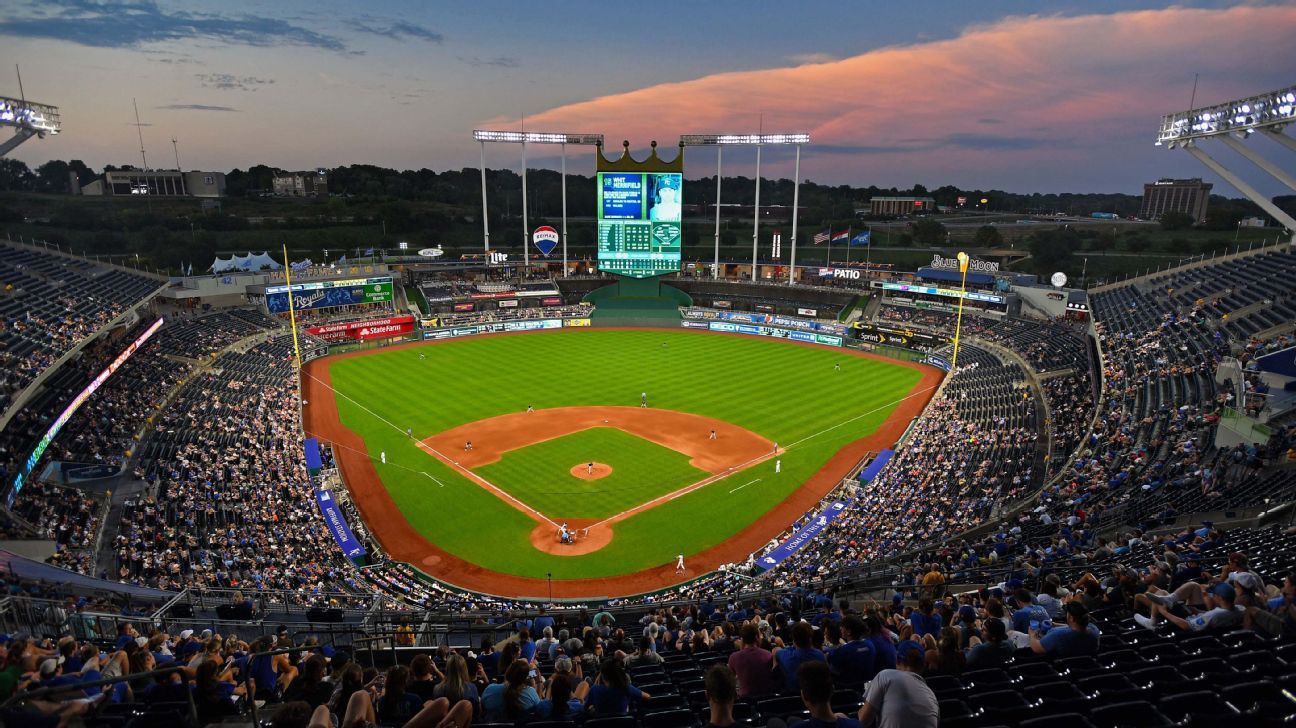
In a seismic shift for one of baseball's most spacious venues, the Kansas City Royals are reportedly moving their outfield fences in by 10 feet to boost offensive production.
Title: Shrinking 'The K': Royals Set to Transform Kauffman Stadium into a Hitter’s Haven Category: MLB Current Content: For decades, Kauffman Stadium has been known as a graveyard for deep fly balls, a cavernous landscape where home runs go to die in the gaps. Its expansive outfield, particularly in the power alleys and to straightaway center, has historically suppressed offensive numbers, making it a challenging venue for even the most potent sluggers. That reputation is about to change dramatically. According to league sources close to the organization, the Kansas City Royals are prepared to fundamentally alter the geometry of their home turf, moving the majority of the outfield wall inward by a significant 10 feet ahead of the 2025 Major League Baseball season. This represents one of the most substantial ballpark dimension changes in recent memory for an established MLB venue.
This isn't just a minor renovation or a cosmetic update; it is a profound philosophical pivot for a franchise that has historically built its identity around speed, defense, and pitching. For generations, the Royals have prided themselves on manufacturing runs, playing small ball, and excelling in the vast expanses of 'The K.' By shrinking the dimensions of 'The K' through these extensive Kauffman Stadium changes, the Royals are signaling a clear and unequivocal desire to keep pace with the modern, power-heavy era of Major League Baseball. The move is expected to transform what were once routine fly outs to the warning track into legitimate long balls, drastically shifting the park factor for a stadium that has long ranked near the bottom of the league in home run frequency and overall offensive production. This strategic alteration aims to inject more excitement and higher-scoring games into the fan experience.
The decision to implement these significant Kauffman Stadium changes comes at a pivotal time for the club’s rising stars and its long-term competitive strategy. Young core players like the electrifying shortstop Bobby Witt Jr. and the promising first baseman Vinnie Pasquantino have already shown they can drive the ball with considerable authority and backspin, but they’ve often been victimized by the stadium’s deep alleys and the sheer distance required to clear the fence. Bringing the fences in should directly amplify their power numbers, providing a more accurate reflection of their true slugging potential. Furthermore, this adjustment could potentially make Kansas City a much more attractive destination for free-agent sluggers and power hitters who previously feared the 'Kauffman tax' on their statistical output, a phenomenon where players' home run totals would often dip considerably after signing with the Royals.
Of course, a change this significant is inherently a double-edged sword, presenting both substantial benefits and notable challenges. While the Royals' bats are undoubtedly expected to benefit from the reduced distances, their pitching staff—particularly a rotation that has historically been built on inducing fly-ball outs and relying on the spacious outfield to turn them into outs—will have a much thinner margin for error. Pitches that once died harmlessly in the glove of an outfielder will now carry over the fence, demanding more precision and ground-ball inducing tendencies from the pitching staff. The legendary center field fountains, a beloved and iconic feature of Kauffman Stadium, will remain a picturesque backdrop, but the sanctuary they provide to pitchers is about to get a lot smaller. As the bulldozers prepare to move the padding and reconstruct the outfield walls, the message from the front office is clear and unmistakable: the era of the grind-it-out small ball in Kansas City is making room for some serious fireworks and a more power-centric brand of baseball.
Strategic Implications for Player Development and Roster Construction
The impending Kauffman Stadium changes will have profound implications beyond just the immediate impact on games; they will fundamentally reshape the Royals' approach to player development and future roster construction. For years, the organization has prioritized athletic, contact-oriented hitters and speedy outfielders who could cover ground in 'The K's' vast expanses. With the fences coming in, the emphasis may shift towards players with higher power potential, even if it comes with a slight trade-off in contact rate or pure foot speed. This could lead to a re-evaluation of prospects in the farm system, potentially elevating those with raw power over those who fit the traditional Royals mold.
Furthermore, the altered dimensions will necessitate a different strategy in the free-agent market and trade discussions. The Royals might now actively pursue power bats that were previously deemed unsuitable due to the park's characteristics. Conversely, they may need to re-evaluate their pitching targets, perhaps favoring ground-ball specialists or pitchers with higher strikeout rates who are less susceptible to the long ball. The front office will be tasked with finding pitchers who can thrive in a more hitter-friendly environment, which could mean a greater investment in elite bullpen arms to shorten games or a focus on developing starters with diverse arsenals. These Kauffman Stadium changes aren't just about moving fences; they're about recalibrating the entire organizational philosophy to align with a new competitive landscape.
The Fan Experience and League-Wide Trends
Beyond the on-field strategy, these significant Kauffman Stadium changes are also designed to enhance the fan experience and align the Royals with broader league-wide trends. In an era where offensive fireworks and home runs are major draws, a more hitter-friendly park promises more exciting, higher-scoring games. This could lead to increased attendance and greater engagement from the fanbase, who have often watched their team struggle to score runs at home. The anticipation of more dramatic swings and potential walk-off blasts will undoubtedly add a new layer of excitement to every game at 'The K.'
This move also reflects a growing trend across Major League Baseball where teams are increasingly optimizing their home parks to suit their roster strengths or to simply boost offensive output. While some parks have expanded dimensions, the prevailing trend has been to bring fences in, often in conjunction with new stadium builds or significant renovations. The Royals, by undertaking these Kauffman Stadium changes, are not just adapting to the modern game; they are actively shaping their future identity to be more competitive and entertaining in a power-driven league. The transformation of 'The K' will be a fascinating case study in how a franchise can strategically alter its physical environment to influence its on-field performance and overall brand appeal. The 2025 season will undoubtedly mark the beginning of a new, more explosive chapter in Kauffman Stadium's storied history.
Stay informed
Follow SportsNow.
Join the reader list for future briefings and important newsroom updates.
Reader conversation