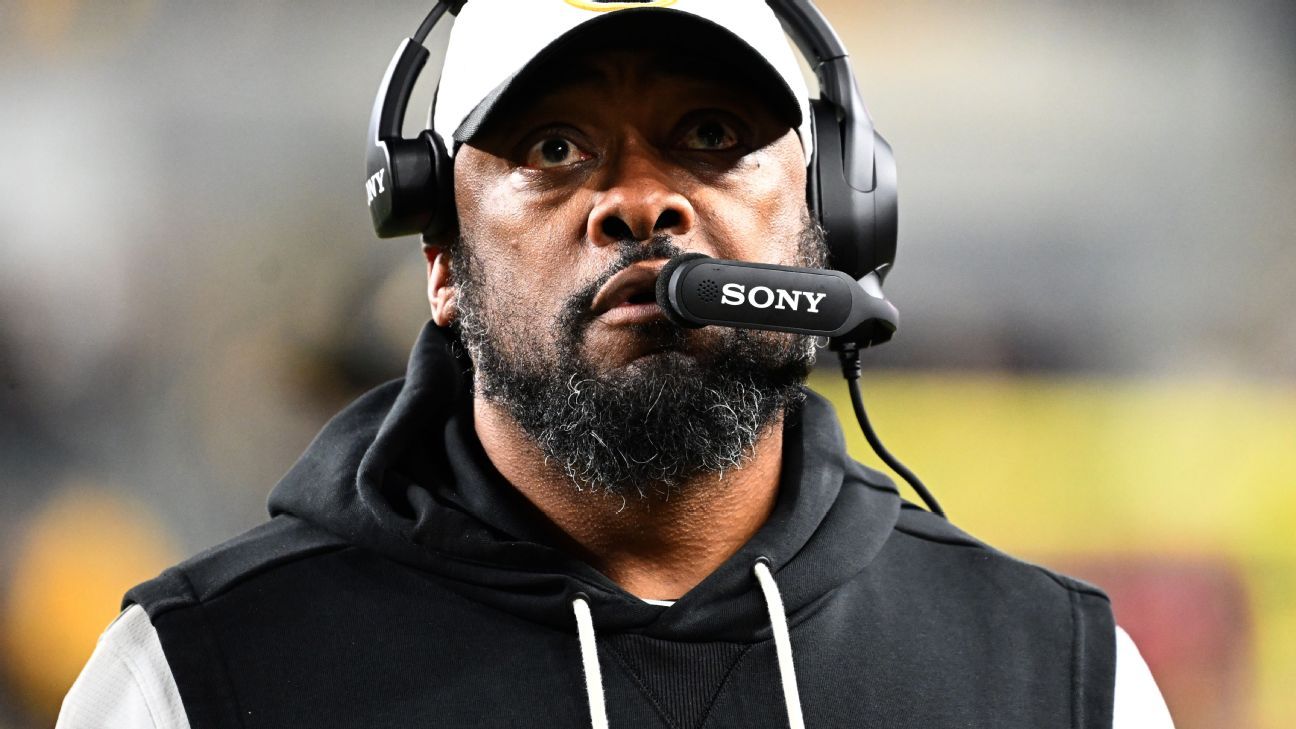
Amidst a demoralizing 30-6 wild-card exit in Houston, the chorus of discontent reached a fever pitch as Pittsburgh fans called for the end of Mike Tomlin's historic tenure.
Title: Steel City Stagnation: Is the Mike Tomlin Era Finally Reaching its Breaking Point? Category: NFL Current Content: For nearly two decades, stability has been the hallmark of the Pittsburgh Steelers, a franchise that prides itself on patience while the rest of the league operates in a cycle of fire-and-hire. This unwavering commitment to continuity has long been a source of pride for the Steelers, setting them apart in a league notorious for its short coaching tenures. However, that legendary resolve was tested on a brutal Monday evening as a frigid reality set in at NRG Stadium. During a lopsided 30-6 shellacking at the hands of the Houston Texans, the traveling 'Steel City' faithful did the unthinkable: they turned on their leader. The rhythmic, angry chants of "Fire Tomlin" echoed through the rafters, signaling a massive disconnect between the front office’s philosophy and a fanbase starving for postseason relevance. This wasn't merely a smattering of disgruntled fans; it was a vocal, unified expression of frustration that cut through the usual stoicism of Steelers Nation.
The optics were undeniably grim. This wasn't just another loss; it was a systematic dismantling that marked Pittsburgh’s fifth consecutive playoff defeat by double digits. Each of these recent postseason exits has been characterized by a similar pattern of being outmatched and outplayed, a stark contrast to the team's historical reputation. Once a team feared for its 'Steel Curtain' defense and physical identity, the Steelers appeared listless and uninspired against a young Texans squad led by a rookie quarterback and first-year head coach. The energy, the aggression, the fundamental soundness that once defined Pittsburgh football seemed absent. For a franchise that defines success by Lombardi Trophies – having hoisted the Super Bowl trophy six times, more than any other NFL team – a seventh straight postseason exit feels less like a temporary slump and more like a permanent loss of direction. The defensive prowess that long defined the Mike Tomlin era was nowhere to be found, replaced by a defensive unit that looked perpetually a step behind, struggling with basic assignments and failing to generate consistent pressure.
Mike Tomlin remains one of the most respected figures in coaching circles, boasting a remarkable regular-season record that has never fallen below .500. This unparalleled consistency is often cited as a testament to his leadership and ability to motivate his players. Yet, the narrative in Pittsburgh is shifting dramatically from 'at least we're competitive' to 'we are stuck in mediocrity.' The standard, as Tomlin often says, is the standard—a mantra that once inspired confidence but now rings hollow for many. When that standard results in being outscored by three touchdowns on the biggest stage, with the team appearing unprepared and outmaneuvered, the seat begins to warm considerably. Critics argue that while Tomlin consistently keeps the team's floor high, ensuring they are rarely truly terrible, he has struggled to raise the ceiling in the post-Ben Roethlisberger era, leaving the team in a perpetual state of 'good but not great.' This inability to translate regular-season success into deep playoff runs has become the central point of contention in the ongoing debate about the future of the Mike Tomlin era.
The Fading Glory of a Dynasty
The Pittsburgh Steelers are not just any NFL franchise; they are an institution built on a foundation of hard-nosed football, iconic players, and a relentless pursuit of championships. The team's history is steeped in Super Bowl victories and a culture of winning. For a significant portion of the Mike Tomlin era, particularly during the prime years of Ben Roethlisberger, the Steelers were perennial contenders, known for their clutch performances and ability to overcome adversity. However, the recent string of playoff failures, characterized by one-sided defeats, has chipped away at this formidable reputation. The identity of the team seems to be in flux, struggling to find a consistent offensive rhythm and, more surprisingly, a dominant defensive presence. The 'Steel Curtain' moniker feels increasingly like a historical reference rather than a descriptor of the current unit. This erosion of their traditional identity is perhaps the most concerning aspect for the fanbase, who remember a time when Pittsburgh football meant physical dominance and an unyielding will to win. The current iteration, despite its winning record, often lacks that intangible fire that defined previous Steelers teams, leading many to question if the Mike Tomlin era can recapture its former glory.
The Quarterback Conundrum and Offensive Woes
A significant factor contributing to the Steelers' current stagnation, and a key challenge for the Mike Tomlin era, is the ongoing struggle at the quarterback position since Ben Roethlisberger's retirement. The team has cycled through several options, each with their own limitations, failing to find a consistent, high-level performer who can elevate the offense. This lack of stability under center has had a ripple effect, hindering the development of offensive playmakers and limiting the creativity of the offensive scheme. While Tomlin is a defensive-minded coach, the inability to cultivate or acquire an elite quarterback has placed immense pressure on the defense to be near-perfect, a standard that is increasingly difficult to meet in today's high-powered NFL. The offensive coordinator carousel, with multiple changes in recent years, further underscores the team's struggle to find an identity and consistent production on that side of the ball. Without a definitive answer at quarterback and a more dynamic offensive philosophy, the Steelers appear destined to remain in the 'good but not great' tier, regardless of the defensive talent they assemble. The future of the Mike Tomlin era hinges significantly on solving this critical offensive puzzle.
As the Steelers head into a long offseason, the organization faces a philosophical crossroads. Do they double down on the stability that has made them an NFL anomaly, trusting in the long-term vision of the Rooney family and the consistent, albeit un-championship-like, performance of the Mike Tomlin era? Or do they listen to the growing roar of a frustrated fanbase demanded a fresh start, a new voice, and a different approach to team building? If Monday's performance in Houston was an audition for the future, the reviews from the gallery were scathing. In a city where winning isn't just an expectation but a requirement, where Super Bowl trophies are the ultimate measure of success, Mike Tomlin’s legendary 'no losing seasons' streak is no longer enough to insulate him from the heat of a disgruntled kingdom. The question is no longer if the pressure is on, but how the Steelers organization will respond to the undeniable cracks showing in the foundation of the Mike Tomlin era.
Stay informed
Follow SportsNow.
Join the reader list for future briefings and important newsroom updates.
Reader conversation