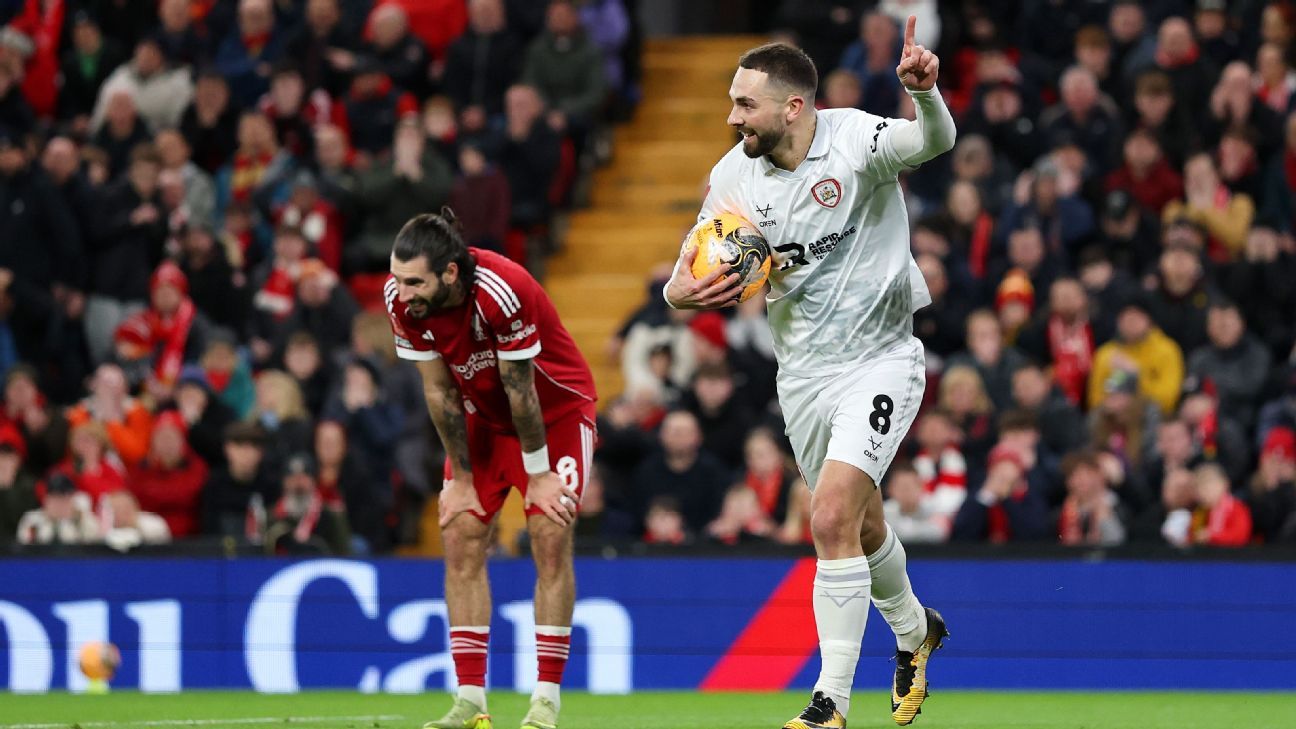
Barnsley head coach Conor Hourihane has hit out at Liverpool star Dominik Szoboszlai, labeling the midfielder's audacious backheel during a 4-1 friendly defeat as a lack of professional respect.
Style or Substance? Barnsley Boss Fumes Over Szoboszlai’s ‘Disrespectful’ Flourish
Football has always straddled the fine line between entertainment and etiquette, but Barnsley head coach Conor Hourihane believes Dominik Szoboszlai crossed it during Liverpool’s comprehensive 4-1 victory this week. While the scoreline told the story of a Premier League giant asserting its dominance, it was a moment of technical flair—or perceived arrogance—from the Hungarian captain that left the visiting dugout simmering with frustration. The incident, though fleeting, has sparked a broader conversation about sportsmanship, confidence, and the unwritten rules of the beautiful game, particularly when top-tier teams face those from lower divisions.
Midway through the contest, Szoboszlai attempted a high-risk backheel inside his own penalty area, a maneuver usually reserved for the playground or a late-game highlight reel when the result is beyond doubt. This wasn't a moment of desperate defending; rather, it appeared to be a deliberate, almost casual, piece of skill executed under minimal pressure. For Hourihane, a man who built his career on grit, tireless effort, and professional standards in the English Football League, the move was less about dazzling skill and more about a conspicuous lack of respect for the opposition. His career, spanning hundreds of appearances in the Championship and League One, instilled in him a deep appreciation for the effort required at every level, making such a perceived slight all the more galling.
Speaking after the whistle, Hourihane didn't hold back in his assessment of the flashy play. He suggested that while Liverpool's quality is undeniable, there is a professional code that should prevent players from 'showboating' in defensive zones, particularly against lower-league opposition. He articulated a sentiment common among managers and players from less glamorous leagues: that while skill is admired, humility and respect for the opponent's efforts are equally important. To the Barnsley coach, the gesture felt like a direct slight against his players' tireless efforts to compete on the pitch, implying that Szoboszlai disrespectful actions undermined the integrity of the contest.
Liverpool supporters, on the other hand, will likely view the incident as a sign of the confidence and technical fluidity being instilled under Arne Slot’s new regime. Szoboszlai has quickly become a fan favorite at Anfield for his vision, composure, and audacious decision-making, qualities that allow him to escape tight spaces in ways most players wouldn't dare. His ability to execute such a move, even if deemed risky, speaks to his supreme self-belief and technical mastery. Whether it was calculated playmaking designed to open up space or a moment of unnecessary bravado, it has certainly ignited a debate over where elite skill ends and poor sportsmanship begins, particularly concerning the perception of Szoboszlai disrespectful conduct.
As Liverpool continues their preseason preparations, the incident serves as a reminder that every touch is under the microscope, especially for high-profile players. For Barnsley, it provides a bitter lesson in the vast gap between the divisions, not just in terms of talent but also in the psychological warfare that can play out on the pitch. For Szoboszlai, it is simply another day at the office—albeit one that left his opponents feeling more than a little slighted, fueling the narrative of Szoboszlai disrespectful play.
The Unwritten Rules of Respect
The incident involving Szoboszlai's backheel touches upon a fundamental, yet often unstated, aspect of football: the unwritten rules of respect. While there are official laws governing the game, an intricate web of traditions and etiquette dictates acceptable conduct. These rules often become more pronounced when there's a significant disparity in perceived quality between two teams. A top-tier player performing a flamboyant trick deep in their own half against a lower-league opponent can be interpreted as a form of condescension, a subtle message that the opposition isn't deemed a serious threat. Hourihane’s strong reaction stems from this very perception; he saw it not as an isolated moment of skill, but as a broader commentary on the perceived value of his team's effort.
This isn't to say that flair should be stifled. Football thrives on moments of individual brilliance. However, the context is crucial. A backheel to set up a goal or escape a pressing opponent in a high-stakes moment is celebrated. A similar move in a non-threatening situation, particularly when a team is already comfortably ahead, can easily be misconstrued. The debate often boils down to intent: was Szoboszlai genuinely trying to advance play in a unique way, or was there an element of showing off? For many, especially those on the receiving end, the latter interpretation is hard to shake, reinforcing the idea that the move was Szoboszlai disrespectful. This clash of interpretations highlights the subjective nature of sportsmanship and how quickly a moment of individual expression can become a point of contention.
Historical Precedents and Modern Interpretations
The discussion around Szoboszlai's actions isn't new; football history is replete with examples of players whose flair has been met with both adoration and condemnation. From the 'Cruyff Turn' to Ronaldinho's audacious no-look passes, moments of individual brilliance have always pushed the boundaries of what's considered acceptable. However, the line between genius and perceived arrogance has always been thin. Think of players like Adel Taarabt or even Neymar, who have often been criticized for perceived 'showboating' when their teams are winning comfortably. Their defenders argue it's simply their natural style, an expression of their talent, while critics view it as an unnecessary provocation.
In the modern era, with social media amplifying every moment, such incidents take on greater significance. A single clip can go viral, sparking global debates and cementing reputations, whether fair or unfair. For Szoboszlai, a player who has largely been praised for his professionalism and work rate since his move to Anfield, this incident offers a rare glimpse into the potential pitfalls of his audacious style. While Liverpool fans might see it as a testament to his confidence and technical ability, it also opens him up to criticism from those who value humility and directness over flamboyant expression, especially when it borders on being Szoboszlai disrespectful. The evolving nature of football, where entertainment value is increasingly paramount, constantly challenges the traditional notions of sportsmanship, making these debates more frequent and more fervent than ever before.
Stay informed
Follow SportsNow.
Join the reader list for future briefings and important newsroom updates.
Reader conversation