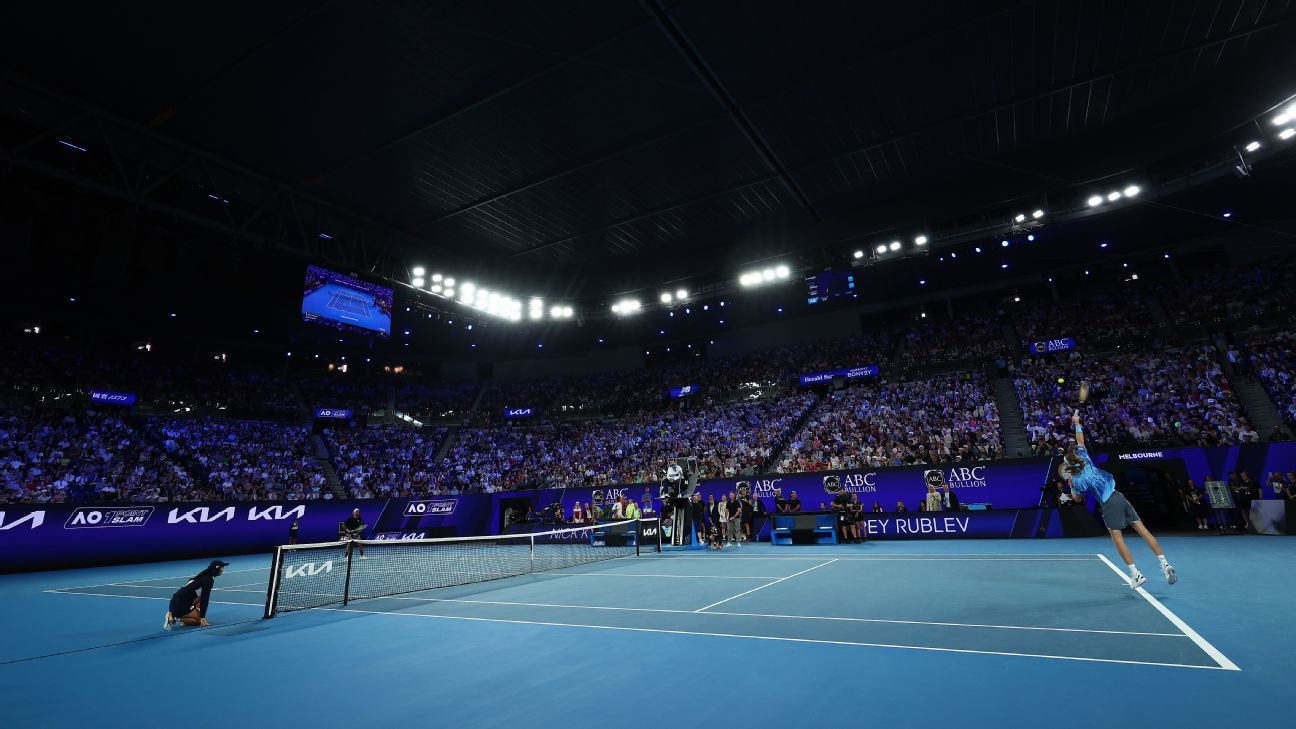
Once confined to a strict fortnight, the Australian Open has evolved into a three-week cultural marathon that is redefining the limits of Grand Slam tennis.
Title: The 21-Day Slam: Inside Craig Tiley’s Masterplan to Reshape Tennis Category: TENNIS
For decades, the rhythm of professional tennis was dictated by the 'fortnight'—a prestigious, two-week sprint that defined the four points of the Grand Slam compass. This traditional structure, with its intense focus on the main draw, was a bedrock of the sport, revered for its history and demanding nature. However, under the ambitious and often audacious leadership of Tennis Australia CEO Craig Tiley, the Australian Open has shattered that long-standing tradition. What was once a standard sports tournament in Melbourne, albeit a beloved one, has mutated into a sprawling, three-week 'tennis bonanza' that effectively moves the goalposts for what a major sporting event can achieve, setting a new benchmark for the Australian Open expansion.
By aggressively promoting the qualifying rounds and introducing 'Opening Week,' Tiley has successfully blurred the lines between preliminary matches and the main draw. This isn't just about more tennis; it’s a calculated commercial masterstroke designed to maximize engagement and revenue. By transforming Melbourne Park into a high-energy festival hub featuring live music, world-class dining, and interactive fan activations long before the top seeds even take the court, the tournament has unlocked a goldmine of engagement and revenue that its peers in Paris, London, and New York are now closely studying. This innovative approach to the Australian Open expansion has fundamentally altered the fan experience, making it a destination event even for those without tickets to the marquee matches.
The expansion also addresses one of the sport's most persistent headaches: scheduling. By officially stretching the tournament to a Sunday start and leaning into the three-week model, the Australian Open has gained much-needed breathing room to mitigate the late-night finishes that have long plagued the tour. These grueling matches, often extending past midnight, are detrimental to player recovery, fan attendance, and broadcast schedules. This structural shift provides a better experience for the athletes, allowing for more rest and recovery between matches, and crucially, keeps the gates swinging and the broadcast cameras rolling for an extra seven days of primetime exposure. This strategic move is a cornerstone of the Australian Open expansion, demonstrating a commitment to both player welfare and commercial viability.
The Economic Engine of the Australian Open Expansion
The financial implications of Tiley’s 21-day vision are profound. By extending the tournament, Tennis Australia isn't just selling more tickets; it's creating an extended economic ripple effect throughout Melbourne and the broader Victorian economy. Hotels, restaurants, retail outlets, and transport services all benefit from the prolonged influx of international and domestic visitors. The 'Opening Week' concept, in particular, acts as a powerful magnet, drawing in crowds who might not typically attend the main draw matches but are keen to soak up the atmosphere and enjoy the peripheral entertainment. This diversified revenue stream, moving beyond mere ticket sales to encompass hospitality, merchandise, and sponsorship opportunities across a longer period, is a testament to the shrewd business acumen behind the Australian Open expansion. Sponsors, too, find greater value in an event that offers a longer window of visibility and a wider array of engagement touchpoints with a diverse audience. The increased broadcast hours also translate into higher advertising revenue, further cementing the financial success of this bold strategy.
Player Welfare and the Future of the Calendar
While the commercial benefits are undeniable, the focus on player welfare is another critical component of the Australian Open expansion. The traditional two-week Grand Slam format, especially with its often-unpredictable scheduling, placed immense physical and mental strain on athletes. The added day at the start of the tournament, and the subsequent spreading out of matches, allows for greater flexibility. This means fewer instances of players having to compete on consecutive days after grueling five-setters, reducing the risk of injury and ensuring a higher quality of play throughout the tournament. For the lower-ranked players in the qualifying rounds, the increased exposure and improved conditions during 'Opening Week' also provide a significant boost, making their journey through the early stages feel more integrated into the main event. This thoughtful consideration for the athletes, coupled with the commercial drive, positions the Australian Open as a progressive leader in shaping the future of the professional tennis calendar, potentially influencing other Grand Slams to re-evaluate their own structures in response to the successful Australian Open expansion.
Ultimately, Tiley’s revolution is about more than just a calendar. It is about a fundamental shift in identity, moving the Australian Open away from being merely a tennis tournament and toward becoming a permanent fixture of global entertainment. It’s a complete reimagining of what a major sporting event can be in the 21st century, blending elite athletic competition with a vibrant cultural festival. As the 'Happy Slam' continues to grow its footprint, both physically and metaphorically, it serves as a bold blueprint for the future of the sport—proving that in the modern era of athletics, where attention spans are fragmented and competition for entertainment dollars is fierce, more is almost always more, especially when executed with such strategic foresight and a clear vision for the Australian Open expansion.
Stay informed
Follow SportsNow.
Join the reader list for future briefings and important newsroom updates.
Reader conversation