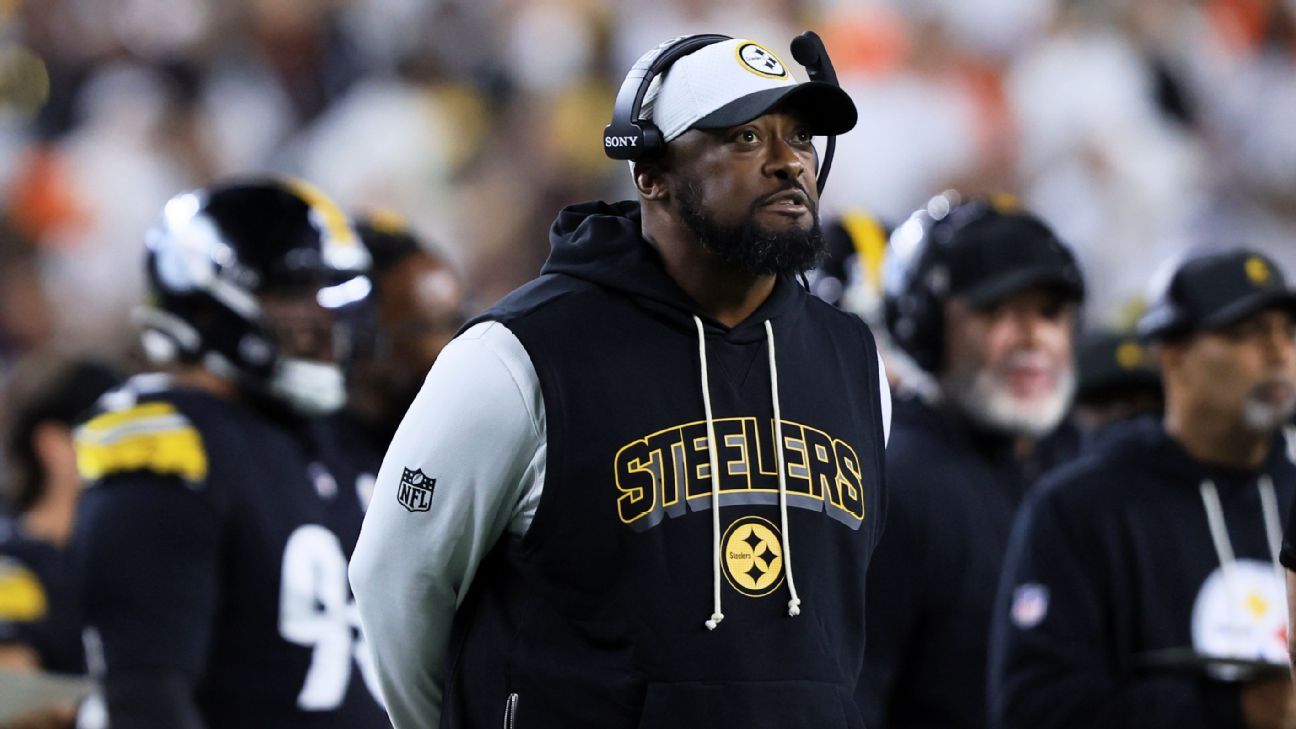
Following the seismic departure of Mike Tomlin, the Steelers must choose between doubling down on their grit-and-defense identity or embracing a modern offensive revolution.
The Steel Curtain Calls: Pittsburgh Faces a Philosophical Crossroads After the Mike Tomlin Era
For the first time in nearly two decades, the most stable seat in professional sports sits empty. Mike Tomlin’s departure from the Pittsburgh Steelers marks more than just a coaching change; it signals the end of an era defined by competitive consistency and a refusal to bottom out. For 17 seasons, Tomlin steered the Steelers ship, never once recording a losing season, a testament to his leadership and the organizational stability he embodied. But as the iron dust settles at Acrisure Stadium, the organization faces a terrifyingly beautiful blank slate. The front office now stands at a generational fork in the road, forced to decide if the 'Steelers Way' needs a renovation or a complete demolition. This pivotal moment will define the franchise's trajectory for the next decade and beyond.
Path one is the traditionalist’s dream: finding a successor who can sharpen the existing blade. This route involves hiring a defensive-minded leader or a disciplined CEO-type coach who can maximize the elite talents of T.J. Watt and Minkah Fitzpatrick, doubling down on the ball-control and physical dominance that has been the franchise’s hallmark since the 1970s. Imagine a coach who can instill an even greater level of defensive ferocity, leveraging the existing talent to create a truly suffocating unit reminiscent of the legendary Steel Curtain defenses. This approach would prioritize stout run defense, relentless pass rush, and opportunistic turnovers, aiming to win games by controlling the clock and limiting opponent possessions. It’s a safe bet that ensures the Steelers remain competitive, maintaining a high floor, but it risks leaving them behind in an AFC North arms race that increasingly favors high-octane offensive fireworks. While the "Steelers Mike Tomlin" era was marked by defensive prowess, the league has evolved, and relying solely on that formula might not be enough to reach the Super Bowl.
Conversely, the second path represents a radical departure from tradition—a full-scale pivot toward the modern NFL offensive revolution. By targeting a young, innovative play-caller like a Ben Johnson or a Bobby Slowik, Pittsburgh would be signaling that they are finally ready to prioritize the quarterback position over defensive grit. This approach would likely necessitate a roster overhaul, moving away from expensive veteran defensive pillars to hoard draft capital for a franchise-altering signalcaller. The focus would shift dramatically to developing a dynamic passing game, utilizing creative schemes, and investing heavily in offensive line talent and skill position players who can thrive in a pass-heavy attack. It is the high-risk, high-reward strategy that the city hasn't seen since the pre-Noll days, a bold move that could either catapult them back to Super Bowl contention or send them spiraling into an unfamiliar rebuild. The legacy of "Steelers Mike Tomlin" is one of stability, but this new direction would embrace volatility for potential greatness.
The Quarterback Conundrum: The Elephant in the Room
No matter which philosophical path the Steelers choose, the quarterback position remains the undeniable elephant in the room. The post-Ben Roethlisberger era has been a struggle, with a carousel of signal-callers failing to consistently elevate the offense. The decision on the next head coach is inextricably linked to the organization's plan for the most important position in sports. If they opt for a traditionalist, defensive-minded coach, it implies a belief that a game-manager or a system quarterback can succeed with a dominant defense and run game. This would mean continuing to search for value in the draft or through free agency, rather than making a blockbuster move for a top-tier prospect.
However, if they commit to the offensive revolution, the hunt for a franchise quarterback becomes paramount. This could involve trading significant draft capital for a proven veteran, or aggressively moving up in the draft to secure one of the top prospects. The success of teams like the Kansas City Chiefs and Buffalo Bills, built around elite young quarterbacks, serves as a powerful blueprint for this approach. The Steelers have historically been patient with their quarterbacks, but the current landscape demands a more proactive and decisive strategy. The next coach will either be tasked with developing a young passer or maximizing the potential of an existing one, a challenge that even a coach of "Steelers Mike Tomlin's" caliber found difficult in recent years.
Navigating the AFC North Arms Race
The decision is further complicated by the increasingly competitive landscape of the AFC North. The division boasts two of the league's most dynamic quarterbacks in Joe Burrow (Cincinnati Bengals) and Lamar Jackson (Baltimore Ravens), both of whom lead high-powered offenses. Even the Cleveland Browns, despite their own quarterback uncertainties, have a roster brimming with talent. To compete in this division, the Steelers cannot afford to stand still. A traditionalist approach, while ensuring competitiveness, might leave them perpetually playing catch-up against these offensive juggernauts.
Conversely, a full offensive pivot, while potentially offering a higher ceiling, comes with significant risk. A failed quarterback acquisition or a slow rebuild could see the Steelers fall further behind in a division where every team is aggressively pursuing Super Bowl contention. The Steelers' identity has long been built on their ability to win ugly, to grind out victories with a dominant defense and a strong running game. But the modern NFL, particularly within the AFC North, demands more. The next head coach must not only navigate the internal philosophical debate but also formulate a strategy that can consistently overcome the formidable challenges posed by their division rivals. The stability provided by "Steelers Mike Tomlin" was a constant, but the path forward requires an adaptation to a rapidly evolving league.
Ultimately, the choice of the next head coach will reveal the internal diagnosis of the Rooney family. Was the Mike Tomlin era’s late-stage plateau a result of coaching fatigue, or a flawed roster-building philosophy? If they hire a disciplinarian, a coach known for their strict adherence to fundamentals and a focus on minimizing mistakes, they believe the engine just needed a tune-up. This would suggest that the core principles of the "Steelers Way" are sound, and only minor adjustments are needed to return to championship form. If they hire a schematic wizard, a young, innovative offensive mind known for pushing boundaries and creating explosive plays, they are admitting the entire machine is obsolete. This would be a clear signal that the organization recognizes the need for a fundamental shift in their approach to the game, embracing the modern offensive trends to keep pace with the league's elite. For a franchise that prides itself on 'the standard,' the new standard is currently being written in the shadows of the Three Rivers, a standard that will undoubtedly be compared to the long and impactful tenure of "Steelers Mike Tomlin."
Stay informed
Follow SportsNow.
Join the reader list for future briefings and important newsroom updates.
Reader conversation