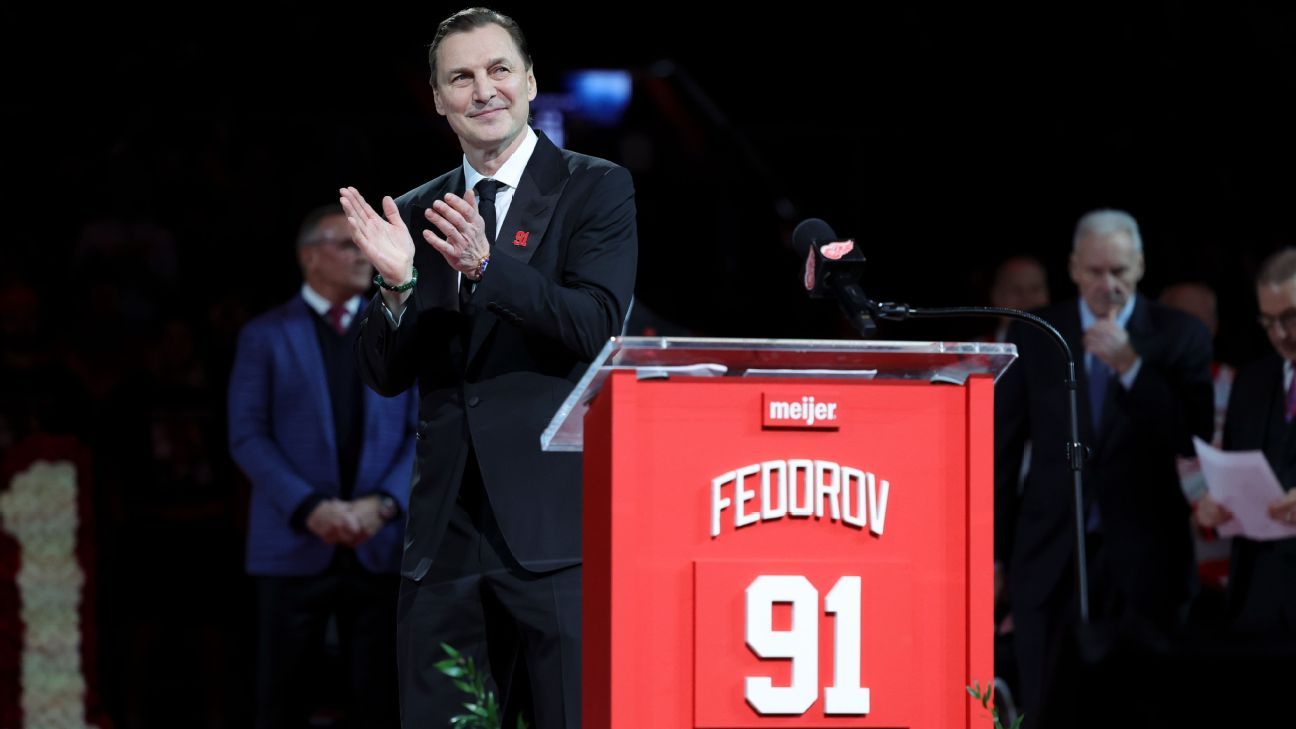
During a stirring ceremony to retire his iconic No. 91 jersey, Sergei Fedorov finally addressed the lingering regret of his 2003 departure from Detroit.
A Wing Takes Flight for the Rafters: Sergei Fedorov’s Red Wings Homecoming Ends in Emotional Admission
The rafters of Little Caesars Arena grew a little heavier and much more legendary on Monday night as the Detroit Red Wings officially hoisted Sergei Fedorov’s No. 91 into immortality. It was a gala of nostalgia, reuniting the architect of the 'Russian Five' with the city where he redefined the modern NHL center. Amidst the standing ovations and the sea of red and white jerseys, the three-time Stanley Cup champion offered something more than just a thank-you speech; he offered a rare, vulnerable moment of retrospection. The atmosphere was electric, a palpable mix of anticipation and reverence for a player who, despite his departure, remained etched in the collective memory of the Red Wings faithful. Fans proudly displayed their vintage Sergei Fedorov jersey, a testament to his enduring legacy.
Fedorov, whose departure for the Anaheim Mighty Ducks in 2003 left a wound in the Motor City that took years to cauterize, addressed the elephant in the arena head-on. As he looked up at the championship banners he helped raise, the Hall of Famer admitted that leaving the franchise in his prime was the greatest misstep of his storied career. "It was a huge mistake," Fedorov told the emotional crowd, acknowledging that his heart never truly left Detroit even after his jersey did. This admission, delivered with genuine emotion, resonated deeply with a fanbase that had long grappled with the pain of his exit. It was a moment of profound healing, not just for Fedorov, but for the entire Red Wings community. The sight of his iconic Sergei Fedorov jersey ascending to the rafters seemed to symbolize the mending of old wounds.
In his prime, Fedorov was a tactical marvel—a player so gifted that Mike Bowman famously played him on defense just to prove he could be the best blueliner on the ice. He was the first European to win the Hart Trophy, a perennial Selke candidate, and the explosive engine behind the 1997, 1998, and 2002 cup runs. His speed, vision, and unparalleled two-way game made him a nightmare for opposing teams. He possessed a rare blend of offensive flair and defensive responsibility, capable of taking over a game at any moment. Monday night served as the final bridge over troubled waters, reconciling the superstar with a fanbase that once felt jilted by his exit. The ceremony wasn't just about celebrating his achievements; it was about acknowledging the complex history and ultimately, finding peace.
As the banner ascended, joining the likes of Yzerman, Lidstrom, and Howe, the era of 'what-ifs' officially came to a close. For Fedorov, the ceremony wasn't just about accolades; it was about coming home. While he may have spent the latter half of his career in different colors, the hockey world was reminded tonight that Sergei Fedorov was always, and will forever be, a Red Wing. The sight of his No. 91 Sergei Fedorov jersey hanging proudly among the legends solidified his place in the franchise's pantheon.
The Enduring Legacy of the Russian Five and Fedorov's Impact
Sergei Fedorov was not merely a star player; he was a foundational piece of one of the most iconic lines in NHL history: the Russian Five. Alongside Igor Larionov, Slava Kozlov, Vladimir Konstantinov, and Slava Fetisov, Fedorov helped revolutionize the game with their fluid, possession-based style of play. This quintet, often deployed together by Scotty Bowman, confounded opponents with their intricate passing, relentless puck pursuit, and uncanny chemistry. Fedorov, with his blistering speed and offensive creativity, was often the spearhead of this unit, driving play and creating scoring opportunities seemingly out of thin air. Their success wasn't just about individual talent; it was about a collective understanding of the game that transcended conventional North American hockey strategies.
The Russian Five's influence extended beyond their three Stanley Cups. They demonstrated that European-style hockey, with its emphasis on skill and puck control, could thrive and dominate in the NHL's physical landscape. Fedorov's role as the dynamic center of this group cemented his status as a trailblazer. He was the prototype of the modern power forward, combining size, speed, and skill in a way few others could. His ability to transition from defense to offense with breathtaking speed was a hallmark of his game and a key component of the Russian Five's effectiveness. The sight of a fan wearing a Sergei Fedorov jersey from that era instantly evokes memories of this groundbreaking line and their indelible mark on hockey history.
A Reconciliation Forged in Time and Reflection
The emotional weight of Fedorov's admission cannot be overstated. For years, his departure was a topic of hushed whispers and lingering resentment among some segments of the Red Wings fanbase. The contract disputes, the perceived lack of loyalty, and the subsequent success he found elsewhere created a complex narrative. However, time, as it often does, has a way of softening edges and offering new perspectives. Fedorov's candid confession that leaving Detroit was his greatest mistake provided a crucial piece of closure for many. It wasn't an excuse, but an honest reflection from a man who, in the prime of his career, made a decision he later regretted.
This public act of vulnerability transformed the banner raising from a mere ceremonial event into a profound moment of reconciliation. It allowed fans to finally process the hurt and move forward, embracing Fedorov not just for his incredible on-ice achievements, but also for his humanity. The cheers that erupted after his admission were not just for the goals he scored or the cups he won, but for the courage he showed in acknowledging his past. It was a testament to the deep bond between a player and a city, a bond that, despite its challenges, ultimately proved unbreakable. The sight of his Sergei Fedorov jersey now hanging permanently in the arena serves as a symbol of this enduring connection and the power of forgiveness and understanding.
Stay informed
Follow SportsNow.
Join the reader list for future briefings and important newsroom updates.
Reader conversation
Your take on the story
Stay with the story
Related coverage
Open desk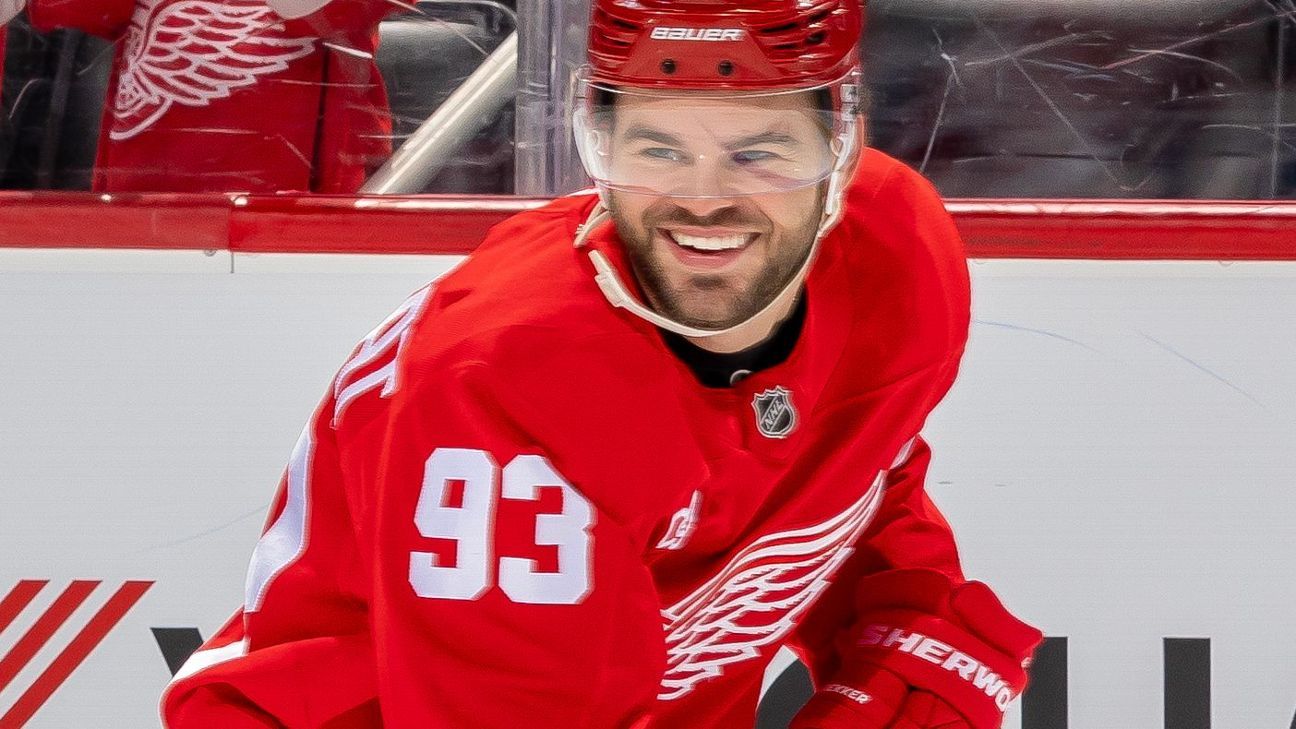
Red Wings Sign Alex DeBrincat to 7-Year, $91M Contract Extension
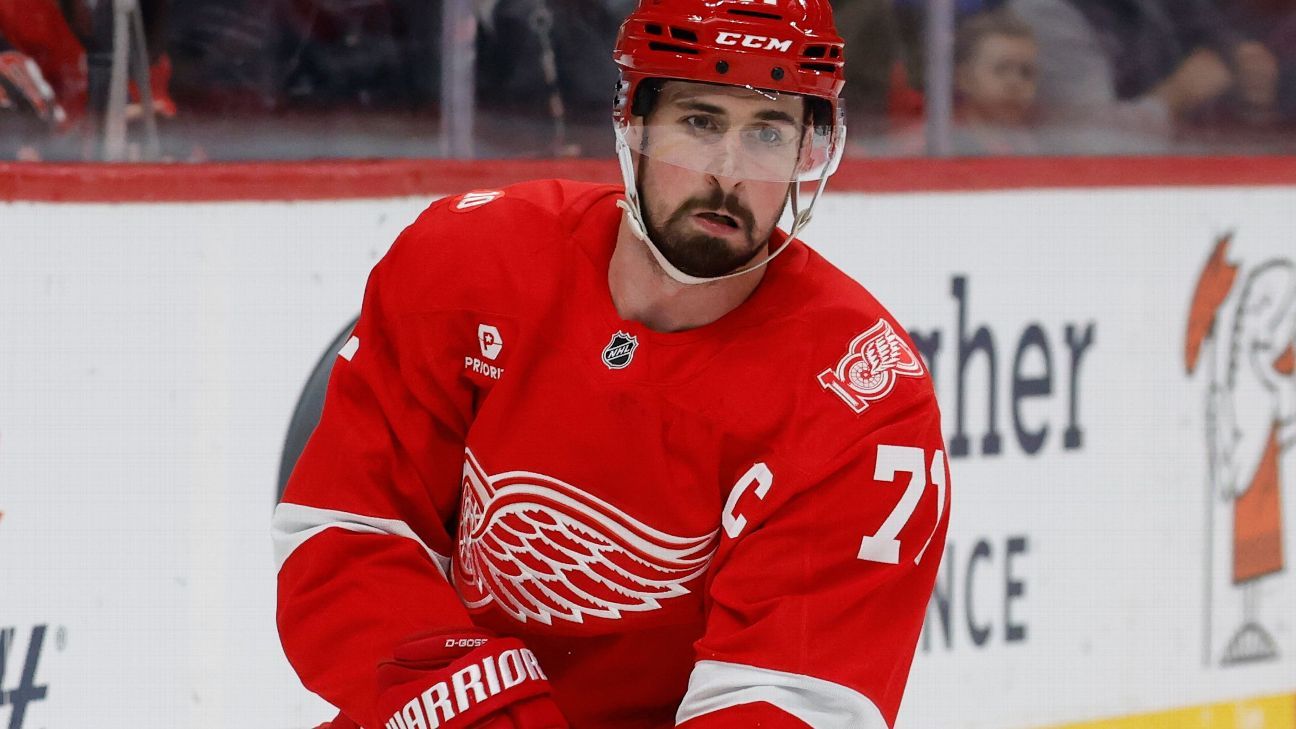
Dylan Larkin Expected to Make Season Debut for Red Wings Following Trade Request