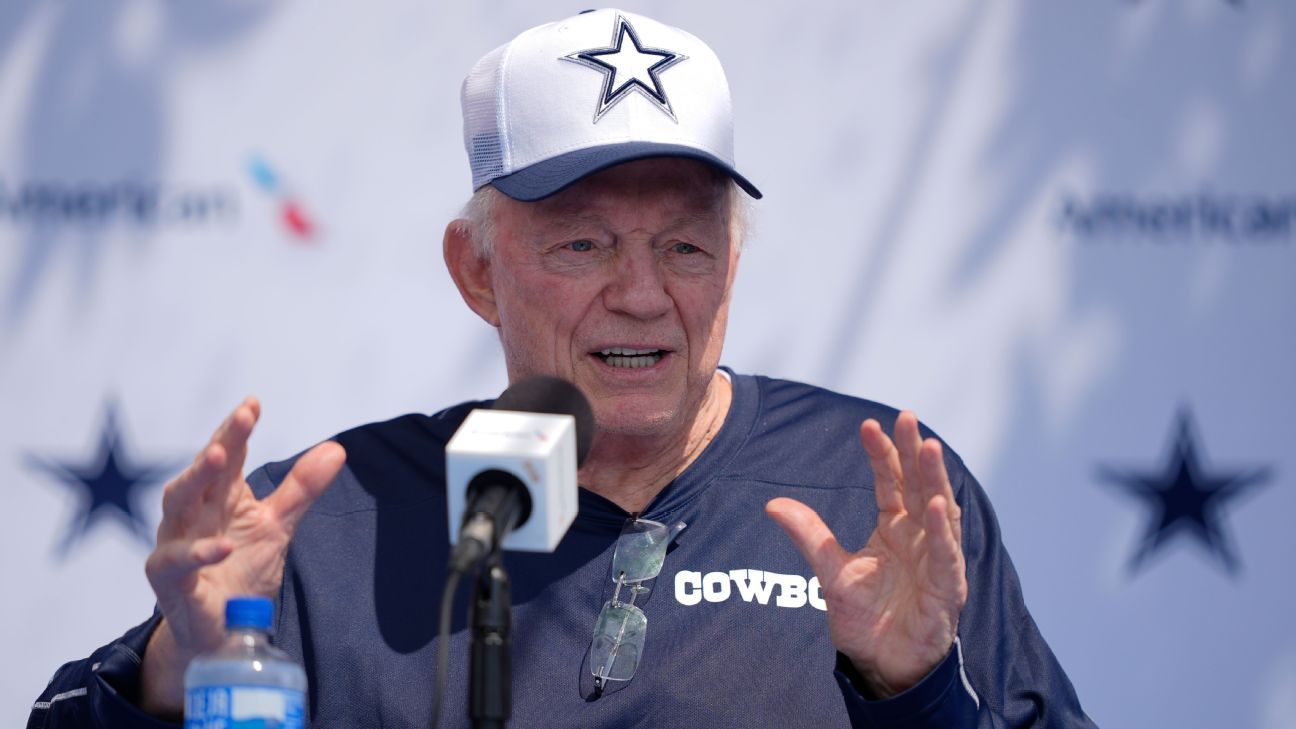
Jerry Jones reflects on the Micah Parsons trade that brought Kenny Clark and Quinnen Williams to the Dallas Cowboys defense.
OXNARD, Calif. -- Dallas Cowboys owner and general manager Jerry Jones confirmed his satisfaction with the blockbuster Micah Parsons trade nearly one year after sending the pass rusher to the Green Bay Packers. The transaction yielded defensive tackle Kenny Clark and a pair of first-round picks in 2026 and 2027 for Dallas. Jones utilized the 2027 first-round selection and a 2026 second-round pick to secure defensive tackle Quinnen Williams from the New York Jets at the previous season's trade deadline. Williams recently finalized a three-year, $105.9 million contract extension on Wednesday, joining a group of six Cowboys players earning $20 million or more annually alongside Dak Prescott, CeeDee Lamb, George Pickens, Tyler Smith, and DaRon Bland.
During the April draft, the Cowboys exercised the 2026 first-round pick acquired in the deal to select pass rusher Malachi Lawrence at No. 23 overall. Jones likened the strategic shift to the 1989 trade of running back Herschel Walker to the Minnesota Vikings, a move that facilitated three Super Bowl titles during the 1990s. The owner noted that having a surplus of draft capital encouraged a more aggressive approach to roster building, describing the extra picks as "extra money in your pocket" while gambling in Las Vegas rather than risking "the baby's new pair of shoes and formula money."
Interior Defensive Overhaul and Roster Construction
The departure of Parsons served as the primary instigator for a complete makeover of the Dallas defense. Jones emphasized a desire to generate interior pass rush and strengthen the unit against the run by prioritizing players in the middle of the line. He credited Parsons’ status as an outstanding talent for providing the leverage necessary to execute such a significant trade with Green Bay. The resulting cap flexibility allowed the front office to sign safety Jalen Thompson and trade for Rashan Gary during the current offseason.
Jones described the decision to invest heavily in Williams as a judicious move under salary cap constraints, noting that a team can only afford six or seven players at that elite pay scale. He characterized Williams as a player without a peer, possessing the physical talent and personal character required for a long-term commitment. The defensive tackle, now entering his seventh NFL season, has never reached the postseason but expressed confidence that the Cowboys' championship mindset mirrors his experience at the University of Alabama.
Mental Shift in Draft Strategy
The 1989 Walker deal served as a historical blueprint for Jones, who stated that the Parsons trade created a mental shift in his role as general manager. By acquiring multiple high-value assets, the organization felt empowered to take the risks involved in revamping the roster. Jones asserted that the current depth on the interior of the defensive line was a deliberate result of this philosophy rather than an accident.
Williams noted that the moment the trade from the Jets occurred, he intended to remain with the Cowboys for the duration of his career. He cited the shared vision of Jones, Prescott, and Lamb as the primary reason for his optimism regarding future playoff success. The defensive tackle highlighted the "iron sharpens iron" environment in Dallas, comparing the daily intensity to his collegiate career. As the one-year anniversary of the trade approaches, the Cowboys continue to build around the interior presence of Williams and Clark while integrating the youth of Lawrence into their defensive rotation.
Stay informed
Follow SportsNow.
Join the reader list for future briefings and important newsroom updates.
Reader conversation