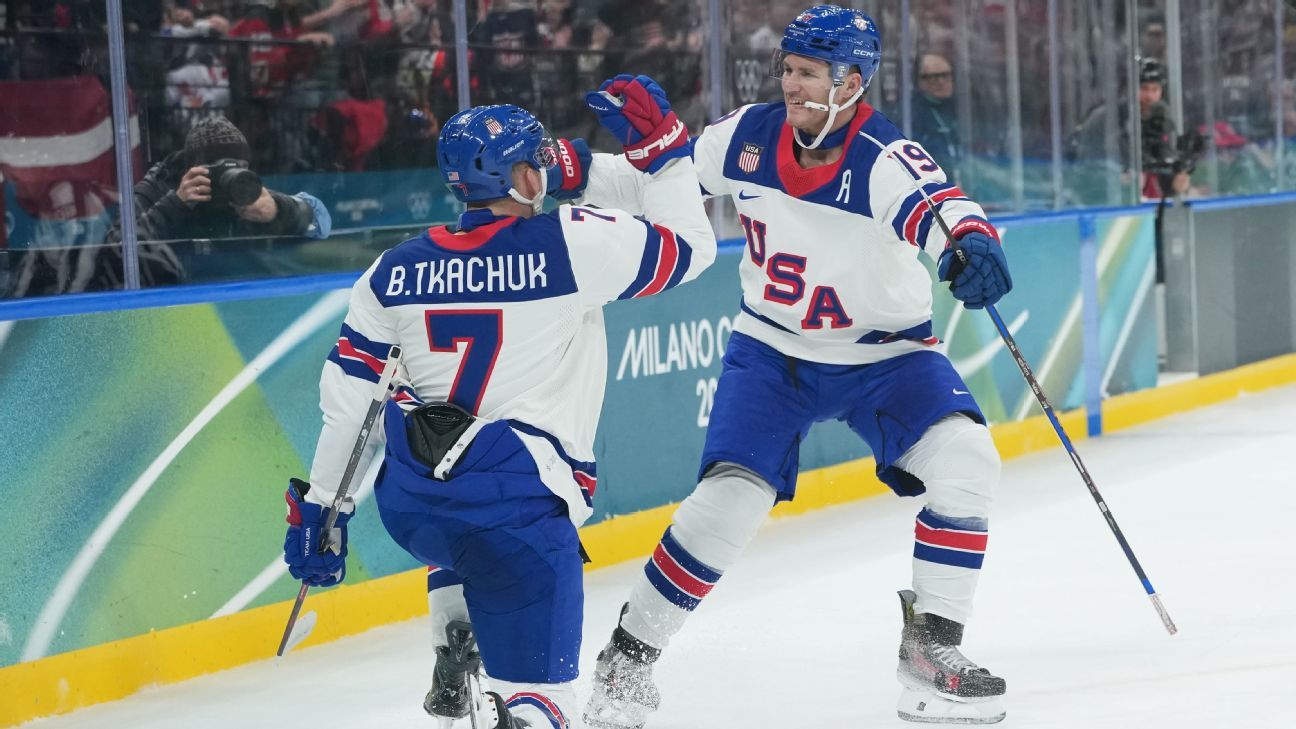
Brady Tkachuk opened the scoring for Team USA, but Latvia responded to even the game in an Olympic matchup featuring NHL players for the first time since 2014.
Brady Tkachuk found the back of the net in the opening minutes to give Team USA a 1-0 lead, but Latvia countered shortly after to bring the score to 1-1. This preliminary round matchup marks the first time active NHL players have participated in the Winter Olympics since the 2014 tournament in Sochi. The American captain’s strike came during a period of sustained pressure in the offensive zone, showcasing the high-tempo style of play expected from a roster comprised entirely of professional talent. Latvia’s equalizer arrived via a quick transition play that caught the United States defense out of position, forcing a deadlock early in the contest.
The return of National Hockey League athletes to the international stage has fundamentally altered the competitive landscape of this tournament. For the past two Olympic cycles, rosters were filled with amateur players and those competing in European professional leagues, but the current agreement allows the world’s premier skaters to represent their nations once again. Tkachuk, who serves as the captain of the Ottawa Senators, utilized his physical presence near the crease to secure the initial advantage. His ability to navigate tight spaces in front of the Latvian goaltender provided the spark the U.S. coaching staff sought from the first puck drop.
Latvia’s response demonstrated a disciplined defensive structure that has become a hallmark of their national program. Despite facing a lineup stacked with North American stars, the Latvian skaters maintained their lanes and capitalized on a rare turnover at the blue line. The resulting goal silenced the pro-American crowd and forced the U.S. bench to reconsider their aggressive forechecking strategy. This back-and-forth exchange highlights the parity found in modern international hockey, where even the most decorated rosters can be challenged by cohesive, well-drilled opponents.
Statistically, the game began with a heavy shot advantage for the United States, as they tested the Latvian netminder with 12 attempts in the first ten minutes. Tkachuk’s goal was the result of a rebound play, emphasizing the importance of net-front presence in the larger international rink dimensions. Latvia, meanwhile, relied on a counter-attacking philosophy, recording only four shots in the same span but making their most dangerous opportunity count. The efficiency of the Latvian strikers served as a reminder that possession time does not always translate directly to a lead on the scoreboard.
As the game progressed into the second period, the physicality intensified, with both teams trading hits along the boards to establish territorial dominance. The American squad looked to utilize their superior foot speed to create odd-man rushes, while the Latvian defense focused on clogging the neutral zone to disrupt the flow of play. This tactical chess match is a direct result of the high hockey IQ brought by NHL veterans who are accustomed to making split-second adjustments. With the score remaining tied, the pressure shifted to the special teams units to break the stalemate through power-play opportunities or shorthanded breakaways.
Stay informed
Follow SportsNow.
Join the reader list for future briefings and important newsroom updates.
Reader conversation
Your take on the story
Stay with the story