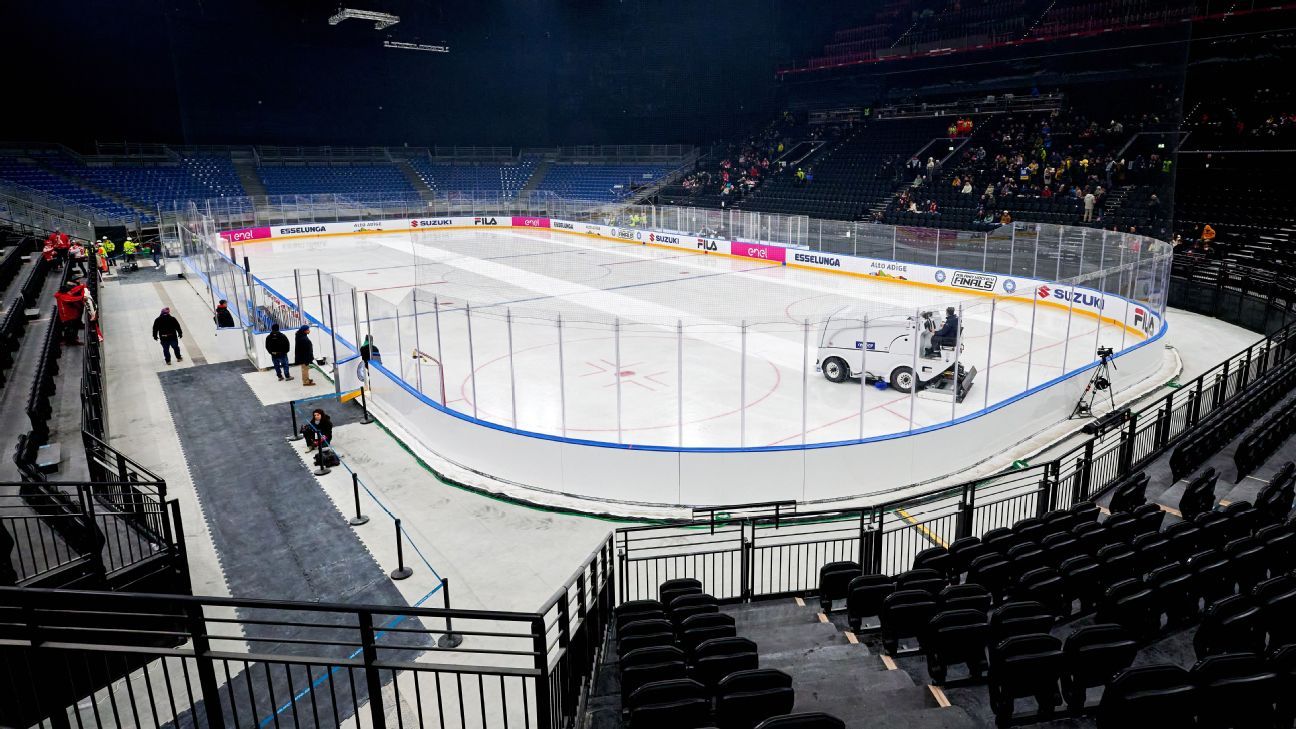
Hockey officials have expressed high confidence in the Milan 2026 facilities following a successful technical ice test at the Santagiulia Ice Hockey Arena.
Milan’s Frozen Stage Passes First Major Grade: NHL, NHLPA Applaud Olympic Ice Trials
The dream of seeing the world’s greatest hockey players return to the Olympic stage took a significant step toward reality this week. Following a comprehensive ice testing event at the Santagiulia Ice Hockey Arena in Milan, both the NHL and the NHL Players' Association (NHLPA) released a joint statement expressing their satisfaction with the venue's progress. As the hockey world looks toward the 2026 Winter Games, the quality of the playing surface remains a top priority for ensuring both elite performance and player safety. The successful trials of the Milan Olympic ice are a crucial early indicator that the host city is on track to deliver a world-class experience.
League officials and ice technicians treated the session as a high-stakes rehearsal, analyzing everything from temperature consistency to the friction of the sheet. This wasn't merely a casual inspection; it involved sophisticated equipment and expert personnel meticulously measuring every parameter that contributes to optimal ice conditions. Factors like ice hardness, surface smoothness, and even ambient humidity were under intense scrutiny. According to the NHL and NHLPA, the exercise served as a “good trial run,” offering vital data that will shape the final preparations over the coming months. This data is invaluable, allowing the organizing committee to fine-tune environmental controls and ice-making processes to meet the exacting standards of professional hockey. For a league that prides itself on lightning-fast speed and precision, the assurance that the Italian ice can handle the rigors of NHL-caliber play is a massive hurdle cleared, providing confidence in the Milan Olympic ice.
This technical green light arrives at a pivotal moment, as anticipation builds for the first true best-on-best international tournament in over a decade. The absence of NHL players from the last two Winter Olympics in PyeongChang and Beijing left a palpable void, and the prospect of their return has reignited excitement across the global hockey community. The collaboration between the league and the players' union highlights a unified commitment to making the Milan Games a gold standard for the sport. Their joint statement underscores a shared vision for excellence, not just in player participation but in every aspect of the event's execution. With the Santagiulia Arena passing this critical litmus test, the focus now shifts from the infrastructure to the rosters, as nations begin to visualize their path to Olympic glory on what promises to be a world-class Milan Olympic ice surface.
The Science Behind the Perfect Sheet
Creating and maintaining a perfect sheet of ice for elite hockey is far more complex than simply freezing water. It's a delicate balance of science and artistry, involving precise temperature control, water purification, and meticulous resurfacing techniques. For an event as prestigious as the Olympic Games, and with the world's best players on the line, the margin for error is virtually nonexistent. The ice technicians involved in the Milan trials are seasoned professionals, often with decades of experience working in NHL arenas. They understand that even minor imperfections – a soft spot, a ripple, or an inconsistent temperature – can impact puck speed, skate glide, and ultimately, player safety.
The testing at Santagiulia likely involved specialized equipment to measure ice temperature at various depths and across different zones of the rink, ensuring uniformity. Friction coefficients were probably assessed to guarantee the optimal balance between glide for skates and grip for stopping and turning. The quality of the water used is also paramount; de-aerated, filtered water helps create a clearer, harder, and more durable surface, free from air bubbles that can weaken the ice structure. The success of these trials indicates that the Santagiulia Arena’s systems – from its refrigeration plant to its dehumidification units – are capable of delivering the consistent, high-performance Milan Olympic ice that the NHL and its players demand. This rigorous scientific approach is what elevates an ordinary rink to an Olympic-caliber stage.
Implications for Player Performance and Safety
The quality of the playing surface directly impacts both player performance and safety, two non-negotiable factors for the NHL and NHLPA. A fast, consistent sheet of ice allows players to showcase their incredible speed, skill, and agility without hindrance. Pucks move crisply, passes connect with precision, and the flow of the game reaches its highest potential. Conversely, a poor ice surface can lead to unpredictable bounces, slower play, and an increased risk of injury. Uneven ice can cause skates to catch, leading to falls and potentially serious injuries like sprains, fractures, or concussions.
The NHLPA, in particular, places a strong emphasis on player safety, and their satisfaction with the Milan Olympic ice is a testament to the venue's commitment to meeting these standards. Knowing that the ice will be top-tier allows players to focus solely on their game, rather than worrying about the playing conditions. This confidence is vital for athletes competing at the pinnacle of their sport, where every advantage, no matter how small, can make a difference. The successful trials send a reassuring message to potential Olympians worldwide: the stage is set for them to perform at their absolute best, free from concerns about the integrity of the playing surface. This early validation of the Milan Olympic ice quality is a significant psychological boost for everyone involved, from athletes to coaches and fans.
Looking Ahead: The Road to 2026
While this initial ice testing represents a major triumph, the journey to the 2026 Milan Cortina Winter Olympics is far from over. This "good trial run" provides a baseline, but continuous monitoring and adjustments will be necessary. The organizing committee will need to maintain these high standards through various environmental conditions, including potential fluctuations in outside temperatures and arena attendance during the Games themselves. Further tests and operational rehearsals will undoubtedly take place, ensuring that the ice-making and maintenance crews are fully prepared for the demands of an Olympic schedule.
The success of the Milan Olympic ice trials also sends a strong message to other venues and host cities for future international competitions: the bar has been set high. It underscores the importance of early planning, meticulous execution, and close collaboration between sports federations, player associations, and local organizing committees. As the hockey world eagerly anticipates the return of the best-on-best format, this positive development from Milan solidifies the belief that the 2026 Winter Games will not only be a spectacular showcase of athletic talent but also a testament to the unwavering commitment to excellence in every detail, starting with the frozen stage itself.
Stay informed
Follow SportsNow.
Join the reader list for future briefings and important newsroom updates.
Reader conversation
Your take on the story
Stay with the story