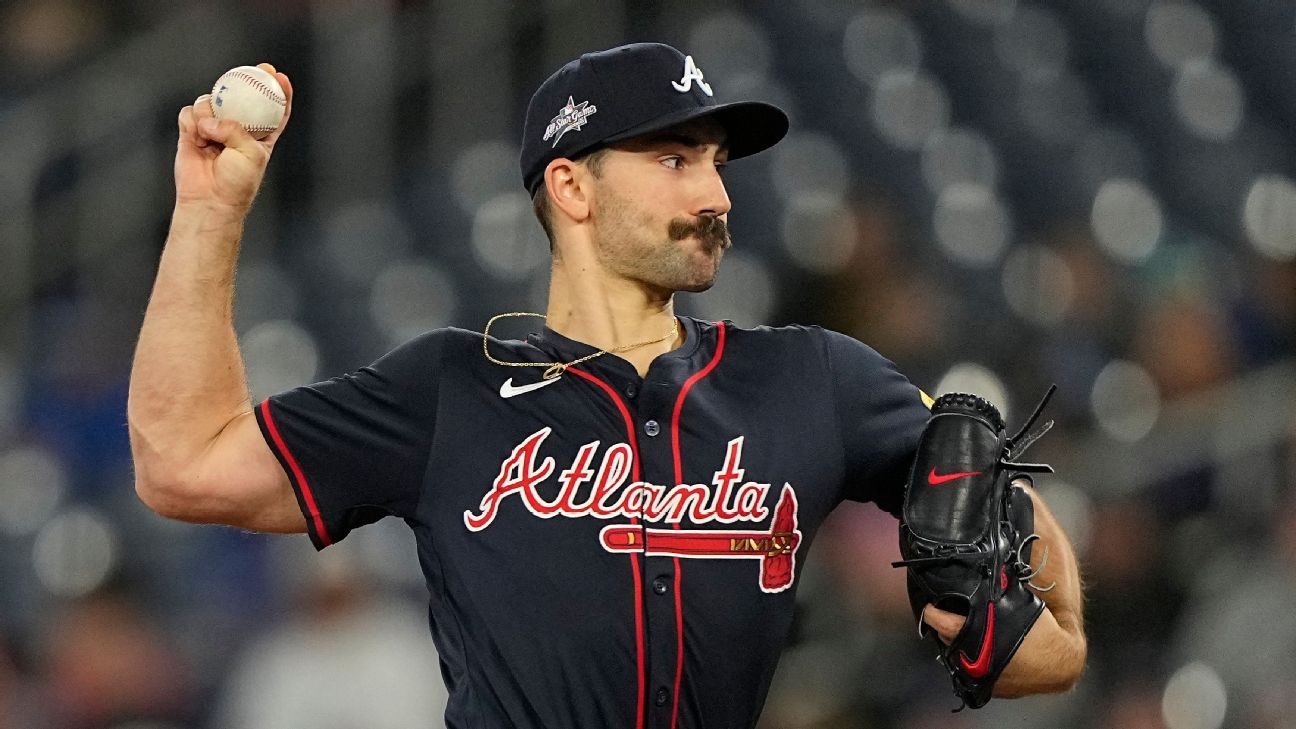
Right-hander Spencer Strider will begin the season on the injured list after a diagnosed oblique strain forced him out of Monday's spring training finale.
Atlanta Braves right-hander Spencer Strider will begin the upcoming season on the injured list following a diagnosis of an oblique strain. Manager Walt Weiss confirmed the medical status on Monday, shortly after the 27-year-old pitcher was scratched from his scheduled start in the spring training finale against Pittsburgh. Strider exits camp having posted a 2-0 record and a 3.24 ERA across 8 1/3 innings of work this spring. This medical development halts his momentum after a difficult 2023 campaign where he finished with a 7-14 record, a 4.45 ERA, and 131 strikeouts.
The loss of Strider is a significant blow to a rotation attempting to recapture his 2023 All-Star form. During that peak season, the righty led the major leagues with 20 victories and 281 strikeouts. However, his availability has been inconsistent; he previously missed the majority of the first six weeks of the prior season. While the Braves have not established a definitive timeline for his return to the active roster, Weiss indicated that the organization hopes the pitcher can resume duties within a few weeks. This vacancy in the starting five follows a series of severe medical setbacks for the Atlanta pitching staff.
The rotation is already operating without Spencer Schwellenbach and Hurston Waldrep, both of whom were placed on the 60-day injured list after undergoing elbow surgery. Furthermore, left-handed pitcher Joey Wentz has been ruled out for the entirety of the season due to a torn ACL in his right knee. These cumulative losses leave the Braves searching for depth as the regular season commences. The Spencer Strider injury is part of a broader trend of roster instability affecting the club this spring. On the offensive side, the infield will be without shortstop Ha-Seong Kim for more than a month as he recovers from a hand injury.
The team’s depth is further tested by the total absence of Jurickson Profar, who received a season-long suspension following a positive test for performance-enhancing drugs (PEDs). Strider’s absence from the Monday finale against Pittsburgh forced an immediate change to the exhibition game's pitching plans. The right-hander had been utilizing the spring schedule to refine his mechanics after the statistical decline seen in his 4.45 ERA last year. His 131 strikeouts in that period were less than half of his league-leading total from the year prior, making his health a primary concern for the front office.
Walt Weiss and the Braves coaching staff must now navigate the early portion of the schedule with a depleted group of starters. The hope for a return in a short window suggests that Strider may avoid a long-term stint on the 60-day injured list, unlike teammates Schwellenbach and Waldrep. However, the oblique strain is a delicate injury that often requires a cautious ramp-up period to avoid re-aggravation during the high-velocity delivery Strider utilizes to generate his high strikeout numbers. With Wentz out for the year and two other prospects recovering from elbow procedures, the internal options for the Braves are narrowing.
The team will rely on the remaining healthy arms to fill the void left by a pitcher who, at his best, provides 20-win production. The focus now shifts to the medical staff's ability to rehabilitate the oblique strain and return the former All-Star to the mound to improve upon his 7-14 mark from the previous season. The Associated Press contributed to the details regarding these roster movements and medical updates. The organization must evaluate the waiver wire or trade market to address the sudden lack of veteran presence in the starting rotation.
Statistically, the drop from 281 strikeouts to 131 represents a 53% decrease in punchouts over a single calendar year. This decline coincided with a jump in ERA from his elite sub-3.00 levels to the mid-fours. The Braves' training staff will monitor his side sessions once he is cleared for light tossing, which usually occurs ten to fourteen days after an oblique diagnosis. If the recovery stalls, the club may be forced to utilize a bullpen game for the fifth spot in the rotation during the first two weeks of April.
In the interim, the Braves' bullpen will likely see increased usage to cover the innings typically handled by the front-line starter. Last season, the relief corps logged significant mileage when the rotation struggled to reach the sixth inning. The absence of Kim at shortstop also places additional pressure on the pitching staff, as the defensive efficiency behind the mound may fluctuate during his recovery period. Every roster move made this week reflects the urgency of stabilizing a championship-caliber roster facing multiple simultaneous absences.
Final roster cuts are expected by Wednesday, but the injury to Strider complicates the math for the final two spots on the pitching staff. Non-roster invitees who performed well in Grapefruit League play are now under heavy consideration for the opening day flight. The front office is tasked with balancing short-term needs against the long-term health of their primary strikeout artist. Maintaining a competitive edge in the division requires a healthy Strider, yet rushing an oblique recovery could lead to a season-ending tear.
Stay informed
Follow SportsNow.
Join the reader list for future briefings and important newsroom updates.
Reader conversation
Your take on the story
Stay with the story