
Tyrell Fortune secured a unanimous decision victory over Marcin Tybura on March 28 in Seattle following a career-defining recovery from a lethal weight cut.
Tyrell Fortune made his UFC debut on March 28 in Seattle at 35 years old, securing a unanimous decision victory over Marcin Tybura. Stepping in on just two weeks' notice after Tybura’s original opponent withdrew due to injury, the heavyweight transitioned to the octagon following a journeyman career in Bellator MMA. This performance comes years after a harrowing Tyrell Fortune weight cut in 2012, during which the athlete was pronounced dead after his heart stopped multiple times. A former NCAA Division II national champion wrestler at Grand Canyon University in Phoenix, Arizona, Fortune’s perspective on professional competition is rooted in surviving organ failure during his amateur wrestling tenure.
The Lethal 27-Pound Weight Cut
During his junior-college season, Fortune weighed between 220 and 230 pounds, placing him between the international weight categories of 211 and 265 pounds. To gain a size advantage at 211 pounds, he attempted to shed 27 pounds in only six days. His daily intake was restricted to three small meals consisting of one bottle of water, a grain bar, and a cup of mandarin oranges. The training regimen required losing five to six pounds per workout before sleeping. After reaching a physical limit where he could no longer run, Fortune remained five pounds over the limit and attempted a rubbing alcohol and Epsom salt bath in hot water at his hotel.
Despite the extreme measures, Fortune arrived at the weigh-ins 0.6 pounds over the target. With 20 minutes remaining, his coach urged him to run another lap to lose the final fraction of a pound. Fortune reported feeling immediate physical distress, but was encouraged to continue until he reached a water fountain. Upon attempting to drink, he collapsed, began foaming at the mouth, and suffered a seizure. Although he could hear and see his coach crying over him, he lost control of his motor functions and passed out.
Clinical Death and Medical Intervention
Medical personnel transported Fortune via ambulance, where technicians informed him that his organs were failing due to complete dehydration. His liver and heart stopped functioning each time he lost consciousness. Paramedics utilized a defibrillator to revive him initially, but after an anxiety attack caused another lapse in consciousness, Fortune was officially pronounced dead. Medical staff administered four additional defibrillator shocks to which he was initially nonresponsive. The entire medical crisis lasted approximately seven to eight hours before he was discharged at 2:00 a.m.
When Fortune regained consciousness at the hospital, he was strapped to a gurney from his forehead to his chest to prevent movement during ongoing seizures. A nurse provided him with soda, orange juice, and saltine crackers to stabilize his condition. His girlfriend remained with him throughout the ordeal, reportedly slapping his face to keep him conscious whenever the heart monitor flatlined. This experience occurred while Fortune was a college student, shortly after he had taken a world religion class and begun questioning his Christian upbringing.
Impact on Heavyweight MMA Career
Fortune describes the sensation of death as a state of coldness and emptiness rather than a light or a dream. He noted that his limbs felt physically different and cold upon waking. This 2012 event fundamentally altered his approach to life and sport, instilling a belief that there are no second chances after death. He credits this unique perspective for his drive to maximize his opportunities in MMA, viewing his career through the lens of a man living on borrowed time.
His victory in Seattle served as a landmark moment, validating a career that spanned various promotions before reaching the UFC. The heavyweight now emphasizes the importance of personal values, noting that his near-fatal incident was entirely self-inflicted. By reflecting on the 2012 trauma with ESPN’s Brett Okamoto, Fortune highlighted how the transition from a 230-pound wrestler to a professional heavyweight fighter was shaped by the moment his body shut down in a hotel bathroom and a weigh-in line.
Stay informed
Follow SportsNow.
Join the reader list for future briefings and important newsroom updates.
Reader conversation
Your take on the story
Stay with the story
Related coverage
Open desk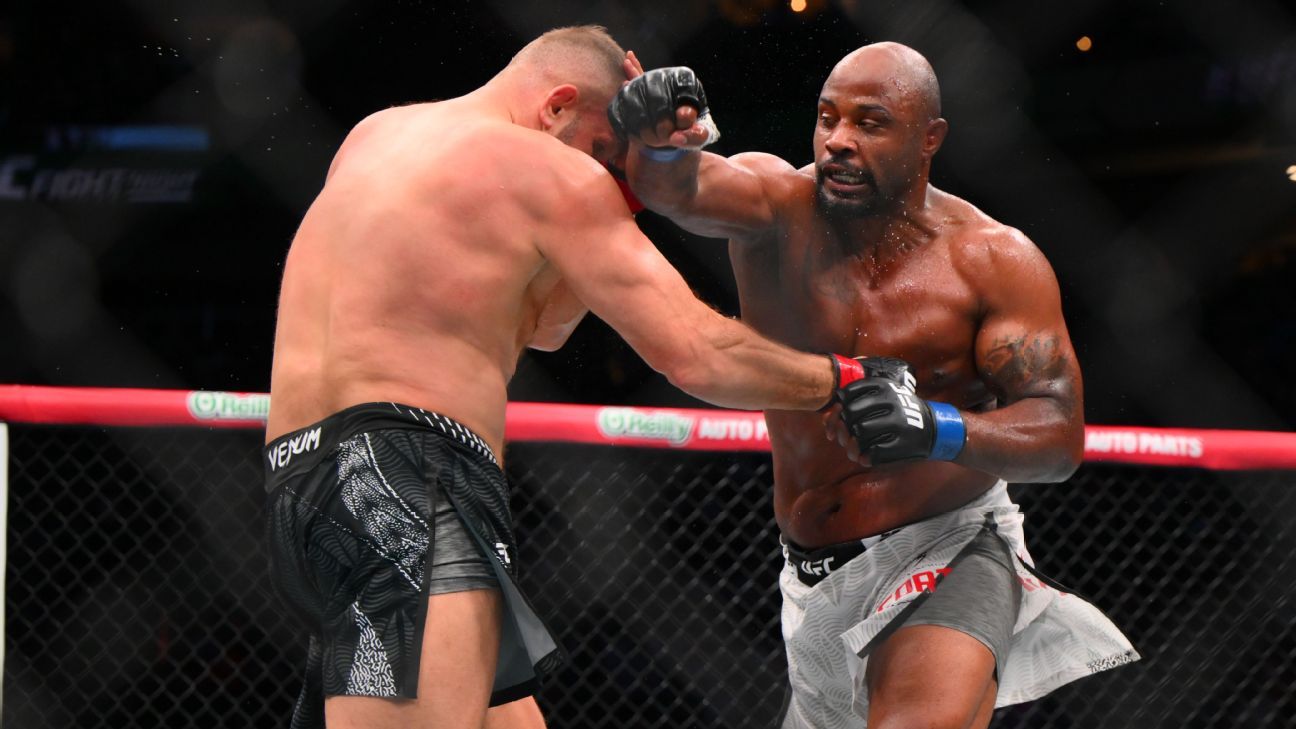
Tyrell Fortune Secures Victory in UFC Debut Following Bruce Buffer Announcement Error

Conor McGregor Expected to Compete in BKFC Following UFC Exit