World Cup beer sales rose 14% in U.S. host cities during the tournament's first month, with Philadelphia reporting 290,000 stadium beers sold.
During the first four weeks of the FIFA World Cup, World Cup beer sales surged 14% in U.S. host cities compared to the same timeframe last year. Data from the Beer Institute indicates that this growth occurred across stadiums, bars, and restaurants, while national sales saw a broader 4% increase. In Philadelphia alone, FIFA organizers confirmed that spectators consumed a total of 290,000 stadium beers across six matches. The tournament concludes on July 19 in East Rutherford, New Jersey, featuring a final between Spain and Argentina, following a third-place match in Miami Gardens between England and France.
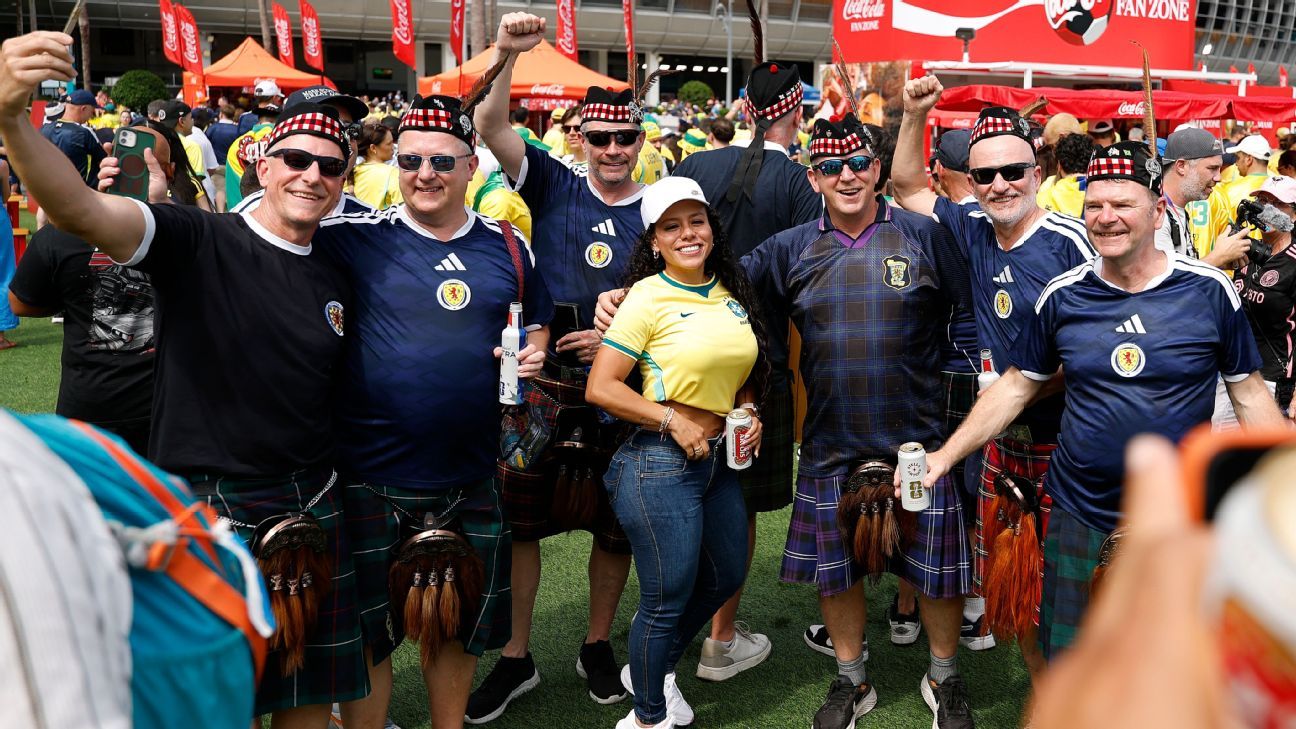
At the Sam Adams Boston Taproom, staff were forced to pour a Boston Lager every 12 seconds to keep up with demand on the first day Scottish fans arrived in the city. Jim Koch, the founder and CEO of Boston Beer Co., noted that his establishment required two emergency deliveries that day to prevent taps from running dry. This high volume of consumption stands in contrast to the 2022 tournament in Qatar, where the government prohibited the sale of alcoholic beer within match venues.
Marketing Investments and Sponsorship Shifts
Official sponsor AB InBev, the producer of Budweiser and Michelob Ultra, supported 200,000 watch parties across 40 different countries to capitalize on the event. Rival manufacturer Molson Coors increased its marketing budget by 60% for June and July compared to the previous year, launching a limited-edition soccer ball designed to hold 12 cans of Miller Lite. Despite these efforts, market volatility remained tied to on-field results; shares for AB InBev and Constellation Brands—owners of the U.S. rights to Corona and Modelo—dropped immediately following the tournament exits of Mexico and Brazil.
Industry Trends and Health Statistics
The recent spike in World Cup beer sales arrives amid a decade-long decline in U.S. consumption reported by the Brewers Association. Similar downward trends have been noted by the national statistics agency in Canada and the Brewers of Europe trade association within the European Union. Health concerns are a primary driver for this shift, with a recent Gallup poll revealing that 53% of Americans believe drinking one or two drinks daily is detrimental to health. This marks the first time a majority of respondents held that view in the history of the poll.
Future Outlook for Alcohol Advertising
While consumers are increasingly pivoting toward "wellness" drinks and non-alcoholic options, the industry is looking toward new opportunities like the 2028 Summer Olympics in Los Angeles. Additionally, the NCAA recently ended its prohibition on alcohol advertising during March Madness. Starting next season, manufacturers of beer, wine, spirits, and hard seltzer will be permitted to sponsor the college basketball tournament for the first time. Industry leaders like Koch remain optimistic about the long-term viability of the product, citing a 10,000-year history of beer as a staple of human civilization and social interaction.
Stay informed
Follow SportsNow.
Join the reader list for future briefings and important newsroom updates.
Reader conversation
Your take on the story
Stay with the story
Related coverage
Open desk
Tyler Adams Named USMNT Captain for New World Cup Cycle
USWNT U17 Crushes Samoa 17-0 to Set FIFA World Cup Scoring Record