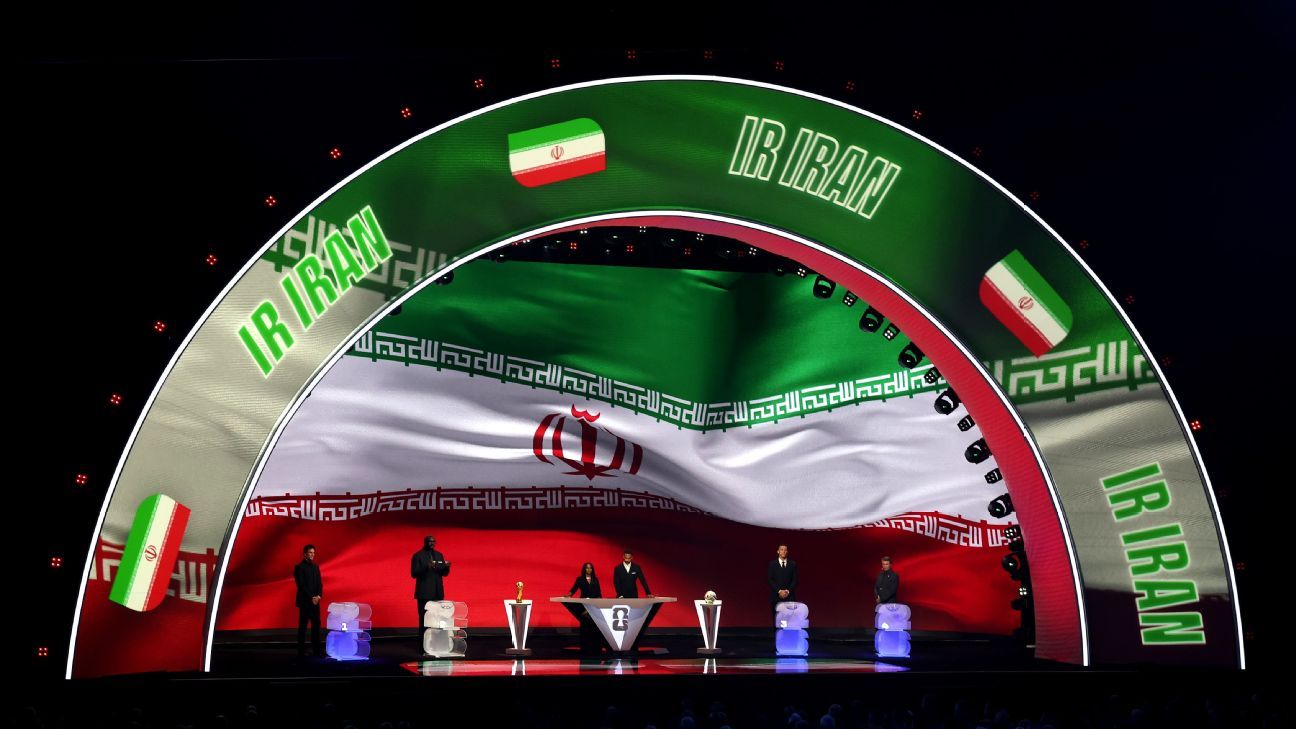
Sports Minister Ahmad Donyamali confirmed Wednesday that Iran will not participate in the 2026 World Cup following the assassination of Ayatollah Ali Khamenei.
Iranian Sports Minister Ahmad Donyamali officially declared on Wednesday that the national soccer team has canceled its participation in the 2026 World Cup. This decision stems directly from a series of airstrikes initiated by the United States and Israel on Feb. 28. Donyamali attributed the withdrawal to the assassination of Ayatollah Ali Khamenei, asserting that the actions of the "corrupt government" have rendered the nation’s presence in the tournament untenable. The move nullifies three scheduled Group G fixtures: a June opener against New Zealand in Los Angeles, a subsequent match against Belgium in the same city, and a final group stage meeting with Egypt in Seattle.
Geopolitical volatility reached a breaking point following the military intervention that began in late February. The Iranian Ministry of Sport determined that the loss of their supreme leader created a domestic environment where international athletic competition became secondary to national mourning. Mehdi Taj, who serves as the vice president of the Asian Football Confederation and the head of Iran’s soccer federation, echoed these sentiments. Taj noted that the Iranian people could not be expected to harbor hope or enthusiasm for a sporting event while their sovereignty was under direct kinetic assault from the host nation and its allies.
FIFA President Gianni Infantino had previously received verbal guarantees from U.S. President Donald Trump regarding the safety and accessibility of the Iranian delegation. Trump had publicly stated that the Iranian team was "welcome" to compete on American soil, despite his simultaneous remarks indicating he "really didn't care" if the squad ultimately participated. These diplomatic contradictions served as the backdrop for the eventual escalation. The Iranian leadership viewed the Feb. 28 airstrikes as a definitive breach of the spirit required for international cooperation, leading to the formal announcement on Wednesday that the team would remain in Tehran.
The logistical fallout of this withdrawal leaves Group G in a state of flux. New Zealand, Belgium, and Egypt were slated to face the Iranian squad in high-capacity venues across the West Coast of the United States. With the Iranian team now absent, FIFA must navigate its own regulatory framework to address the vacancy. Article 5 of the FIFA World Cup regulations typically governs team withdrawals, yet the specific circumstances of a military conflict involving the host nation present an unprecedented challenge for the Zurich-based organization. Officials are currently reviewing whether to promote a standby nation or proceed with a reduced group.
Potential replacements for the Iranian slot include Iraq and the United Arab Emirates (UAE). Iraq’s head coach, Graham Arnold, has already initiated contact with FIFA to discuss the possibility of rescheduling playoff matches to accommodate a potential promotion. The Asian Football Confederation (AFC) is under pressure to maintain its allotted slots for the 2026 cycle. If Iraq or the UAE is selected to fill the void, they would inherit the June schedule in Los Angeles and Seattle. This transition would require rapid visa processing and security clearances, tasks made difficult by the ongoing regional instability following the assassination of Ayatollah Ali Khamenei.
The impact on the 2026 World Cup schedule is significant, particularly for the city of Los Angeles. The metropolitan area was prepared to host two of Iran's matches, drawing on a large local diaspora. The cancellation of these fixtures represents a loss of ticket revenue and broadcast viewership in key Middle Eastern markets. Seattle’s match against Egypt also loses its original competitive context, as the Egyptian side now awaits news on whether they will face a different opponent or receive a forfeit victory. FIFA has not yet confirmed if the points for the canceled matches will be awarded automatically to the remaining Group G participants.
In Tehran, the mood remains somber as the sports ministry pivots away from international engagement. Ahmad Donyamali’s Wednesday statement emphasized that the dignity of the Iranian state outweighed any potential success on the pitch. The national team, which had successfully navigated the qualification rounds to secure their place in Group G, will now see their efforts erased from the tournament bracket. This marks the first time a qualified nation has withdrawn from the World Cup due to active military hostilities with the host country since the tournament's inception. The move sets a stark precedent for the intersection of global politics and the FIFA calendar.
International observers are monitoring the situation to see if other nations will follow Iran’s lead in boycotting the event. While no other Group G teams have signaled an intent to withdraw, the regional tension remains high. The U.S. State Department has not issued a formal rebuttal to Donyamali’s claims regarding the "corrupt government," focusing instead on the security of the remaining 47 teams. As the June kickoff approaches, the focus of the sporting world remains fixed on how FIFA will rebalance the tournament structure in the wake of the Feb. 28 airstrikes and the subsequent Iranian exit. The absence of the Iranian squad will be a defining narrative of the 2026 World Cup's opening weeks.
Stay informed
Follow SportsNow.
Join the reader list for future briefings and important newsroom updates.
Reader conversation
Your take on the story
Stay with the story
Related coverage
Open deskTrump Cites Safety Concerns for Iran World Cup Squad After Airstrikes
United States to Host Inaugural 19-Team Women's Club World Cup in 2028