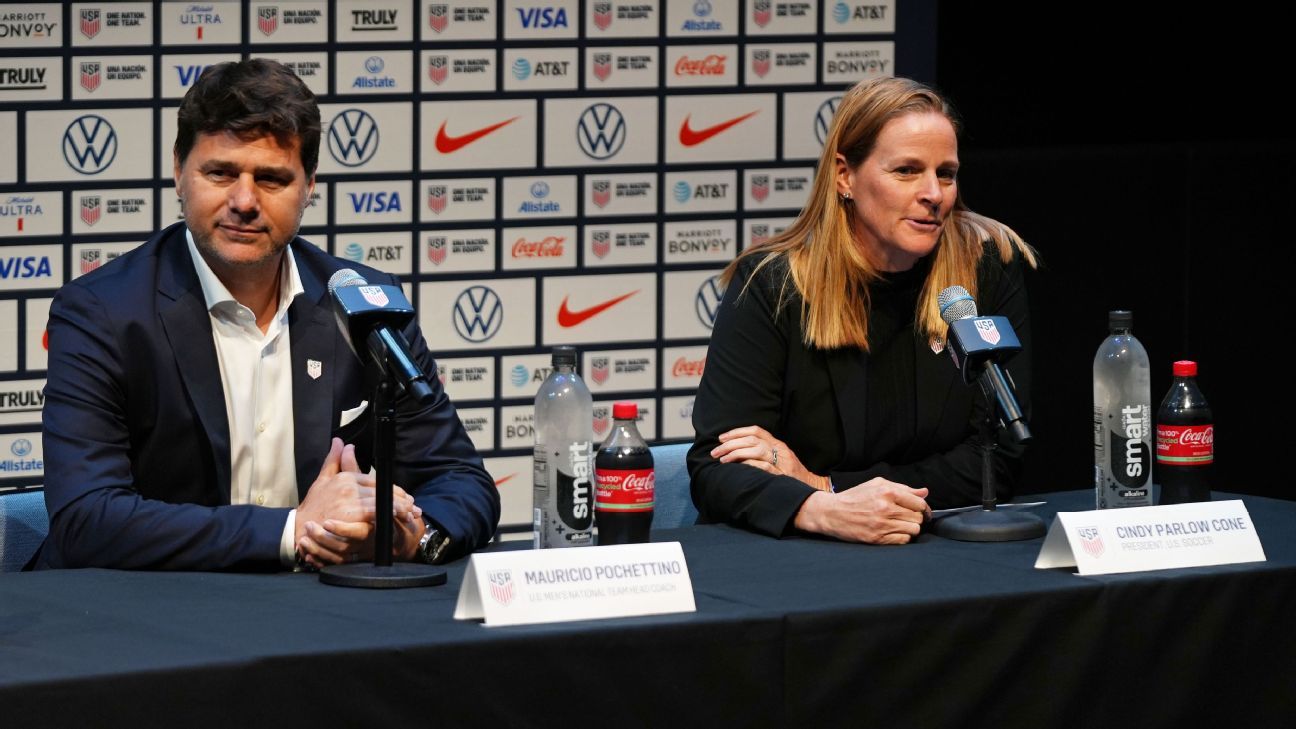
Mauricio Pochettino has signed a four-year contract extension to lead the U.S. men's team through the 2030 World Cup following a 17-12-2 start to his tenure.
Mauricio Pochettino has signed a new four-year contract to remain the head coach of the United States men’s national team through the 2030 World Cup. The agreement follows a summer tournament where the U.S. co-hosted alongside Mexico and Canada, reaching the round of 16 before suffering a 4-1 defeat against Belgium. Since taking over the program in September 2024, midway through the previous World Cup cycle, Pochettino has compiled a coaching record of 17 wins, 12 losses, and 2 draws.
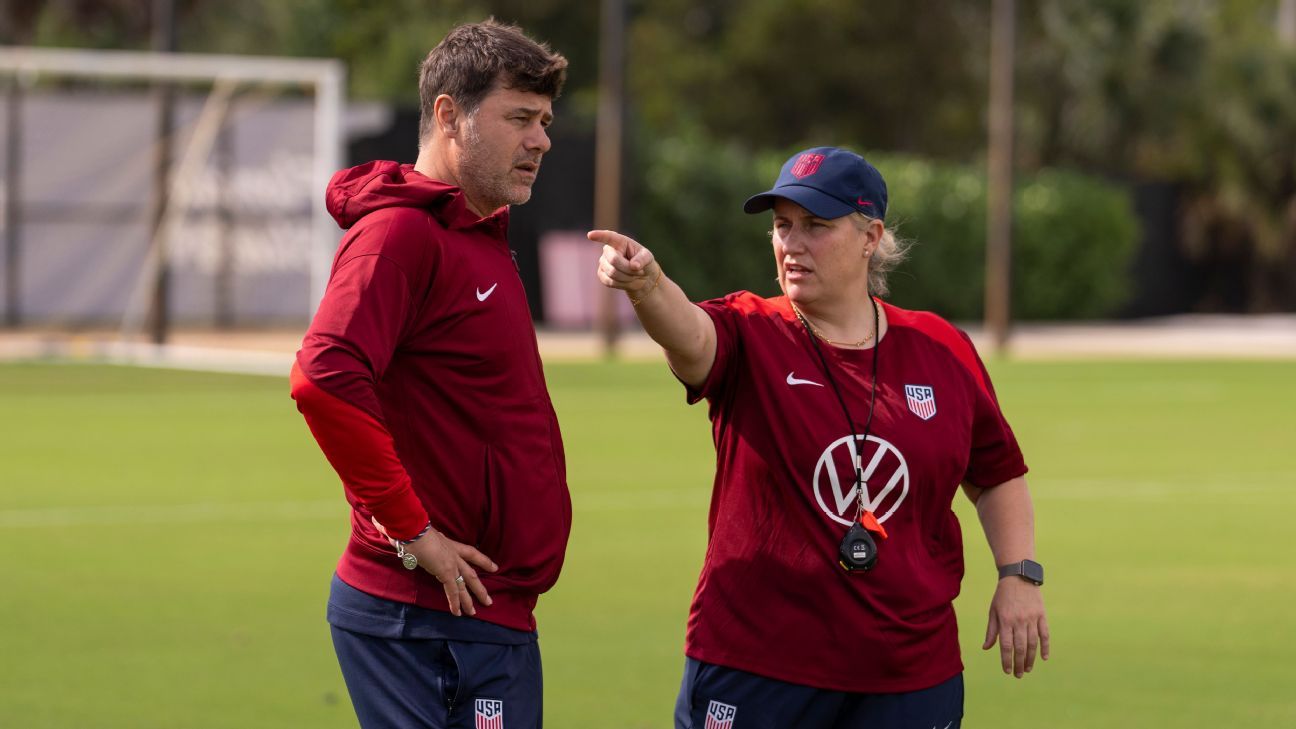
U.S. women’s head coach Emma Hayes expressed she is "delighted" by the extension, noting that the new deal allows both coaches to prioritize long-term planning for their respective programs. Hayes, who led the U.S. women to the 2024 Olympic gold medal shortly after concluding her tenure with Chelsea in the Women's Super League, believes the men's team is just beginning its progression under Pochettino. The men's coach recently stated that his reappointment provides an opportunity to have a lasting impact on the sport that extends beyond on-field results.
Youth Development and Technical Philosophies
Hayes and Pochettino previously worked together at Chelsea during the 2023 and 2024 seasons, and they now face similar challenges regarding the disparate American soccer system. Hayes emphasized that the U.S. must innovate its playing philosophies to avoid becoming a "mid-major" in the women's game by relying solely on the history of the badge. She identified game intelligence, technique, and tactical understanding as priorities that should rank higher than physical components in player training.
The two coaches plan to meet for coffee or a phone call to discuss accessing communities currently missing from the soccer landscape. Hayes noted that creating correct youth development pathways is essential for Pochettino to close gaps at the international level. She has specifically advocated for American players to gain experience at the U20 Women's World Cup to better prepare the next generation for senior international competition.
Lessons from the 2026 World Cup Cycle
During the 2026 Men's World Cup, Hayes served as an analyst for British television, observing specific match elements such as hydration breaks, substitution patterns, and new officiating rules. She intends to apply these observations to the U.S. women’s team ahead of the 2027 Women's World Cup in Brazil. A primary focus for Hayes is the speed and transparency of VAR decisions, as well as officials addressing tactics designed to disrupt or slow down the game.
To prepare for next summer's tournament, the U.S. women will utilize VAR during two October friendlies against Spain at Hayes' specific request. While the women's team does not often play games using the technology, Hayes is pushing for FIFA to ensure the women's game is prepared for high-quality officiating and rapid video review. She contacted Pochettino frequently to offer support leading up to the 2026 tournament and believes he successfully encouraged the country to believe in the men's squad.
Building Toward the 2030 World Cup
With a full four-year cycle now secured, Pochettino aims to map out the journey of top-level players and improve the preparation of the youth ranks. Hayes noted that while his challenges might be larger, they are parallel to her own efforts to modernize development strategies. She has been adamant since taking the U.S. job in late 2023 that the program must not remain stagnant. Both coaches are currently recharging following the summer schedule before beginning the work required for the 2030 cycle and the 2027 Women's World Cup.
Stay informed
Follow SportsNow.
Join the reader list for future briefings and important newsroom updates.
Reader conversation
Your take on the story
Stay with the story